
Revisions, Changes, and Abridgements:
How Mrs. White's Writings Have Been Altered
By , last updated Nov.
Ellen White, Letter 106, 1895, to Fannie Bolton
Ellen G. White claimed that her writings were dictated by God Himself—words that were not to be altered, retracted, or improved upon. Yet over the years, her writings have been revised, condensed, polished, and even rewritten by others, including her husband, her son, and a small army of editors. If her messages were truly divine, who authorized the changes? And what happens to inspiration when "God’s words" pass through so many human hands?
No Authorization to Change Mrs. White's Words
Mrs. White claimed that the words she wrote came from God and were not to be changed:
"The word given me is, 'You are faithfully to reprove those who would mar the faith of the people of God. Write out the things which I shall give you, that they may stand as a witness to the truth till the end of time.' I said, 'If any of the citizens of Battle Creek wish to know what Mrs. White believes and teaches, let them read her published books. My labors would be naught should I preach another gospel. That which I have written is what the Lord has bidden me write. I have not been instructed to change that which I have sent out.'"1
If Mrs. White was not instructed to change what she sent out, then who gave the instructions? Who approved the alterations to her writings? Mrs. White said, "I am not to retract one word of the message I have borne."2 Despite this, a number of her words have been retracted and removed from later publications. For example:
- Statements referring to the shut door of salvation.
- Statements which have been proven false by science, such as amalgamation.
- An entire chapter of the Great Controversy (chapter 12 "God Honoreth the Humble").
- Entire books have been taken out of print, such as An Appeal to Mothers, which was full of 19th century myths about the dangers of "solitary vice".
So, who was authorized to change Mrs. White's writings?
James White
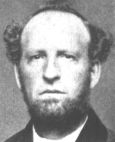
Early in Ellen White's career, James White played a key role in the development of his wife's writings. Being more educated and skilled as a writer, James assisted Ellen in editing and reviewing her writings. His most infamous editing episode was his publication of the pamphlet entitled Experiences and Views, in 1851. In that pamphlet, James republished his wife's earlier visions, but deleted out 19% of the content—primarily those parts dealing with the shut door of salvation.
The deletion of the material created such an uproar among the brethren, the fledgling sect was almost split. Sect members wrote to the Review complaining that the material was removed because the "suppressed visions...did not teach the truth."3 When Uriah Smith attempted to explain that the church did not have enough money to publish all of Mrs. White's writings, some wrote back to him offering to pay for the printing of the deleted material.4 He never responded to their offer.
James later insisted that his wife's writings be "polished" by the "last touches of the old gentleman's pencil" before they were published.5 Just how much of the "old gentleman's" polishing became part of the "inspired" testimonies is impossible to determine.
Corporate Leaders Take Charge of the Revisions
In 1992, the Review revealed the practice of the staff of the White Estate in revising and altering the writings of Ellen White. Paul A. Gordon, then secretary of the White Estate, wrote:
Is it legitimate to change, abridge, or simplify Ellen White's writings? The answer is yes. We can change, abridge, or simplify the words, but we do not have license to change the intended message. Here's why: Seventh-day Adventists do not hold to verbal inspiration. That means we do not believe that God dictated the words for Ellen White to use. ... In the years since Mrs. White's death in 1915, more than 50 new compilations or editions of Ellen White's books have been prepared by the E.G. White Estate. In every case--including editions that have been abridged, condensed, or simplified—the intended message has never been lost, only the wording has been changed.6
Despite these assurances, in practice, the message itself was often changed—sometimes subtlely, and sometimes quite radically. Examples of that are shown at the end of this article.
The process of altering and changing Mrs. White's writings is a longstanding practice. In 1883, two years after James passed away, a resolution was passed by the SDA General Conference creating a committee to oversee revisions in her writings:
33.WHEREAS, Many of these testimonies were written under the most unfavorable circumstances, the writer being too heavily pressed with anxiety and labor to devote critical thought to the grammatical perfection of the writings, and they were printed in such haste as to allow these imperfections to pass uncorrected; and, WHEREAS, we believe the light given by God to His servants is by the enlightenment of the mind, thus imparting the thoughts, and not (except in rare cases) the very words in which the ideas should be expressed; therefore, Resolved, That in the republication of these volumes, such verbal changes be made as to remove the above-named imperfections, as far as possible, without in any measure changing the thought; and further,
34. Resolved, That this body appoint a committee of five to take charge of the republication of these volumes according to the above preambles and resolutions.7
The Editorial Assistants

After the resolution was passed, Mrs. White was provided with numerous assistants who played a large role in preparing her works for publication.8 One of her assistants, Fannie Bolton, worked for Mrs. White for seven-and-a-half years. Bolton had a tendency to be outspoken. In one instance, she asked if it was proper for Mrs. White to get credit for her writings since they had to be "almost entirely changed" from their original form.9 Even more important than the question of credit is the question of whether the thought was changed when the source material had to be "almost entirely changed." Ellen White later complained to Bolton about "my articles bearing your [Bolton's] ideas."10 While Bolton was working for Ellen, how can anyone know which ideas in Ellen's writings came from God through Ellen and which came through Bolton?
Mrs. White's utter dependence on her assistants can be seen in this letter she wrote to the general conference president in 1888:
I ought to have out another testimony for the church, but I cannot obtain brain worker like Eliza [Burhman] and Marian [Davis]. She is now on Volume One [Old Testament History], [and] Eliza [is] in Australia. Fannie Bolton is fitted well for the work she is doing, but she cannot take these matters that require attention and arrange them, for she has not experience.11
Why would Sister White need a "brain worker" (Websters: "someone whose profession involves using his head to solve problems") to produce a testimony? Why was Bolton, a proficient editorial assistant, insufficient for the work? Obviously, a lot more than "polishing" was going on by 1888!
Apparently Bolton eventually gained the necessary experience, because by 1892, Mrs. White was sending her an article "to prepare" and then forward to "Professor Prescott" so that it could "be put in shape."12 One can only wonder how much "shape" Bolton and Prescott put into that article, and others.
As it turns out, Bolton had a history of adding too much "shape" to Ellen White's writings. Ellen once complained:
I have quite a number of letters to go, but shall not try to have them fitted up, for several have written me that when they could have the matter direct from my hand, it was far more forcible than after it had been prepared. It sounded like another thing, and as the matter is not designed for publication, I shall not send it to Fannie. I think Fannie feels that many of my expressions can be bettered, and she takes the life and point out of them.13
This quote shows that not only were Ellen's personal letters being "fitted up" by her assistants, but that sometimes the modifications altered the very message of the letter, much to her consternation. When Mrs. White wrote a letter to Bolton complaining about the severity of the alterations, Bolton shot back to her: "The omissions were made in harmony with Bro. White’s advice..."14 Thus, omissions were made by Bolton after review with W.C. White, not Sister White.
Not long after this, Bolton complained to Brother Starr about not getting credit for the finished articles which were radically different from the material received from Ellen White:
...the ideas and preparations of the articles were almost entirely changed from the writings of Sister White, that her writings came in such a shape that they had to be made all over.15
When Mrs. White found out about Fannie's exchange with Starr, she was enraged that Bolton wanted credit for her work of entirely changing Mrs. White's writings. About this same time Bolton confessed to Merritt Kellogg:
Most of what I write is published in the Review and Herald as having come from the pen of Sister White, and is sent out as having been written by Sister White under inspiration of God. I want to tell you that I am greatly distressed over this matter for I feel that I am acting a deceptive part. The people are being deceived about the inspiration of what I write. I feel that it is a great wrong that anything which I write should go out as under Sister White’s name as an article specially [sic] inspired of God.16
When Kellogg informed Mrs. White of what Bolton had said, Mrs. White replied, "Fannie Bolton shall never write another line for me."17 This candid admission would seem to confirm that Bolton was not just editing Mrs. White's mistakes but that she was actually writing for her.
Mrs. White summarily fired Bolton and replaced her with Maggie Hare. It appears Bolton was not dismissed for tampering with Mrs. White's writings, but rather for making it known to others that she was the real author behind the "spirit of prophecy." Bolton was letting out the dirty secret that Mrs. White's beautiful writings were not the miraculous product of a prophet with a third-grade education, but rather were the product of skilled writers. Bolton should have known to protect the secret, because years earlier W.C. White had advised her to keep quiet about her role, saying, "best you say nothing about it to anyone."18
In 1897, Mrs. White wrote a stinging letter to Bolton pointing out that Bolton had told at least seven people about her modifications to Ellen's writings. Ellen denounced Fannie, telling her how glad she was with her new editors who did not put their own ideas into her writings:
I thank the Lord that I have two good editors in Maggie Hare and Minnie Hawkins. They are doing good work. The writings come from their hands with my own ideas, and I know it.19
While it is reassuring that Mrs. White's writings were finally coming out with her own ideas contained therein, one must wonder what ideas were coming out while Bolton was doing the editing. Bolton cast the blame right back on Mrs. White for not providing enough ideas. She claimed at one point that Ellen White came into her room and gave Bolton "a few points" verbally, and then "told her to write out the communication and fill it in herself."20 What was Bolton to do but make up what she thought best and send it out under Ellen White's name?
Edson White Confirms Fannie Bolton's Claims
Fannie Bolton was not the only person claiming Ellen White's writings were being manipulated. Her own son, Edson White, was very concerned about it and discussed the situation with some fellow SDAs in Battle Creek. Edson was apparently upset about how his brother, Willie, was manipulating his mother's writings. When Mrs. White caught wind of it, she fired off a rebuke to Edson, denying it was happening. She asked him why he came to Battle Creek "saying to those there that W. C. White, your own brother, for whom you should have respect, manipulated my writings?"21 If this truth were to get out, it would surely destroy whatever little confidence her followers still retained in her "testimonies."
SDA Corporate Leaders Wrestle with the Modifications
Many of those on the inside of the SDA corporate power structure suspected that Mrs. White's writings were being manipulated. Behind closed doors, at the 1919 conference on Ellen White, SDA college president W.W. Prescott mentioned the changes he was involved in and how it left him with doubts regarding the inspiration of Mrs. White's writings:
Here's my difficulty. I have gone over this (The Great Controversy) and suggested changes that ought to be made in order to correct statements. These changes have been accepted. My personal difficulty will be to retain faith on those things that I cannot deal with on that basis. ... If we correct it here and correct it there, how are we going to stand with it in the other places?22
This was not the first time W.W. Prescott raised the alarm over the problems in Mrs. White's books. In 1915, he raised concerns in a letter to W.C. White:
The way your mother's writings have been handled and the false impressions concerning them, which is still fostered among the people, have brought great perplexity and trial to me. It seems to me that what amounts to deception, though probably not intentional, has been practiced in making some of her books, and that no serious effort has been made to disabuse the minds of the people of what was known to be their wrong view concerning her writings.23
Great Controversy was not the only book that Prescott assisted with. According to C.C. Crisler, long-time secretary of the White Estate, Prescott's help was needed in preparing the book Prophets and Kings. Crisler wrote to Prescott asking for help:
In the preparation of this series [Prophets and Kings], we felt the need of counsel, and often wished that we could have the help of those who were familiar with the period of the Exile and the Restoration from Babylon . . . We greatly desire that you shall read the remaining articles, and eliminate any portions that you fear may do more harm than good. As you will note, some points have been safe-guarded, others have been omitted, and, in some instances positions have been taken... We realize very keenly our inability to see many points that should be closely scrutinized; and hence we feel the need of critical help.24
Like Prescott, General Conference president A.G. Daniells had an eye-opening experience as he witnessed the "spirit of prophecy" being "made up":
In Australia I saw "The Desire of Ages" being made up, and I saw the rewriting of chapters, some of them written over and over and over again. I saw that, and when I talked with Sister Davis about it, I tell you I had to square up to this thing and begin to settle things about the spirit of prophecy. If these false positions had never been taken, the thing would be much plainer than it is today. What was charged as plagiarism would all have been simplified, and I believe men would have been saved to the cause if from the start we had understood this thing as it should have been. With those false views held, we face difficulties in straightening up.25
Gender-Inclusive Language Changes
In recent decades, the White Estate has apparently joined the political-correctness bandwagon and has altered Ellen White's compilations to make them gender inclusive.26 In the preface of Christ Triumphant, the White Estate assures the reader:
Thus, without making any change in Ellen White’s thought, this devotional book uses gender-inclusive language.27
Despite this assurance, the changes do affect the thought. For example, when Ellen White discussed leadership in the sect, she addressed her comments to men. The new compilation of Christ Triumphant makes it appear the comments are directed towards both men and women, thus making it seem as if she approved of women in leadership positions. It is highly unlikely that would have been her intent. (This change is shown in the last example below.)
Late in life, Mrs. White objected strenuously to those who changed her wording:
They come to me, those that are copying my writings, and say, "Now here is the better revised words, and I think I will put that in." Don’t you change one word, not a word. The revised edition we do not need at all. We have got the word that Christ has spoken Himself and given us. And don’t you in my writings change a word for any revised edition. There will be revised editions, plenty of them, just before the close of this earth's history, and I want all my workers to understand...that they are never to take the revised word, and put it in the place of the plain, simple words just as they are. They think they are improving them, but how do they know but that they may switch off on an idea, and give it less importance than Christ means them to have.28
Conclusion
Starting at the very beginning of her career, with James "polishing" her writings, Ellen White's writings have been altered and revised by various people with no prophetic calling, including her son and her editorial assistants. The modifications likely reached their peak during the seven-and-a-half-year career of Fannie Bolton, who by Ellen White's own admission, radically altered her writings. The practice continued after her death, up until the present era, with changes being made to replace male-specific language with gender-neutral language.
Examples of Changes
| Revised Ellen White | Original Ellen White |
|---|---|
| "I testify to my brethren and sisters that the church of Christ, enfeebled and defective as it may be, is the only object on earth on which He bestows His supreme regard."29 | "The church of Christ is the only object on the earth upon which he bestows his supreme regard; yet it has grown feeble and inefficient through selfishness."30 |
| "On this path the Advent people were traveling to the city... Others rashly denied the light behind them and said that it was not God that had led them out so far. The light behind them went out, leaving their feet in perfect darkness, and they stumbled and lost sight of the mark and of Jesus, and fell off the path down into the dark and wicked world below. Soon we heard the voice of God like many waters, which gave us the day and hour of Jesus' coming."31 | "On this path the Advent people were travelling to the City... Others rashly denied the light behind them, and said that it was not God that had led them out so far. The light behind them went out leaving their feet in perfect darkness, and they stumbled and got their eyes off the mark and lost sight of Jesus, and fell off the path down in the dark and wicked world below. It was just as impossible for them to get on the path again and go to the City, as all the wicked world which God had rejected. They fell all the way along the path one after another, until we heard the voice of God like many waters, which gave us the day and hour of Jesus' coming."32 |
| "More deaths have been caused by drug-taking than from all other causes combined."33 | "I was shown that more deaths have been caused by drug-taking than from all other causes combined."34 |
| "More than this, the pope has been given the very titles of Deity. He has been styled 'Lord God the Pope,' and has been declared infallible:"35 | "More than this, the pope has arrogated the very titles of Deity. He styles himself 'Lord God the Pope,' assumes infallibility and demands that all men pay him homage."36 |
| "The Spirit is freely given us of God if we will appreciate and accept Him. And what is He? The representative of Jesus Christ. He is to be our constant helper. It is through the Spirit that Christ fulfills the promise, "I will never leave thee nor forsake thee." "Verily, verily, I say unto you, He that believeth on me hath everlasting life" (John 6:47). (The bell is sounding for morning worship. I must stop here.)"37 | "The Spirit is freely given us of God if we will appreciate and accept it. And what is it? The representative of Jesus Christ. It is to be our constant helper. It is through the Spirit that Christ fulfills the promise, "I will never leave thee nor forsake thee." "Verily, verily, I say unto you, He that believeth on me hath everlasting life" (John 6:47). (The bell is sounding for morning worship. I must stop here.)"38 |
| "The time had come for a final decision ; he [Lucifer] must fully yield to the divine sovereignty or place himself in open rebellion. He nearly reached the decision to return, but pride forbade him. It was too great a sacrifice for one who had been so highly honored to confess that he had been in error, that his imaginings were false, and to yield to the authority which he had been working to prove unjust."39 |
"Satan trembled as he viewed his work. He was alone in meditation upon the past, the present, and his future plans. His mighty frame shook as with tempest. An angel from Heaven was passing. He called him, and entreated an interview with Christ. This was granted him. He then related to the Son of God that he repented of his rebellion, and wished again favor of God." "After Satan was shut out of heaven , with those who fell with him, he realized that he had lost all the purity and glory of heaven forever. Then he repented and wished to be reinstated again in Heaven."40 |
| "Babylon must apply to religious bodies that were once pure and have become corrupt. since this message follows the warning of the judgment, it must be given in the last days; therefore it cannot refer to the Roman church alone, for that church has been in a fallen condition for many centuries."41 | "Babylon must apply to some religious body that was once pure, and has become corrupt. It cannot be the Romish Church which is here meant; for that church has been in a fallen condition for many centuries."42 |
| "While standing over the dying bed of my husband, I knew that had others borne their part of the burdens, he might have lived. I then pleaded, with agony of soul, that those present might no longer grieve the Spirit of God by their hardness of heart."43 | "While standing over the dying bed of my husband, I knew that had the church heeded the testimony given them, he would have been spared. Had others borne their part of the burdens, he might have lived. I then pleaded, with agony of soul, that those present might no longer grieve the Spirit of God by their hardness of heart."44 |
| "Those placed in positions of responsibility should be men and women who fear God, who realize that they are humans only, not God. They should be people who will rule under God and for Him." 45 | "Those placed in positions of responsibility should be men who fear God, who realize that they are men only, not God. They should be men who will rule under God and for Him." 46 |
| "The Waldenses were among the first of the peoples of Europe to obtain a translation of the Holy Scriptures."47 | "The Waldenses were the first of all the peoples of Europe to obtain a translation of the Holy Scriptures."48 |
| "These monstrous doctrines are essentially the same as the later teaching of popular educators and theologians—that there is no unchangeable divine law as the standard of right, but that the standard of morality is indicated by society itself, and has constantly been subject to change. All these ideas are inspired by the same master spirit—by him who, even among the sinless inhabitants of heaven, began his work of seeking to break down the righteous restraints of the law of God."49 | "This monstrous doctrine is essentially the same as the Romish claim that "the pope can dispense above the law, and of wrong make right, by correcting and changing laws;" that "he can pronounce sentences and judgments in contradiction ... to the law of God and man." Both reveal the inspiration of the same master-spirit,—of him who, even among the sinless inhabitants of Heaven, began his work of seeking to break down the righteous restraints of the law of God."50 |
See also