Prophetess of Health
Chapter 6: Short Skirts and Sex
By Ronald L. Numbers
"God would not have his people adopt the so-called reform dress."
Ellen G. White (1863)1
"God would now have his people adopt the reform dress...."
Ellen G. White (1867)2
Ellen White took great interest in the affairs of the Western Health Reform Institute, but she did not allow the water cure to monopolize her attention. In the decades following her 1863 vision and the subsequent visits to Dansville she spoke out frequently and forcefully on the other facets of health reform: dress, sex, and diet. Of all the causes she urged on her followers, perhaps none was more personally frustrating than her ten-year effort to put the Adventist sisters into "short" skirts and pants. The need for dress reform was self-evident. Fashionable layers of long skirts and petticoats, weighing as much as fifteen pounds, swept floors and streets, while vise-like corsets tortured midriffs into exaggerated hourglass shapes, resulting in frequent fainting and internal damage. And to make American women even more uncomfortable and immobile, the steel-wired hoop skirt staged a revival in the mid-1850s.3
About 1850 Elizabeth Smith Miller quietly launched a revolt to free women from their "clothes-prison." Encouraged by her reform-minded father, Gerrit Smith, she broke with fashion and donned a short skirt over pantaloons. Her unusual attire attracted little attention until she visited her cousin Elizabeth Cady Stanton in Seneca Falls, New York, and caught the eye of Amelia Bloomer, editor of a women's temperance magazine, the Lily. When the Lily began advocating Libby Miller's outfit, the national press dubbed it the "Bloomer." Seneca Falls in the 1850s was a hotbed of feminist activity, and the women's righters eagerly adopted the Bloomer as their distinctive uniform. Among the Bloomerites were such leading feminists as Sarah and Angelina Grimké, Lucy Stone, and Susan B. Anthony.4
Health reformers, who had long condemned the evils of tight corsets and dragging skirts, shared the feminists' enthusiasm for the Bloomer. It became especially popular at water cures, where cumbersome long dresses were definitely out of style. Almost inevitably, Gerrit Smith's protégé James Caleb Jackson supported the reform, promoting the short skirt first at Glen Haven and then at Our Home. Not being completely satisfied with the original style, he and his associate Harriet N. Austin slightly modified the Bloomer and renamed it the "American costume." Although the casual observer could scarcely distinguish their design from Mrs. Miller's, Jackson heatedly insisted that it was no more like the Bloomer than "an elephant is like a rhinoceros."5
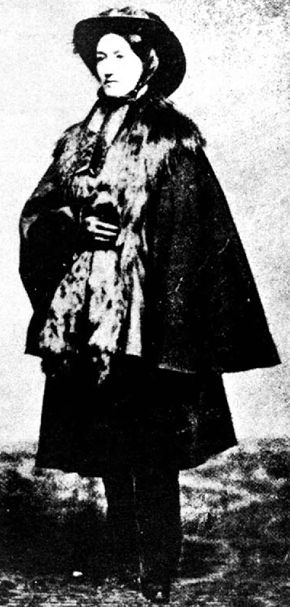
Despite the advantages of comfort and mobility it gave its wearers, the Bloomer and its variations met with universal ridicule and abuse. A hostile press characterized Bloomerites as "strong minded" and associated them with "free love" and "easy divorce." On one occasion Ellen Beard Harman, Trall's associate, was even arrested for wearing pants on the streets of New York City. To avoid such unpleasantries, both Libby Miller and Elizabeth Stanton experimented with skirts at various lengths below the knee, and Mrs. Stanton once went so far as to discard the controversial trousers. This latter act elicited a strong rebuke from Susan Anthony, who feared that it would "only be said the Bloomers have doffed their Pants the better to display their legs." Discouraged, the feminists one by one abandoned their reform. "We put the dress on for greater freedom," explained Mrs. Stanton, "but what is physical freedom compared with mental bondage?" By the 1860s the costume was no longer capturing headlines, but its influence could still be seen among hard-working housewives in the West and at places like Our Home on the Hillside, the Dansville water cure twice visited by Ellen White.6
Since her girlhood days Ellen had been a plain dresser — no bows, no ribbons, no rings. Among the strict Christians with whom she associated, outward adornment was not only a sure sign of a corrupt heart but a sinful waste of means as well. Thus for her, modesty in dress was not originally a matter of health but of religion. When she damned the "disgusting" hoop skirt in the early 1860s, her reason for doing so was that God would have a "peculiar" people. It was not until after her 1863 vision that she began associating the subject of dress with health.7
God Doesn't Want a Reform Dress
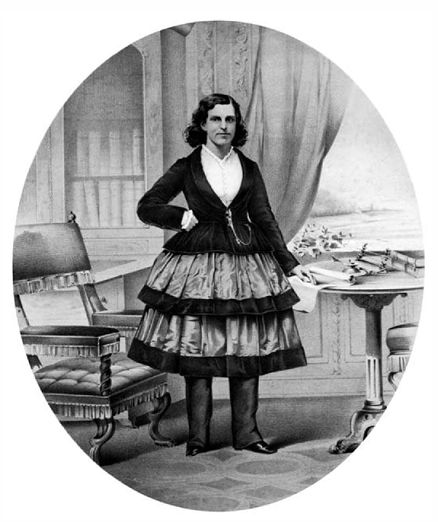
The question of whether Adventists should embrace the reform dress arose as soon as Ellen White began preaching her health message in 1863. No doubt inspired by the divine call for reform, a few Adventist sisters pressed for the immediate adoption of the American costume. But Mrs. White would have none of it. "God would not have his people adopt the so-called reform dress," she stated unequivocally in Testimony No. 10. "Those who feel called out to join the movement in favor of women's rights and the so-called dress reform, might as well sever all connection with the third angel's message." In her recent vision God had shown her that the American costume specifically violated the biblical injunction in Deuteronomy 22:5 against women wearing "that which pertaineth unto a man." Besides being mannish, the outfit induced "a spirit of levity and boldness" unbefitting a Christian.8
There was also a more personal reason for Ellen White's opposition to the American costume: she feared identification with Bloomer-wearing spiritualists. Since the 1848 experiments of Kate and Margaret Fox with the rappings of "Mr. Splitfoot," spirit communication had become an American sensation. Because of Mrs. White's ability to communicate with the supernatural world, early Seventh-day Adventists were often "branded as Spiritualists." Eli Curtis, a Millerite turned spiritualist, had upset the young prophetess by failing to discriminate between her divine revelations and the diabolical work of "the Dixboro Ghost." She was afraid that the adoption of the American costume would only add to such confusion and destroy whatever influence the Adventists had. To avoid this possibility, she recommended that Adventist women simply wear their dresses "so as to clear the filth of the streets an inch or two." In this way they would appear neither "odd or singular."9
Within a year or so of writing these words Ellen White paid her first visit to Dansville and began having second thoughts about the reform dress. Up close it did not appear nearly as inappropriate as she had imagined. Harriet Austin's masculine appearance repulsed her; but, she wrote friends, some of the dresses were "very becoming, if not so short." Using patterns from Dansville, she planned to devise a dress "from four to six inches shorter than now worn" that would "accord perfectly" with what she had seen in vision. Of necessity it would have to be distinct from the previously condemned American costume. "We shall imitate or follow no fashion we have ever yet seen," she promised. "We shall institute a fashion which will be both economical and healthy."10
Maybe God Does Want a Reform Dress
In the last of her How to Live pamphlets, probably completed soon after returning from Our Home, Ellen White provided the first public indication of her weakening opposition to the reform dress. Addressing her sisters in the church, she made her case for joining the dress reformers. "Christians should not take pains to make themselves gazing-stocks by dressing differently from the world," she told them. "But if in accordance with their faith and duty in respect to their dressing modestly and healthfully, they find themselves out of fashion, they should not change their dress in order to be like the world." The pressing issue was what course to take, for the extremely short skirts of some reformers seemed scarcely less objectionable than the notorious whalebones and heavy dresses of fashionable ladies. Her solution was to lengthen the skirt of the American costume. "The dress should reach somewhat below the top of the boot; but should be short enough to clear the filth of the sidewalk and street, without being raised by the hand." No specific length was given, but alert readers were not slow in pointing out that "the top of the boot" was a good deal higher than "an inch or two" from the street.11
Verbally accepting the reform dress was one thing; actually putting it on was something else again. Month after month Ellen postponed the dreadful moment, praying for the perfect occasion. Her opportunity came in September, 1865, when she accompanied her ailing husband for a second visit to Our Home. There, mingling with others in short skirts and pants, she would not attract any undesirable attention. During the stopover in Rochester, shortly before arriving in Dansville, she put the finishing touches on her new wardrobe. Anxious not to appear singular in any way, she wrote home asking her children to send a dozen steel-rimmed buttons. "I need them up and down my short dress," she explained. "That is the way they all have them." Presumably her Dansville debut took place without incident; yet for over a year she remained self-conscious whenever appearing in the eye-catching garb. Under no circumstances would she wear it "at meetings, in the crowded streets of villages and cities, and when visiting distant relatives."12
Mrs. White no doubt would have pursued this halfhearted course indefinitely had not the eruption of an internecine conflict forced her hand. The controversy broke out when physicians at the newly opened Western Health Reform Institute, acting in harmony with the counsel in How to Live, urged incoming patients to dress in the manner revealed by God. This policy, identifying Adventism with the disreputable short skirt, aroused the ire of some Battle Creek brethren and their fashion-conscious wives. Had not Mrs. White in Testimony No. 10 pointedly condemned the reform dress? they asked. As the debate heated, it became clear that the authority of Ellen White's visions was at stake. Openly siding with the physicians, she lamented that among her critics, whom she characterized as possessing "a strange spirit of blind and bitter opposition," were "some who professed to be among the firmest friends of the testimonies." When news of the dissension spread beyond the confines of Battle Creek in the fall and winter of 1866, a flood of letters descended on Ellen White, demanding an explanation of the apparent contradiction between Testimony No. 10 and How to Live. Which instruction was the church to follow: the 1863 admonition not to adopt the reform dress, or the later advice to wear a lengthened American costume?13
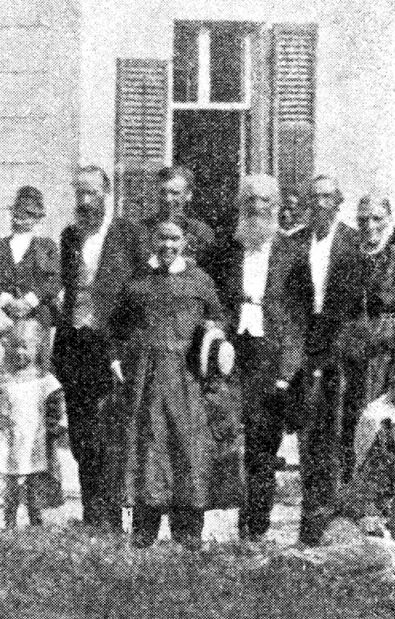
Deserted by friends and besieged by enemies, Mrs. White in late December withdrew with her ailing husband to the less hostile territory of northern Michigan. Here in the small town of Wright they remained six weeks attempting to recoup their lost health and influence. At first even the Adventists in Wright suspected there "was not full harmony in Mrs. White's testimony, especially on dress." But, reported James, "as she was present to speak for herself she was able to show a perfect harmony in her testimonies, and the church seems to be thoroughly aroused and prepared to receive the truth [on dress reform]." Her first two weekends in Wright Ellen cautiously kept on her "long dress" while she explained the benefits of the short skirt and pants. Then, after all prejudice had disappeared, she slipped into her reform dress. The response from the sisters was heartening, and for several years thereafter she consistently wore the divisive short skirt.14
During her sojourn at Wright, Ellen White wrote out a new testimony (No. 11), which she hoped would set the record straight and end the unpleasant controversy that had engulfed her. Petulantly she attributed the confusion surrounding her views on dress to "those who do not wish to believe what I have written" and thus fail to see the accord between Testimony No. 10 and How to Live. "I must contend," she wrote, "that I am the best judge of the things which have been presented before me in vision; and none need fear that I shall by my life contradict my own testimony, or that I shall fail to notice any real contradiction in the views given me." Her two statements on dress could not possibly disagree, she asserted, for they were both based on the same vision. Therefore, "if there is any difference, it is simply in the form of expression." Her allusion to "the top of the boot" seemed to be the most troublesome. But since she had obviously been referring to those commonly worn by women — not men's high-topped boots — she professed to see no basis for misunderstanding.15
Elsewhere, she recalled in detail what she had seen four years earlier on the evening of June 5:
... three companies of females passed before me, with their dresses as follows with respect to length:
The first were of fashionable length, burdening the limbs, impeding the step, and sweeping the street and gathering its filth; the evil results of which I have fully stated. This class who were slaves to fashion, appeared feeble and languid.
The dress of the second class which passed before me was in many respects as it should be. The limbs were well clad. They were free from the burdens which the tyrant, Fashion, had imposed upon the first class; but had gone to the extreme in the short dress as to disgust and prejudice good people, and destroy in a great measure their own influence. This is the style and influence of the "American Costume," taught and worn by many at "Our Home," Dansville, N.Y. It does not reach to the knee. I need not say that this style of dress was shown to me to be too short.
A third class passed before me with cheerful countenances, and free, elastic step. Their dress was the length I have described as proper, modest and healthful. It cleared the filth of the street and side-walk a few inches under all circumstances, such as ascending and descending steps, &c.
Since she had not seen a lady's boot, and since the angel with her had not quoted a particular length, she went on, "I was left to describe the length of the proper dress in my own language the best I could, which I have done by stating that the bottom of the dress should reach near the top of a lady's boot, which would be necessary in order to clear the filth of the streets under the circumstances before named."16
Essential to Ellen White's defense was the alleged shortness of the American costume. Having previously denounced it as displeasing to God, she now found it desirable to put as much distance as possible between her own design and that associated with Dansville. To get this message across, she insisted that the American costume did "not reach to the knee," that it fell "about half-way from the hip to the knee," or that Dr. Harriet Austin wore her skirts about "six inches" above the knee. In contrast, her own dresses cleared the floor by only about nine inches and thus clearly represented a distinct style.17
There is evidence, however, that her zeal to appear independent of any Dansville influence led her to exaggerate the differences between Dr. Austin and herself. In her writings on dress reform Dansville's lady physician consistently advocated wearing the skirt of the American costume "a little below the knee" — not six inches above — and contemporary photographs show that this is in fact the length she wore her dresses (see photo, p. 189). Her friend Charlotte A. Joy, first president of the National Dress Reform Association, likewise advised wearing the skirt "just below the knee." When asked once about the accuracy of the Whites' description of her dress, Dr. Austin replied that "it was not the first time she had heard of Eld. White and wife making misstatements about her dress, but that she had always worn, and in her descriptions and advice to others had recommended a dress which covers the knee in walking, and which reaches six or eight inches below the knee in sitting; and that neither Eld. nor Mrs. White ever saw her in a dress which in standing or walking did not cover the bend of the knee." Some years after the controversy over his wife's testimonies had simmered down, James White, in a moment of candor, granted that Ellen's vaunted innovation had consisted principally of lowering the skirt of the American costume a few inches: "The style of dress introduced by Mrs. W. and adopted by our sisters, with very few exceptions, is about the same as the American Costume of Our Home, with this difference, the skirt of the American Costume reaches hardly to the bend of the knee, while that introduced by Mrs. W., reaches within nine or ten inches of the floor."18
God Now Wants a Reform Dress
Following the publication of Testimony No. 11 early in 1867, Ellen White devoted considerable energy to establishing uniformity in dress among Adventist women. Since her 1863 warning that "God would not have his people adopt the so-called reform dress," her views had changed significantly. It was currently her opinion that "God would now have his people adopt the reform dress," but not the "deformed" outfits some of the sisters were putting on in the name of reform. Above all, a standard length needed to be set. "I would earnestly recommend uniformity in length," she wrote in Testimony No. 12 (1867), "and would say that nine inches as nearly accords with my views of the matter as I am able to express it in inches." Only a few months earlier, while still in northern Michigan, she had finally settled on that figure. When the question of a proper length had arisen, someone had brought out a ruler, measured a number of reform dresses, and simply taken the average. "Having seen the rule applied to the distance from the floor of several dresses, and having become fully satisfied that nine inches comes the nearest to the samples shown me," she explained, "I have given this number of inches in No. 12, as the proper length in regard to which uniformity is very desirable." Why the dress had seemed to be only "an inch or two" from the street immediately following her 1863 vision, she did not explain, except to say that "the length was not given me in inches."19
To assist the sisters in dressing alike, Ellen White began peddling approved patterns as she traveled from church to church. Those unable to make the purchase directly could order them through the mail, as suggested in the following advertisement for "Reformed Dress Patterns" appended to the back of one of her Testimony pamphlets:
I will furnish patterns of the pants and sack, to all who wish them; free to those not able to pay; to others for not less than 25 cents a set. The paper costs me 6 cents a pattern. Address me at Greenville, Montcalm Co., Mich. I shall take them with me wherever I travel, until all are supplied.
Assisting — or competing with — her in the pattern business was Dr. Phoebe Lamson of the Western Health Reform Institute, who advertised her design in the Health Reformer at fifty cents a set.20
As an additional means of bringing about the desired uniformity, Mrs. White prepared a small tract listing the dos and don'ts of dress reform. Gracing the front page was an engraving of a model sister neatly attired in her short skirt and pants. Just because a skirt fell eight or nine inches from the floor did not mean it was a reform dress, Ellen wrote. To qualify fully, it should "be cut by an approved pattern" and meet certain other criteria. Bright, figured materials, reflecting "vanity and shallow pride," were to be shunned. Mixed colors, "such as white sleeves and pants with a dark dress," were likewise in bad taste. As for accessories, hats and caps were to be preferred over shawls and bonnets. The high point of Ellen White's short-skirt crusade came in 1869 when the General Conference at its annual session officially endorsed the dress standards laid down in this little tract.21
Despite the nominal backing of the church leadership and her own tireless efforts on its behalf, the reform dress — or "woman-disfigurer," as her niece called it — never won the affection of the rank and file. Some of the Adventist brothers did seem to like it on their wives and daughters, but the women who had to wear it found the experience truly humbling. "The world is cold and distant," wrote one discouraged sister; "my neighbors seem to me sometimes to be afraid of me. (My husband says it is because I wear the short dress).... I cannot mingle with them in their social parties.... My folks do not like to have me go out much. They feel ashamed of my dress. What shall I do?"22
In 1873 Ellen White complained bitterly that, notwithstanding her many testimonies, the dress reform continued to be "treated by some with great indifference, and by others with contempt." The pants, especially, were a source of great embarrassment, even for those who generally favored the short skirt. But Mrs. White never quite understood this attitude. How, she wondered, could one who did not even blush at the "immodest exposure" of a lady's naked ankle honestly profess shock at the sight of "limbs thoroughly dressed with warm pants"?23
Other factors also contributed to the growing (or continuing) unpopularity of the short skirt and pants. Fanatical "extremists," for whom "this reform seemed to constitute the sum and substance of their religion," brought disrepute upon themselves and the dress by constantly pressing the issue on their less-reform-minded sisters. Lovers of the world tried to lighten "the cross" by adding superfluous trimmings or by deviating in other ways from the approved pattern. Then, with Dr. Kellogg's rise to power, the medical work passed into the hands of one who had never felt anything but chagrin at seeing the reform dress. Finally, even Ellen White, who regarded dress as a "minor" part of health reform, grew weary of the incessant bickering and longed for peace at almost any price. "Perhaps no question has ever come up among us," she noted ironically, "which has caused such development of character as has dress reform."24
God No Longer Wants a Reform Dress
January 3, 1875, effectively marked the end of Ellen White's ten-year struggle to impose radical dress reform upon the Adventist church. On that date God mercifully removed her burden to continue wearing and promoting the short skirt and pants. In vision she saw that the dress reform had become "an injury to the cause of truth." Rather than a blessing, it "had been made a reproach, and, in some cases, even a disgrace." The testimony calling for its adoption was now "to become silent." Journeying to California, Mrs. White discreetly left her pants behind. The ordeal was over.25
Freed at last from the much-despised reform costume, Adventist sisters returned to wearing apparel of their own design. But it was not long before evidences of "pride in dress" reappeared, making it necessary for Ellen White once again to lay down rigid dress standards. This time she offered a "less objectionable style":
It is free from needless trimmings, free from the looped-up, tied-back over-skirts. It consists of a plain sacque or loose-fitting basque, and skirt, the latter short enough to avoid the mud and filth of the streets. The material should be free from large plaids and figures, and plain in color.
"Will my sisters accept this style of dress, and refuse to imitate the fashions that are devised by Satan, and continually changing?" she inquired pleadingly. She was no longer in a mood for compromise. "All exhibitions of pride in dress," she declared, should lead to disciplinary action by the church, for continuing manifestations of such pride constituted prima facie evidence of an unconverted heart.26
Late in the century, when certain members tried to reintroduce the long-discarded reform dress, Ellen White wanted nothing to do with it. The Lord was not in the movement, she said. The controversies of the past were to be left behind. No "singular forms of dress" were to embarrass God's cause. "[D]o not again introduce the short dress and pants," she admonished one correspondent, "unless you have the word of the Lord for it." By now the fires of reform that had once burned so brightly within her were slowly flickering out. There would be no more patterns, no more hard-and-fast rules. Mellowed by age and experience, she advised simply to let the "sisters dress plainly, as many do, having the dress of good material, durable, modest, appropriate for this age, and let not the dress question fill the mind."27
Although the short skirt and pants attracted by far the most attention, dress reform for Ellen White "comprised more than shortening the dress and clothing the limbs. It included every article of dress upon the person." Through the years she offered her sage advice on every conceivable item. "Superfluous tucks, ruffles, and ornaments of any kind," for example, were positive indications "of a weak head and a proud heart." Cosmetics injured health and endangered life itself. Breast-paddings inhibited natural growth and dried up the supply of milk in the breasts. Once she served on a committee to select "a proper style and manufacture of hats," an appropriate assignment in view of her childhood labor as a hatmaker.28
Hair
Hair styles — both men's and women's — were a favorite subject of health reformers. Ellen White herself said little or nothing about the wearing of beards, but presumably she supported the action of the General Conference in 1866 condemning brethren for shaving and coloring their beards and for wearing only mustaches and goatees, which betokened "the air of the fop." A man's face was to appear either clean shaven or with full beard, "as nature designed it." As the Health Reformer pointed out, a man's facial hair did more than merely improve his personal appearance. "The hair of the moustache not only absorbs the moisture and the miasma of fogs, but it strains the air from dust and the soot of our great smoky cities." Similarly, the beard served as a "respirator" and a "comforter," protecting the neck against heat and cold.29
Mrs. White's general silence on male beards was more than offset by her outspoken criticism of the wigs and hair-pieces commonly worn by women. The artificial chignons and braids then so popular were particularly distasteful to her. The chignon or "waterfall" could be formed naturally by attaching a horsehair frame to the back of the head with an elastic band, brushing the hair down over it, and tucking the ends up underneath. But much time could be saved by simply purchasing one ready-made and securing it in place with hairpins. Braids, pinned up over the back of the head, were another favorite of the 1860s and could also be bought as hairpieces.30
These "monstrosities" were known to be an excellent breeding ground for "pestiferous vermin," but Ellen White saw even more terrible consequences — "horrible disease and premature death" — resulting from wearing these contrivances. Addressing "Christian Mothers" in the Health Reformer, she described the dire physiological effects:
The artificial hair and pads covering the base of the brain, heat and excite the spinal nerves centering in the brain. The head should ever be kept cool. The heat caused by these artificials induces the blood to the brain. The action of the blood upon the lower or animal organs of the brain, causes unnatural activity, tends to recklessness in morals, and the mind and heart is in danger of being corrupted. As the animal organs are excited and strengthened, the morals are enfeebled. The moral and intellectual powers of the mind become servants to the animal.
In consequence of the brain being congested its nerves lose their healthy action, and take on morbid conditions, making it almost impossible to arouse the moral sensibilities. Such lose their power to discern sacred things. The unnatural heat caused by these artificial deformities about the head, induces the blood to the brain, producing congestion, and causing the natural hair to fall off, producing baldness. Thus the natural is sacrificed to the artificial.
Many have lost their reason, and become hopelessly insane, by following this deforming fashion.31
Mrs. White's fears in this instance were based upon her understanding of the so-called science of phrenology, widely current among health reformers. According to phrenological theory (discussed in Chapter 3), the animal organs of the brain were located in the back and lower part of the head, while the organs of intellect and sentiment occupied the frontal region. Heating the back of the head thus stimulated the sexual passions — "amativeness," the phrenologist would say — and depressed the spiritual sentiments.
Her flirtation with phrenology seems to have begun during that first, critical visit to Dansville in 1864 when she took her two sons to Dr. Jackson for head readings and physical examinations. Only two years earlier she had denounced phrenology, along with psychology and mesmerism, as a tool of Satan. Although "good in their place," these sciences became in Satan's hands "his most powerful agents to deceive and destroy souls." In the years following her contacts with Dansville, however, phrenological allusions began appearing frequently in her writings. During her husband's extended illness, for instance, she complained that his "large and active" bumps of "cautiousness, conscientiousness, and benevolence," all assets in time of health, were in sickness "painfully excitable, and a hindrance to his recovery." And in an 1869 testimony regarding a brother's inordinate love of money, she attributed his problem to satanic excitation of "his organ of acquisitiveness."32
Ellen White's proclivity for phrenology was, of course, not atypical, especially for a health reformer. As one author has recently noted, the science had, "by the mid-1860's, filtered deeply into the common life of the country." Even among Adventists, it commanded widespread respect. Such prominent figures as William Miller and George I. Butler, twice president of the General Conference, unashamedly submitted to head readings, and the editors of the Health Reformer openly admired the work of the American Phrenological Journal. Mrs. White herself was reported to be "a woman of singularly well-balanced mental organization," notable for her traits of benevolence, spirituality, conscientiousness, and ideality.33
Phrenological theory also helps in understanding her sweeping statements on prenatal influences. It was her firm conviction — based on two divinely sent messages — that parents transmitted to their children not only physical characteristics but intellectual and spiritual ones as well. If they were selfish and intemperate, their children would likely tend toward selfishness and intemperance; while if they were loving and kind, these traits would be reflected in their offspring. Such notions, commonly found in the writings of health reformers, had long been a part of folklore, but nineteenth-century phrenology gave them a respectable scientific basis. The argument went this way: mental traits correspond with the physical organs of the brain; physical characteristics are known to be inheritable; therefore, mental traits can be passed from one generation to the next. Thus, in terms of both science and revelation, Mrs. White's statements made considerable sense to her contemporaries.34
Masturbation
Ellen White followed another well-marked trail when she ventured into the potentially hazardous field of sex. From the appearance of Sylvester Graham's Lecture to Young Men on Chastity in 1834 this subject had played an integral and highly visible role in health-reform literature. Alcott, Coles, Trall, and Jackson, among others, had all spoken out on the dangers of what they regarded as excessive or abnormal sexual activities, particularly masturbation, which was thought to cause a frightening array of pathological conditions ranging from dyspepsia and consumption to insanity and loss of spirituality. By carefully couching their appeal in humanitarian terms, they had largely avoided offending the sensibilities of a prudish public. Theirs was a genuinely moral crusade against what Jackson called "the great, crying sin of our time."35
Given this background, and the knowledge that she possessed both Trall's and Jackson's books on sex by late 1863, it is not surprising that Ellen White's very first book on health was a little volume entitled An Appeal to Mothers: The Great Cause of the Physical, Mental, and Moral Ruin of Many of the Children of Our Time (1864). As customary in such works, she began by emphasizing her strictly humanitarian and spiritual concern "for those children and youth who by solitary vice [masturbation] are ruining themselves for this world, and for that which is to come." Her explanation for writing on this delicate subject was a recent vision, apparently the one on June 5, 1863, in which her angel guide had directed her attention to the present corrupt state of the world. "Everywhere I looked," she recalled with obvious horror, "I saw imbecility, dwarfed forms, crippled limbs, misshapen heads, and deformity of every description." Sickened by the sight before her, she learned that it had resulted from the practice of solitary vice, so widespread that "a large share of the youth now living are worthless." And many adults, she might have added, for she was also shown a pitiful Adventist brother of her acquaintance who had been brought near death by this mind- and body-destroying habit.36
To assist parents in detecting the presence of this vile practice, she offered a list of potentially incriminating symptoms: absentmindedness... irritable disposition... forgetfulness... disobedience... ingratitude... impatience... disrespect for parental authority... lack of frankness... a strong desire to be with the opposite sex... a diminished interest in spiritual things. She also warned of dire physical consequences, calculated to strike fear in the most hardened of hearts. Continued masturbation, she warned, produced not only hereditary insanity and deformities, but a host of diseases, including "affection of the liver and lungs, neuralgia, rheumatism, affection of the spine, diseased kidneys, and cancerous humors." Not infrequently, it led its victims "into an early grave."37
She went on to offer a number of tips on combatting this terrible curse. Speaking as a parent, she wrote that it was vitally important to "teach our children self-control from their very infancy, and learn them the lesson of submitting their wills to us." Special care should be taken to protect the young from the contaminating influence of other children. In recent years she had come to view her crippling childhood accident as a blessing in disguise that had preserved her in pristine innocence. According to her account, she had grown up in "blissful ignorance of the secret vices of the young" and had learned about them only after marriage from "the private death-bed confessions of some females." To maintain the purity of her own offspring, she had never permitted them to associate with "rough, rude boys" or to sleep in the same bed or room with others their age. Her letters confirm that she did in fact keep a tight rein on their activities. In one note to sixteen-year-old Edson she forbade him from associating with a young Adventist friend suspected of keeping "dissolute company" and reprimanded him for going out riding with a girlfriend. "[Y]ou are well aware that we would not approve of your showing partiality or attention to any young miss at your age," she advised. "When you are old enough to begin to manifest a preference for any particular one we are the ones to be consulted and to choose for you."38
Like Graham before her, Ellen White regarded a bland diet as one of the best means of curbing the urge to masturbate. All stimulating substances like "Mince pies, cakes, preserves, and highly-seasoned meats, with gravies" were proscribed since they created "a feverish condition in the system, and inflame[d] the animal passions." In addition to watching their children's diets, parents were to be constantly on the lookout for overt signs of self-abuse. If apprehended in the act, the children were to be told "that indulgence in this sin will destroy self-respect, and nobleness of character; will ruin health and morals, and its foul stain will blot from the soul true love for God, and the beauty of holiness."39
Appended to Mrs. White's appeal was an anonymous twenty-nine page essay on "Chastity" citing persons "of high standing and authority in the medical world" who agreed with the prophetess. Among those quoted were many stalwarts of the reform movement: Sylvester Graham, L. B. Coles, James C. Jackson, Mary Gove Nichols, the phrenologist O. S. Fowler, and for good measure — Dr. Samuel B. Woodward, superintendent of the Massachusetts Lunatic Hospital. So closely did the views of these individuals parallel those of Ellen White, the publishers felt it necessary to add a note denying prior knowledge on her part. Taking her word at face value, they asserted that "she had read nothing from the authors here quoted, and had read no other works on this subject, previous to putting into our hands what she has written. She is not, therefore, a copyist, although she has stated important truths to which men who are entitled to our highest confidence, have borne testimony."40
Ellen White's sexual attitudes, as even her publishers recognized, were far from unique. In fact, they rested squarely on the popular vitalistic physiology of Broussais that Sylvester Graham had been preaching since the early 1830s. Puzzled by the organic processes that sustained life, the vitalists had invented a mysterious "vital force" (or energy) that supposedly interacted with inanimate matter to produce the vital functions of the body. According to Elder John Loughborough's necessarily vague definition, vital force was simply "that power placed in the human body, at its birth, which will enable the body, under favorable circumstances, to live to a certain age." Since the initial endowment was limited, and since each sexual act used up an irreplenishable amount, it behooved those who coveted a long life to keep their sexual activities to a minimum.41
To illustrate the concept of vital force, nineteenth-century authors frequently compared it to capital in a bank account, gradually depleted over the years by repeated withdrawals. Again Mrs. White was no exception. As she saw it, God had made the original deposit by granting each individual, according to sex, "a certain amount of vital force." (For some inscrutable reason he had been more generous with men than women.) Those who carefully budgeted their resources lived a normal lifetime, but those who by their intemperate acts used "borrowed capital," prematurely exhausted their account and met an early death. In her Appeal to Mothers she explained how continued self-abuse wasted "vital capital" and shortened life:
The practice of secret habits surely destroys the vital forces of the system. All unnecessary vital action will be followed by corresponding depression. Among the young, the vital capital, the brain, is so severely taxed at an early age, that there is a deficiency, and great exhaustion, which leaves the system exposed to diseases of various kinds. But the most common of these is consumption. None can live when their vital energies are used up. They must die.42
Although Ellen White could have acquired her knowledge of vitalism from any number of sources, a close examination of her writings reveals that she was particularly indebted to Horace Mann and L. B. Coles, whose works she had read no later than 1865.43 Often she appropriated passages from them with only cosmetic changes, as the following parallel readings show:
| Elena G. de White | Horace Mann |
|---|---|
|
Man came from the hand of God perfect in every faculty of mind and body; in perfect soundness, therefore in perfect health. It took more than two thousand years of indulgence of appetite and lustful passions to create such a state of things in the human organism as would lessen vital force.44 |
Man came from the hand of God so perfect in his bodily organs... so surcharged with vital force, that it took more than two thousand years of the combined abominations of appetite and ignorance... to drain off his electric energies and make him even accessible to disease.45 |
|
If Adam, at his creation, had not been endowed with twenty times as much vital force as men now have, the race, with their present habits of living in violation of natural law, would have become extinct.46 |
... if the race had not been created with ten times more vital force than it now possesses, its known violations of all the laws of health and life would, long ere this, have extinguished it altogether.47 |
Her curious doubling of Adam's vital force no doubt stemmed from her reading of biblical history, which has early man living approximately twenty times longer than modern man.
Her reliance on Coles is evident in her discussion of a corollary to the doctrine of vitalism: the electrical transmission of vital force through the nervous system. In his Philosophy of Health Coles had shown how the nerves, branching out from the brain, acted "like so many telegraphic wires" carrying the electrical current to the various parts of the body. Ellen White not only employed the same simile, but followed the Millerite physician in positing an intimate electrical relationship between mind and body.48
| Elena G. de White | L.B. Coles |
|---|---|
|
The sympathy which exists between the mind and the body is very great. When one is affected, the other responds.49 |
The sympathy existing between the mind and the body is so great, that when one is affected, both are affected.50 |
On the basis of the reciprocal arrangement, she concluded that nine-tenths of all diseases originated in the mind.51
She also adopted Coles's electrical explanation of why masturbation deadened a person's spiritual sensibilities. In the Philosophy of Health he had argued that since God's only means of communicating with man was through the nervous system, any unnatural burden upon that system impeded the flow of divinely sent messages. Ellen White liked the idea so much that she worked it into an 1869 testimony on "Moral Pollution," but neglected, as she so often did, to cite her earthly source.
| Elena G. de White | L.B. Coles |
|---|---|
|
The brain nerves which communicate with the entire system are the only medium through which Heaven can communicate to man, and affect his inmost life. Whatever disturbs the circulation of the electric currents in the nervous system, lessens the strength of the vital powers, and the result is a deadening of the sensibilities of the mind.52 |
Whatever mars the healthy circulation of the electric currents in the nervous system, lessens the strength of the vital forces; and, through them, deadens the native susceptibilities of the soul. The nervous system is the only medium through which truth can reach Interior man. Divinity himself uses no other medium through which to reach the human heart.53 |
On October 2, 1868, five years after her first view of the world's corrupt state, Ellen White had a second major vision on sex, which left her confidence in humanity "terribly shaken." As the sordid lives of "God's professed people" passed before her, she became "sick and disgusted with the rotten-heartedness" of the church. Reputable brethren were shown leaving the "most solemn, impressive discourses upon the judgment" and returning to their rooms to engage "in their favorite, bewitching, sin, polluting their own bodies." Adventist children were pictured "as corrupt as hell itself." Speaking to the Battle Creek church in March, 1869, she reported that "Right here in this church, corruption is teeming on every hand." Privately, she estimated "that there is not one girl out of one hundred who is pure minded, and there is not one boy out of one hundred whose morals are untainted." So nearly universal seemed the practice of masturbation, she grew suspicious of almost everyone and even began refusing requests for prayers of healing for fear she might be asking the Lord's blessing upon a self abuser.54
In addition to the many who were abusing themselves there were others she learned who were abusing their spouses. In her second How to Live pamphlet she had urged couples to consider carefully the result of every privilege the marriage relation grants — but until 1868 the brunt of her sexual advice had been directed to masturbators. Now, however — she warned that even married persons were accountable to God "for the expenditure of vital energy which weakens their hold on life and enervates the entire system." In phrenological language she counseled Christian wives not to "gratify the animal propensities" of their husbands but to seek instead to divert their minds "from the gratification of lustful passions to high and spiritual themes by dwelling upon interesting spiritual subjects." Husbands who desired "excessive" sex she regarded as "worse than brutes" and "demons in human form." Although she never defined exactly what she meant by excessive — it seems likely — since she generally agreed with earlier health reformers in such matters — that she would have frowned on having intercourse more frequently than once a month. That was the maximum Sylvester Graham had condoned, and his disciple O. S. Fowler, who personally favored sex for procreation only, had stated that "to indulge, even in wedlock, as often as the moon quarters, is gradual but effectual destruction of both soul and body."55
The Whites seem to have agreed in principle with the New York phrenologist, for they reprinted this bit of marital advice in an expanded version of Appeal to Mothers, published in 1870 under the revealing title of Solemn Appeal Relative to Solitary Vice, and the Abuses and Excesses of the Marriage Relation. In addition to Fowler's essay and the material from the original edition, Solemn Appeal contained an account of how sexual disorders were treated at the Western Health Reform Institute, an article by a Dr. E. P. Miller on "The Cause of Exhausted Vitality," the complete second chapter of Ellen's "Disease and Its Causes" from How to Live, and several selections from testimonies based on the 1868 vision with all references to their supernatural origin carefully edited out for non-Adventist consumption.56
Although Mrs. White never wrote specifically on contraception and family planning, her restrictions on the frequency of sexual intercourse no doubt served as a brake on unwanted pregnancies among Adventists, who had few other options. According to one 1865 manual, there were four known ways "to prevent child-getting": (1) withdrawing "the male organ just before the discharge of Semen takes place," (2) using a douche of cold water or white vitriol (zinc sulfate) immediately after coition, (3) inserting a walnut-sized sponge soaked in a weak solution of sulphate of iron and attached to a fine silk string, or (4) covering the penis with a sheath of India-rubber. Given these choices, and their respective liabilities, many families may have considered monthly intercourse an expedient and satisfactory policy.57
Following the spate of sex-oriented testimonies in 1869 and 1870, some of which she published with the guilty identified by name, Ellen White wrote surprisingly little on the subject for the rest of her life. Her volume on Christian Temperance, compiled in 1890 largely from her previously published writings, did include a chapter on "Social Purity," but the familiar topics of masturbation and marital excess were notably absent from The Ministry of Healing (1905), her last major work on health. In the meantime, Dr. John Harvey Kellogg kept Adventists sexually informed with his best-selling editions of Plain Facts about Sexual Life, a somewhat sadistic manual originally written in fourteen days that recommended such measures as frequent nighttime raids and circumcision without anesthesia to put an end to masturbation.58
Throughout her long life Ellen White remained generally antipathetic toward sex, though unlike Ann Lee and Jemima Wilkinson she always stopped short of advocating celibacy. In her waning years she looked forward expectantly to an idyllic existence in the new earth free from such unpleasant activities. When some members inquired in 1904 if there would be any children born in the next life, she replied sharply that Satan had inspired the question. It was he, she said, who was leading "the imagination of Jehovah's watchmen to dwell upon the possibilities of association, in the world to come, with women whom they love, and of their raising families." As for herself, she needed no such prospects.59
Footnotes
- EGW, "The Cause in the East," Testimonies, I, 421.
- EGW, "The Reform Dress," ibid., I, 525. Ellen White was referring here to her own reform dress as opposed to the "so-called reform dress" of Harriet Austin and others.
- Andrew Sinclair, The Emancipation of the American Woman (New York: Harper and Row, 1966), pp. 102-4; Elizabeth McClellan, History of American Costume: 1607-1870 (New York: Tudor Publishing Co., 1969), p. 466.
- Sinclair, Emancipation of the American Woman, p. 105; Elizabeth Cady Stanton and Others, History of Woman Suffrage (New York: Fowler & Wells, 1881), I, 127-28, 544; Alma Lutz, Created Equal: A Biography of Elizabeth Cady Stanton, 1815-1902 (New York: John Day Co., 1940), pp. 63-64. Elizabeth Smith Miller's own account of the origin of the "Bloomer" appears in Aileen S. Kraditor (ed.), Up from the Pedestal: Selected Writings in the History of American Feminism (Chicago: Quadrangle Books, 1968), pp. 123-24.
- James C. Jackson, How to Treat the Sick without Medicine (Dansville, N.Y.: Austin, Jackson & Co., 1872), pp. 66-67. On the American costume, see also William D. Conklin, The Jackson Health Resort (Dansville, N.Y.: Privately distributed by the author, 1971), pp. 137, 191-93. On the distinction between the Bloomer and the American costume, see Harriet N. Austin, "Various Things," Laws of Life, IX (August, 1866), 115. In 1852 Mrs. M. Angeline Merritt suggested naming the reform dress "the American dress"; see her Dress Reform, Practically and Physiologically Considered (Buffalo: Jewett, Thomas and Co., 1852), p. 134.
- Stanton and Others, History of Woman Suffrage, I, 470; "Patrick vs. 'The Am. Costume," Herald of Health, V (June, 1865), 155; Kraditor, Up from the Pedestal, p. 124; Lutz, Created Equal, p. 86; Robert E. Riegel, "Women's Clothes and Women's Rights," American Quarterly, XV (Fall, 1963), 394. Susan Anthony is quoted in Sinclair, Emancipation of the American Woman, p. 106. Elizabeth Stanton's comment is found in Eleanor Flexner, Century of Struggle: The Woman's Rights Movement in the United States (New York: Atheneum, 1970), p. 84. On dress reform in the West, see "Dress Reform Pic-Nic," HR, IV (November, 1869), 84; and Mrs. S. W. Dodds, "Dress Reform and Health Reform in Kansas," HR, IV (February, 1870), 157-58.
- EGW, Spiritual Gifts: My Christian Experience, Views and Labors (Battle Creek: James White, 1860), pp. 13-14; EGW, "A Question Answered," Testimonies, I, 251-52; EGW to Mary Loughborough, June 6, 1861 (L-5-1861, White Estate). Mrs. White shortly thereafter condemned the view that "oddity and carelessness in dress" were virtuous; EGW, "Power of Example," Testimonies, I, 275.
- EGW, "The Cause in the East," pp. 420-21; EGW, "Extremes in Dress," Testimonies, I, 424-25. Marietta V. Cook was wearing and promoting the American costume by early 1863; see "A Good Beginning," Laws of Life, VI (March, 1863), 43.
- EGW, "The Cause in the East," p. 421; EGW, "Extremes in Dress," pp. 424-25; EGW, "Eli Curtis," R&H, I (April 7, 1851), 64. On spiritualism in America, see R. Laurence Moore, "Spiritualism and Science: Reflections on the First Decade of the Spirit Rappings," American Quarterly, XXIV (October, 1972), 474-500; and Moore, "Spiritualism," in The Rise of Adventism: Religion and Society in Mid-Nineteenth-Century America, ed. Edwin S. Gaustad (New York: Harper & Row, 1974), pp. 79-103.
- EGW to Bro. and Sister Lockwood, September [14], 1864 (L-6-1864, White Estate). James White expressed serious doubts about the American costume shortly after arriving at Dansville, but by the time he departed he reportedly told his hosts: "If we cannot produce a better style of dress reform than that worn here, you may expect to see my wife dressed in your style." James White to Mrs. Myrta E. Steward, September 6, 1864 (White Estate); H. E. Carver, Mrs. E. G. White's Claims to Divine Inspiration Examined (2nd ed.; Marion, Iowa: Advent and Sabbath Advocate Press, 1877), p. 17.
- EGW, Health; or, How to Live (Battle Creek: SDA Publishing Assn., 1865), No. 6, pp. 57-64. In the fifth pamphlet of the series Ellen had discussed proper clothing for children, largely repeating what Dio Lewis and others had earlier said. How to Live was published in June, 1865.
- EGW to Edson and Willie White, September 18, 1865 (W-5-1865, White Estate); EGW, "Questions and Answers," R&H, XXX (October 8, 1867), 260-61.
- Ibid., p. 261.
- James White, "Report from Bro. White," R&H, XXIX (January 15, 1867), 66-67; EGW, "Questions and Answers," p. 261.
- EGW, "Reform in Dress," Testimonies, I, 456-66.
- EGW, "Questions and Answers," p. 260.
- Ibid.; EGW, "Reform in Dress," p. 465; Carver, Mrs. E. G. White's Claims to Divine Inspiration Examined, p. 15.
- Harriet N. Austin, "Dress Reform," Water-Cure Journal, XIX (April, 1855), 80; Harriet N. Austin, "The Reform Dress," ibid., XXIII (January, 1857), 3; Harriet N. Austin, "What Is the American Costume?" Laws of Life, X (August, 1867), 121; Charlotte A. Joy, "Suggestions to Women Who Are Interested in the Dress Reform," Water-Cure Journal, XXI, (May, 1856), 114; James White, "Health Reform—No. 7: Its Rise and Progress among Seventh-day Adventists," HR, V (May 1871), 253. Harriet Austin's comments on the Whites are based on a letter to H. E. Carver, March 26, 1868; Carver, Mrs. E. G. White's Claims to Divine Inspiration Examined, p. 15.
- EGW, "The Reform Dress," Testimonies, I, 521; EGW, "Questions and Answers," p. 260. For a somewhat different account of how the nine-inch length was selected, see J. H. Waggoner, "The Dress Reform," HR, II (March, 1868), 130.
- EGW, "The Reform Dress," p. 522; EGW, "Reformed Dress Patterns," Testimony for the Church, No. 13 (Battle Creek: SDA Publishing Assn., 1867), p. 79; "Items for the Month," HR, II (February, 1868), 128. The Health Reformer also carried reform patterns for such articles as a "flannel undergarment," a "garment combining chemise and drawers, arranged with buttons so as to support the skirts and stockings from the shoulders," and "dress drawers with leggins." "Dress Reform Patterns," HR, X (July, 1875), 224.
- EGW, The Dress Reform: An Appeal to the People in Its Behalf (Battle Creek: SDA Publishing Assn., 1868), pp. 14-15; "Business Proceedings of the Seventh Annual Session of the General Conference of S. D. Adventists," R&H, XXXIII (May 25, 1869), 173. The Dress Reform was reprinted in HR, III (August, 1868), 21-23, and (September, 1868), 41-43. Mrs. White's pamphlet is very similar in places to M. Angeline Merritt's little book Dress Reform; compare, for example, Ellen White on "the popular style of woman's dress" (pp. 4-5) with Mrs. Merritt's section on the inconvenience of the popular style (pp. 79-86).
- Mary Clough to Lucinda Hall, April 21, 1876, and Mrs. A. L. Cowdrey to Emma [?], 1869 (Lucinda Hall Collection, White Estate). For reactions to the reform dress, see D. M. Canright, "Report from Bro. Canright," R&H, XXX (June 18, 1867), 9; L. L. Howard, "A Good Move," R&H, XXX (August 13, 1867), 141; C. O. Tayler, "The Reform Dress," R&H, XXX (September 3, 1867), 188; L. I. Belnap, "From Sister Belnap," R&H, XXXI (December 31, 1867), 42-43; M. J. Cottrell, "In Answer to Our Prayers," R&H, XXXI (February 25, 1868), 166-67. By the summer of 1872 many Adventist sisters were wearing the reform dress only to church, and support for the costume was rapidly disappearing; Ira Abbey to Lucinda Hall, September 4, 1872 (Lucinda Hall Collection). One church leader somewhat annoyed by the "everlasting Short Dress question" was Elder G. I. Butler; see Butler to James White, July 21, 1868, and an undated letter circa 1872 (White Estate).
- EGW, "The Health Institute," Testimonies, III, 171; EGW, "The Reform Dress," HR, VII (May, 1872), 154-56.
- EGW, "Simplicity in Dress," Testimonies, IV, 636-39; J. H. Kellogg to EGW, September 2 and October 7, 1882 (White Estate); EGW, "Questions and Answers," p. 261. Although the dress embarrassed him, Kellogg did concede that it had merit; see [Kellogg], "Dress Reform: Number Three," HR, XI (March, 1876), 66.
- EGW, "Simplicity in Dress," pp. 637-39; F. E. Belden to E. S. Ballenger, February 13, 1933 (Ballenger-Mote Papers). Belden was Mrs. White's nephew.
- EGW, "Simplicity in Dress," pp. 640-48.
- EGW to J. H. Haughey, July 4, 1897 (H-19-1897, White Estate).
- EGW, "Simplicity in Dress," p. 635; EGW, unpublished MS (MS 106-1901, White Estate); EGW, "Words to Christian Mothers on the Subject of Life, Health, and Happiness—No. 1," HR, VI (September, 1871), 90; EGW, "Words to Christian Mothers on the Subject of Life, Health, and Happiness—No. 2," ibid., VI (October, 1871), 122; J. N. Andrews, "Business Proceedings of the Sixth Annual Session of the General Conference of Seventh-day Adventists," R&H, XXXI (May 26, 1868), 356.
- "Fourth Annual Session of General Conference," R&H, XXVIII (May 22, 1866), 196; "Why We Should Wear Beards," HR, I (January, 1867), 93. At its 1866 session the General Conference approved an amended version of an eleven-point resolution on dress recently adopted by the Battle Creek Church. See "Resolutions on Dress," R&H, XXVII (May 8, 1866), 180.
- EGW, "Words to Christian Mothers on the Subject of Life, Health, and Happiness—No. 2," p. 121; McClellan, History of American Costume, pp. 486, 495.
- James Caleb Jackson, "The Hair," HR, V (May, 1871), 266; EGW, "Words to Christian Mothers on the Subject of Life, Health, and Happiness—No. 2," p. 121. Dr. Jackson's comments apparently inspired Mrs. White's writing on the subject five months later.
- EGW to Bro. and Sister Lockwood, September [14], 1864; EGW, "Philosophy and Vain Deceit," Testimonies, I, 290, 296; EGW, "Our Late Experience," R&H, XXVII (February 27, 1866), 98; EGW, "Warnings to the Church," Testimonies, II, 238. It was not uncommon in the nineteenth century to distinguish between the philosophy of phrenology (thought to be materialistic and infidel) and its scientific content; see John D. Davies, Phrenology, Fad and Science: A 19th-Century American Crusade (New Haven: Yale University Press, 1955), p. 74.
- Madeleine B. Stern, Heads & Headlines: The Phrenological Fowlers (Norman: University of Oklahoma Press, 1971), p. 214; "Phrenological Developments of Mr. Miller," Advent Herald, n.s., I (May 20, 1848), 127; Sylvester Bliss, Memoirs of William Miller (Boston: Joshua V. Himes, 1853), pp. 160-61; G. I. Butler to J. H. Kellogg, January 31, 1904 (Kellogg Collection, MSU); "Items for the Month," HR, I (March, 1867), 128; American Biographical History of Eminent and Self-Made Men... Michigan Volume (Cincinnati: Western Biographical Publishing Co., 1878), Dist. 3, p. 108. Internal evidence suggests that this biographical sketch of Mrs. White was written by her niece, Mary Clough.
- EGW, The Ministry of Healing (Mountain View, Calif.: Pacific Press, 1942; first published in 1905), pp. 371-73; O. S. Fowler, Hereditary Descent: Its Laws and Facts Illustrated and Applied to the Improvement of Mankind (New York: O. S. & L. N. Fowler, 1843), p. 127 et passim. On prenatal influences, see also Sylvester Graham, Lectures on the Science of Human Life (People's ed.; London: Horsell, Aldine, Chambers, 1849), pp. 211-14; and L. B. Coles, Philosophy of Health (rev. ed.; Boston: Ticknor, Reed, & Fields, 1853), p. 161.
- Sylvester Graham, A Lecture to Young Men on Chastity (10th ed.; Boston: Charles H. Peirce, 1848); William A. Alcott, The Physiology of Marriage (Boston: Dinsmoor and Company, 1855); Coles, Philosophy of Health, p. 126 et passim; Russell T. Trall, Pathology of the Reproductive Organs, Embracing All Forms of Sexual Disorders (Boston: B. Leverett Emerson, 1862); James C. Jackson, The Sexual Organism, and Its Healthful Management (Boston: B. Leverett Emerson, 1862), p. 11. On the humanitarian approach to sex, I am following Sidney Ditzion, Marriage, Morals, and Sex in America: A History of Ideas (New York: Bookman Associates, 1953), p. 317. On the development of attitudes toward masturbation, see Stephen W. Nissenbaum, "Careful Love: Sylvester Graham and the Emergence of Victorian Sexual Theory in America, 1830-1840" (Ph.D. diss., University of Wisconsin, 1968); and H. Tristram Engelhardt, Jr., "The Disease of Masturbation: Values and the Concept of Disease," Bulletin of the History of Medicine, XLVIII (Summer, 1974), pp. 234-48. As Vern L. Bullough and Martha Voght have recently pointed out, the term masturbation in the nineteenth century often denoted homosexuality as well; "Homosexuality and Its Confusion with the 'Secret Sin' in Pre-Freudian America," Journal of the History of Medicine and Allied Sciences, XXVIII (April, 1973), 143-55.
- EGW, An Appeal to Mothers (Battle Creek: SDA Publishing Assn., 1864), pp. 17, 24-25.
- Ibid., pp. 6-9, 18.
- Ibid., pp. 10-12; EGW to Edson White, October 19, 1865 (W-7-1865, White Estate). Dr. Jackson also warned of the dangers in letting children sleep together. Jackson, The Sexual Organism, p. 42.
- EGW, An Appeal to Mothers, pp. 13-14, 19-20. See also Graham, A Lecture to Young Men on Chastity, p. 147.
- EGW, An Appeal to Mothers, p. 34. I have been unable to identify the author of the essay on chastity, but it might have been Horace Mann.
- Nissenbaum, "Careful Love," pp. 69-70; Sylvester Graham, Lectures on the Science of Human Life, pp. 155-56; J. H. Loughborough, Hand Book of Health; or, A Brief Treatise on Physiology and Hygiene (Battle Creek: SDA Publishing Assn., 1868), pp. 14-15. On Ellen White's use of vitalism, see Yvonne Tuchalski, "Vital Force as a Significant Factor in Ellen G. White's Health Reform Message" (unpublished paper submitted to the Department of History, Andrews University, August 14, 1970). Ellen White may not actually have read the works of other authors on sex, but she owned their manuals and assimilated their vocabularies; compare, for example, Mrs. White (An Appeal to Mothers, p. 6) with Jackson (The Sexual Organism, p. 69) on the "sieve-like" memories of masturbators.
- EGW, An Appeal to Mothers, pp. 27-28; EGW, Christian Temperance and Bible Hygiene (Battle Creek: Good Health Publishing Co., 1890), pp. 64-65; EGW, Ministry of Healing, pp. 234-35. On the concept of vital force in nineteenth-century American thought, see Nathan C. Hale, Jr., Freud and the Americans: The Beginnings of Psychoanalysis in the United States, 1876-1917 (New York: Oxford University Press, 1971), pp. 34-35.
- How to Live, published in 1865, contains selections taken from both Mann and Coles.
- EGW, "Indulgence of Appetite," Testimonies, IV, 29; first published in 1876.
- Horace Mann, "Dedicatory and Inaugural Address," in Life and Works (Boston: Lee and Shepard Publishers, 1891), V, 335-36. The address was given in 1853.
- EGW, "Proper Education," Testimonies, III, 138-39; first published in 1873.
- Mann, "Dedicatory and Inaugural Address," p. 340. The two parallel readings given are excerpts from much longer passages taken from Mann. Ellen White's reliance on Mann can also be seen in her "Degeneracy-Education," HR, VII (November, 1872), 348; and Christian Temperance, pp. 7-8.
- Coles, Philosophy of Health, pp. 11-13; EGW, "Experience Not Reliable," Testimonies, III, 69.
- EGW, "True Benevolence," ibid., IV, 60; first published in 1876.
- Coles, Philosophy of Health, p. 127.
- EGW, "Responsibilities of the Physician," Testimonies, V, 444.
- EGW, "Moral Pollution," Testimonies, II, 347.
- Coles, Philosophy of Health, pp. 266-67.
- EGW, "An Appeal to the Church," Testimonies, II, 439, 468-69; EGW, "Christian Temperance," ibid., II, 360; EGW, "Moral Pollution," pp. 349-50; EGW to Dr. and Mrs. Horatio Lay, February 13, 1870 (L-30-1870, White Estate). The letter to the Lays was later published as "Labor Conducive to Health," Testimonies, IV, 96. Although Ellen White did not specifically attribute all the statements quoted in the paragraph to the 1868 vision, it seems certain that was the source.
- EGW, How to Live, No. 2, p. 48; EGW, "An Appeal to the Church," pp. 472-75; Graham, Lecture to Young Men on Chastity, p. 83; Fowler, Hereditary Descent, p. 206; O. S. Fowler, "Evils and Remedy," in James White (ed.), Solemn Appeal Relative to Solitary Vice, and the Abuses and Excesses of the Marriage Relation (Battle Creek: SDA Publishing Assn., 1870), p. 200. For another example of marital advice phrased in phrenological terms, see EGW, "Sensuality in the Young," Testimonies, II, 391.
- James White (ed.), Solemn Appeal.
- James Ashton, The Book of Nature (New York: Brother Jonathan Office, 1865), pp. 38-41. On contraception, see John S. Haller and Robin M. Haller, The Physician and Sexuality in Victorian America (Urbana: University of Illinois Press, 1974), pp. 113-24.
- EGW, Testimony Relative to Marriage Duties, and Extremes in the Health Reform (Battle Creek: SDA Publishing Assn., 1869); EGW, Christian Temperance, pp. 127-40; J. H. Kellogg, Plain Facts about Sexual Life (2nd ed.; Battle Creek: Good Health Publishing Co., 1879), pp. 336-37, 375-76; Richard W. Schwarz, "John Harvey Kellogg: American Health Reformer" (Ph.D. diss., University of Michigan, 1964), p. 233. It should be pointed out that drastic solutions to the problem of masturbation were not unusual; see Engelhardt, "The Disease of Masturbation," pp. 243-45; and John Duffy, "Masturbation and Clitoridectomy: A Nineteenth-Century View," Journal of the American Medical Association, CLXXXVI (October 19, 1963), 246-48.
- EGW, Letter B-59-1904, quoted in J. E. Fulton, "Shun Speculative Theories," Pacific Union Recorder, XXXI (July 7, 1932), 2; EGW, MS 126, 1903, quoted in The Adventist Home (Nashville: Southern Publishing Assn., 1952), p. 121; Raymond Lee Muncy, Sex and Marriage in Utopian Communities: 19th-Century America (Bloomington: Indiana University Press, 1973), pp. 17, 33. Sex in the new earth was a position advocated by Elder E. J. Waggoner, who later divorced his wife to marry an English nurse. His story was sensationalized on the front page of the Chicago American, January 8, 1906. Mrs. White's 1904 statement was probably elicited by the spread of Waggoner's heresy to the South; see G. I. Butler to EGW, January 28, 1904 (White Estate).