
Ellen White's Alchemy:
Transforming the Words of the "Damned" into "Light from Heaven"
By , last updated April
Cambridge Bible for Schools and Colleges, entry for Jeremiah 23:30

Many Seventh-day Adventists are under the impression that the words contained in Ellen White's books are the words that God impressed upon her through visions and talks with angels. They sincerely believe that God was the source of her writings. In 1867, Mrs. White encouraged that belief, writing thus of her testimonies:
...the words I employ in describing what I have seen are my own, unless they be those spoken to me by an angel, which I always enclose in marks of quotation.1
But are the words really her own? After Walter Rea exposed the extent of Ellen White's plagiarism of other authors, Warren Johns of the White Estate admitted openly:
The more we examine the library books once held by Ellen White, the more we are finding examples of the ways in which she used them and the extent of their use.2
As it turns out, the real sources of Ellen White's inspiration were the non-SDA ministers whom she described as those "who had rejected God's truth, and had been given over to strong delusions to believe a lie that they might be damned."3 She took the words of these "deluded" and "damned" ministers of Apostate Protestantism and made them her own.
In a letter written in 1905, Mrs. White claimed Jesus told her, "'Write the messages that I give you, that the people may have them.'" Then she adds,
These messages have been written as God has given them to me. Of myself, I could not have brought out these books, but the Lord has given me the help of His Holy Spirit. These books contain the instruction which for nearly half a century God has been giving me. They contain light from heaven and will bear the test of investigation.4
Mrs. White was very clear about her writing process:
- Her books contain messages that God gave her and Jesus instructed her to write.
- She could not have written them herself.
- The Holy Spirit was her divine helper.
- Her books contain the "light from heaven."
Whether Ellen White had divine aid is anyone's guess. However, she certainly had aid from the authors she denounced as "deluded" and "damned." Whether Ellen White actually received any light from heaven is unknown, but what is a known fact is that she received plenty of "light" from authors she denounced as being part of "Babylon" and "Apostate Protestantism."
Since she plagiarized these authors heavily, it is safe to say that the majority of the "light from heaven" in her writings came from Babylon.
Heavenly Light from J.C. Geikie

John Cunningham Geikie (1824–1906) started his ministerial career as a Presbyterian minister in Canada. He later went to England and became a priest for the Church of England. Charles Spurgeon described him as "one of the best religious writers of the age."5 Mrs. White must have agreed, since she copied massively from him. She had four of his books in her personal and office libraries (Hours With the Bible: Old Testament Series, The Life and Words of Christ, Old Testament Characters, and Precious Promises.)6
When counseling SDA General Conference President O.A. Olsen about an important upcoming meeting, Mrs. White turned to J.C. Geikie for inspiration, fooling Olsen into believing he was receiving "light from heaven:"
| J. Cunningham Geikie, The Precious Promises 1882, pp. 36, 47-51, 58-60 |
Ellen White Letter 19E to O.A. Olsen, Oct. 26, 1892 (7LTMS 3950-3857)) |
|---|---|
To him who is contented to receive without deserving; to feel that he can never recompense such love; to lay his pride and self-sufficiency at the feet of Christ, and to approach with lowly child-like spirit, all the treasures of eternal love are a free and everlasting gift. "He will work and who will let it?" "There is nothing too hard for him," for "His is the greatness and the power and the glory and the victory and the majesty; for all that is in heaven and earth is his, and He is exalted as head above all." "Riches and honour come of Him, and He reigns over all, and in His hand are power and might, and in His hand it is to make great and to give strength unto all." "He is the blessed and only Potentate; the King of kings and Lord of lords." He has a mighty arm; strong is his hand, high is his right hand." "He is the mighty God, who is able to do exceeding abundantly, above all that we ask or think." "Trust ye, then, in the Lord for ever, for in the Lord Jehovah is everlasting strength." "If He be for you, who can be against you?" Make the words of the Psalmist your own,—"The Lord is my light and my salvation; whom shall I fear? The Lord is the strength of my life; of whom shall I be afraid? When I walk through the valley of the shadow of death, I shall fear no evil, for He is with me." ... It will be well for us, if we can rely on a care so much above our own; which sees the end from the beginning, and can make all things work together for our good, when they seem most against us. With such a source to which to look in all times of trouble, the heart can have no misgivings. Man may err: God cannot. He has heaven and earth at his command, and He knows what we have need of before we ask Him. We see only a little way before us, but all things are naked and open to Him with whom we have to do. Our prejudices, weaknesses, self-deceptions, and ignorance, often prompt us to steps hurtful in many ways; but He sits above the confusions and distractions of earth, with all things open to his divine survey, and from his calm eternity can order them as is best. If left to ourselves, how often should we miss our way! how often follow appearances, and wreck our high interests! We need the cloudy pillar all through our journey, and in the promises we have it assured us; for they are the mystic presence of God, to cheer us in our pilgrimage, and guide us by the only safe course to the better Canaan. Where the cloud rests, let us willingly abide: whither it guides, let us ever follow. Whatever difficulties be in our way, let us still trust Him who has led us thus far. Where we see no way, He sees it for us. Let us rest in the Lord and make Him our confidence. Whatever burden may press, o cast it on the Lord. He can cast all his cares on Him, for He careth for us. In all dangers he may lie down in lie down in peace, remembering that “He that keepeth Israel, neither slumbers nor sleeps.” ... He is kept in perfect; peace;, for his mind is stayed on God. ... Fear not, for I am with thee; be not dismayed, for I am thy God; I will strengthen thee; yea, I will help thee; yea, I will uphold thee with the right hand of my righteousness?" ... Mary's Magnificat is his, for his soul magnifies the Lord, and his spirit rejoices in God his Saviour... |
To him who is content to receive without deserving, who feels that he can never recompense such love, who lays all doubt and unbeliefs aside, and comes as a little child to the feet of Jesus, all the treasures of eternal love are a free, everlasting gift. ... He will work and who will let or hinder? There is nothing too hard for Him. His is the greatness, the power, the glory, the victory and the majesty. Let us not limit the Holy One of Israel. “Riches and honor come of thee, and thou reignest over all; and in thine hand is power and might; and in thine hand it is to make great, and to give strength unto all.” [1 Chronicles 29:12.] He “is the blessed and only Potentate, the King of kings, and Lord of lords.” [1 Timothy 6:15.] “Thou hast a mighty arm: strong is thy hand, and high is thy right hand.” [Psalm 89:13.] He is the mighty God who is “able to do exceeding abundantly above all that we ask or think.” [Ephesians 3:20.] “Trust ye in the Lord forever; for in the Lord Jehovah is everlasting strength.” [Isaiah 26:4.] “If God be for us, who can be against us?” [Romans 8:31.] So with firm step, making melody in your heart, sing His praises. “The Lord is my light and my salvation; whom shall I fear? the Lord is the strength of my life; of whom shall I be afraid?” [Psalm 27:1.] “Yea, though I walk through the valley of the shadow of death, I will fear no evil; for thou art with me; thy rod and thy staff, they comfort me.” [Psalm 23:4.] ... It is well for us to rely upon a care that is so much above our own. He sees the end from the beginning and will make “all things work together for good to them that love God.” [Romans 8:28.] What a source to which we can look in all times of trouble; the heart can have no misgivings! Man is erring, stubborn, rebellious, and defiant even against God; but the Lord is kind and patient and of tender compassion. He has heaven and earth at His command, and He knows just what we need even before we present our necessities and desires before Him. We can see only a little way before us; “but all things are naked and opened unto the eyes of him with whom we have to do.” [Hebrews 4:13.] He never becomes confused. He sits above the confusion and distractions of the earth, and all things are opened to His divine survey; and from His great and calm eternity, [He] can order that which His providence sees is best. If we were left to ourselves to plan, we should make mistakes. Our prejudices, our weaknesses, our self-deceptions, and our ignorances would be manifest in many ways. ... We certainly need to hear the counsel of God as did the children of Israel through all their journeyings, from the cloudy pillar by day, and the pillar of fire by night. ... We have the ministration of angels, as well as they, to cheer us in our pilgrimage and guide us by the only safe course to our haven of rest. When the cloud rests, we willingly abide; and when it begins to move, we move also. We must never loose faith and trust in God. Move onward, although we see no way; He sees it for us and bids us go forward. Let us rest in the Lord and make Him our confidence. ...go forward hopeful and courageous in God, saying, He careth for us. Whatever burdens lay heavily, cast them on the Lord. He that keepeth Israel neither slumbers nor sleeps. Repose in God. He is kept in perfect peace whose mind is stayed on God. ... “Be strong and of good courage; be not afraid, neither be thou dismayed, for the Lord thy God is with thee whithersoever thou goest.” [Joshua 1:9.] “I will strengthen thee; yea, I will help thee; yea, I will uphold thee with the right hand of my righteousness.” [Isaiah 41:10.] ... Let the lips utter, My soul magnifies the Lord, My spirit rejoices in God my Saviour. |
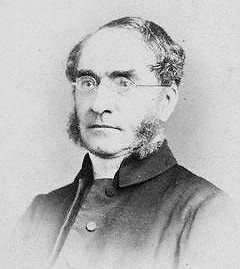
Light from John Cumming
John Cumming (1807–1881) was a minister in the Scottish National Church. He was a prolific writer, authoring 180 books. Mrs. White had seven of his books in her libraries. These books frequently proved to be a rich source of inspiration for her own books. Below are some examples where she copied his words:
| John Cumming, Lectures on the Book of Daniel, pp. 29–30 |
Ellen G. White, Manuscript 122, 1897 |
|---|---|
|
Daniel was very young when he was carried away a captive into Babylon. He is called "a child"... the word rendered "child," means "a stripling," "a young man;" the presumption therefore is that Daniel at this time was about fifteen or sixteen years of age. |
Daniel was but a youth when carried away captive into Babylon. He was about fifteen or sixteen years old, for he is called a child, which means that he was in his youth. |
|
It could not be that he thought it sinful to drink wine, or improper to dine with the king of the country. He knew just as well as others that wine was more agreeable to his taste than water, and that to dine at the royal table would be a great honour. |
Why did he refuse the use of wine as his beverage, when it was at the king's command that it was placed before him? He knew that by use wine would become to him a pleasant thing, and would be preferred before water. |
|
The reason of his refusal was evidently this: the king of Babylon, like all heathens, was in the habit of what we would call "asking a blessing" before his meals... he took a portion of his food and dedicated it to the god whom he worshipped, and also a portion of the wine he was about to drink, and poured out a libation to his idol before tasting it himself; and thus, as it were, consecrated...the whole to the heathen god. |
A second consideration of these youthful captives was that the king always asked a blessing before his meals, and addressed his idols as Deity. He set apart a portion of his food to be presented to the idol gods whom he worshipped, and also a portion of the wine. This act, according to their religious instruction, consecrated the whole to the heathen god. |
|
Daniel now felt that he could not conscientiously partake of it, because it would have been... implicating himself with heathenism, and acting unfaithfully to his country, his religion, and his God. |
To sit at the table where such idolatry was practiced, Daniel and his three brethren deemed, would be a dishonor to the God of heaven... This would indeed implicate them with heathenism, and dishonor the principles of their national religion and their God. |
|
Daniel had received an early religious education; he was not brought up at a school where he learned the world and nothing more, or mere secular education to the exclusion of religion, just as if that were possible. He was not educated at a school where he was taught what the French schoolmasters are now teaching — pantheism and socialism; but he was brought up at the home of his father, where he acquired the knowledge of the God of Abraham. |
The education which these four youth had received was not after the order of the worldly schools... It was not after the education of Sodom and Gomorrah, to the exclusion of all true religion. These youth were not educated after a worldly standard. They were brought up in homes where their fathers and mothers taught them the fear of the Lord. |
|
Early education was to Daniel, under God, the means of his preservation. The deep engraving of truth upon the heart of the young is never altogether effaced. |
And this early education was to these four children the means of their preservation. The lessons learned in their earliest years were the means of their remaining uncorrupted in the courts of Babylon. |
|
The deep engraving of truth upon the heart of the young is never altogether effaced. Those impressions of divine truth that are made on our hearts in youth often emerge in after years... |
The truth was truth to them. Its principles were stamped upon their hearts... The image of God was engraved upon the heart. |
| John Cumming | Ellen White |
|---|---|
|
"Heaven is the great continent of glory; this earth was once a part of it; but sin, with its disruptive force, broke off this earth from that continent of heaven..."
Behold, The Bridegroom Cometh: The Last Warning Cry, With Reasons For The Hope That Is In Me, (London: James Nisbet & Co., 1865), 207 |
1885 -"Through sin our world was divorced from the continent of heaven. . ." The Review and Herald, October 27, 1885
1886 - " . . . . This world is, as it were, but one link in a chain composed of a thousand links; but because of sin it was struck off from the continent of heaven, and Satan claimed it as his." The Review and Herald, March 9, 1886 1887 - ". . . . Though earth was struck off from the continent of Heaven and alienated from its communion, Jesus has connected it again with the sphere of glory." The Signs of the Times, November 24, 1887 1888 - "This earth because of transgression had been struck off from the continent of heaven." Advent Review and Sabbath Herald, February 28, 1888 1890 - ". . . . The transgression of man had separated earth from heaven, and finite man from the infinite God. As an island is separated from a continent, so earth was cut off from heaven, and a wide channel intervened between man and God. . ." The Review and Herald, November 11, 1890 ". . . . After the transgression of Adam, God no longer communicated directly with man; earth was separated, as it were, from the continent of heaven; . . . ." The Review and Herald, June 10, 1890 1894 - ". . . . Jesus became the world's Redeemer, rendering perfect obedience to every word that proceedeth out of the mouth of God. He redeemed Adam's disgraceful fall, and threw the kingdoms of this world back into favor with God, uniting the earth, that had been divorced by sin from God, to the continent of heaven." The Signs of the Times, March 26, 1894 1900 - ". . . .The world that was separated by sin from the continent of heaven, he drew back into favor with God." The Youth's Instructor, February 22, 1900 |
| "'In him [Christ] was life,'— that is, original, unborrowed, underived." Sabbath Evening Readings, (1865), 5 | "In Christ is life, original, unborrowed, underived." The Desire of Ages, (1898), 530. |
Here is one passage Mrs. White never copied:
Proselytism to a sect is most obnoxious...
— John Cumming, The Daily Life, (Boston: John P. Jewett and Co., 1855), 252
Frederick W. Krummacher
Friedrich Wilhelm Krummacher (1796–1868) was one of the most celebrated German Reformed clergymen of the 19th century. Ellen White had three of his books in her libraries (Elisha, and Elijah the Tishbite, Days of Elisha. These books were a rich source of inspiration for Ellen White.
Mrs. White spoke often of a spirit guide who would instruct her. In the example below, she even put the words of other authors into the mouth of her spirit guide:
| Frederick W. Krummacher, Elijah the Tishbite 1836, pp. 20-21 |
Ellen White Diary Entry, Nov. 21, 1890 (MR21, 446, Desire of Ages, 224-225) |
|---|---|
| The whys and wherefores are concealed from us... The ways God leads us are generally mysterious... God...knows exactly and much better than we do what is good and necessary for His children; and, in truth, He never leads them otherwise than they would wish Him to lead them, if they were able to see as clearly into their hearts and necessities as He does. ... This is the way of our gracious God. We must venture upon His Word. | My guide said... The whys and wherefores are concealed from you, yet speak the words I give you, however painful it may be to you. The ways in which God leads His people are generally mysterious. You have asked to know God’s way. Your supplication has been answered. God knows better than you do what is good and essential for His children. He never leads them otherwise than they would wish to be led if they were able to see as clearly as He does their necessities... The people whom God is leading must venture out upon His Word. |
Below is an example where her vision came from Krummacher:
| Frederick W. Krummacher, Elijah the Tishbite 1836, p. 221 |
Ellen White Testimonies vol. 5 (1882), 76 |
|---|---|
| Brethren, who knows what our own churches have still to experience? We are at present evidently under divine forbearance; can any one of us say how long it will last? It cannot be expressed how much mercy has already been expended upon us. Yet how many...are heartily devoted to his service. | But few know what our churches are to experience. I saw that at present we are under divine forbearance, but no one can say how long this will continue. No one knows how great the mercy that has been exercised toward us. But few are heartily devoted to God. |
Henry Venn
Henry Venn (1725–1797), a minister in the Church of England, wrote the book The Complete Duty of Man — a book Ellen White had in her personal library.
| Henry Venn, The Complete Duty of Man 1836, pp. 31-32 |
Ellen White, Testimonies vol. 8 (1904), 258 |
|---|---|
| He was not beholden to pre-existent matter in the formation of the world... On the contrary, all things, whether of a material or spiritual nature, stood up before the mighty God at his call, and were created at his pleasure. The heavens, and all the hosts of them; the earth, and all things which are therein, are not only the work of his hands, but ‘by the word of the Lord were the heavens made, and all the host of them by the breath of his mouth.’ | In the formation of our world, God was not indebted to pre-existing matter. On the contrary, all things, material or spiritual, stood up before the Lord Jehovah at His voice and were created for His own purpose. The heavens and all the host of them, the earth and all things therein, are not only the work of His hand; they came into existence by the breath of His mouth. |
John Harris
John Harris (1802–1856) was a prominent English Congregational minister, theologian, and academic who became one of the most widely read religious authors of the mid-19th century. Mrs. White copied repeatedly from Harris. His inspiration can be found throughout her books. She had three of his books in her libraries (The Great Commission, The Great Teacher, and Mammon). One example below:
| John Harris, The Great Commission 1854, p. 103 |
Ellen White, Christ’s Object Lessons vol. 8 (1904), p. 327 |
|---|---|
| Not more certainly is the throne of every believer prepared in heaven, than his appropriate place is prescribed on earth. | Not more surely is the place prepared for us in the heavenly mansions than is the special place designated on earth where we are to work for God. |
Charles Beecher
Charles Beecher (1815–1900) was a prominent American minister in the Congregationalist church. Mrs. White had his book Redeemer and Redeemed in her office library. In this work, Beecher laid out his full "Cosmic Conflict" theology, detailing the fall of Lucifer and the legal battle between Christ and Satan over the Earth. Beecher’s vivid descriptions of Lucifer's high position in heaven and his subsequent envy of Christ are strikingly similar to the narrative later found in White's The Great Controversy.
| Charles Beecher, Redeemer and Redeemed 1864, p. 65, 69 |
Ellen White, Manuscript 113, 1899 (DA 25, AA 33, RH 9-7-1897) |
|---|---|
| As the high priest laid aside his gorgeous pontifical robes and officiated in the white linen dress of a common priest, so Christ emptied himself and took the form of a servant and offered sacrifice, himself the priest, himself the victim. As the high priest, after going into the Holy of Holies with the blood, finally came forth to the waiting congregation in full pontifical robes, so, unto them that look for him, Christ shall appear a second time in all the splendors of his eternal kingdom and glory. | As the high priest laid aside his pontifical dress, and officiated in the white linen dress of a common priest, so Christ emptied himself, and took the form of a servant, and offered sacrifice, Himself the priest, Himself the victim. As the high priest, after performing his service in the holy of holies, came forth to the waiting congregation in his pontifical robes, so Christ will come the second time clothed in glorious garments of the whitest white, “such as no fuller on earth can whiten them.” [Mark 9:3.] He will come in His own glory... |
| Charles Beecher, Redeemer and Redeemed (1864), p. 65 |
Ellen G. White, Review and Herald, Sept. 7, 1897 |
|---|---|
| As the high-priest laid aside his gorgeous pontifical robes, and officiated in the white linen dress of a common priest, so Christ emptied himself [marginal reading of “made himself of no reputation”], and took the form of a servant [Phil. 2:7], and offered sacrifice, himself the priest, himself the victim. | As the high priest laid aside his gorgeous, pontifical robes, and officiated in the white linen dress of a common priest, so Christ emptied himself, and took the form of a servant, and offered the sacrifice, himself the priest himself the victim. |
Theodore L. Cuyler
Theodore Ledyard Cuyler (1822–1909) was one of the most beloved American Presbyterian ministers of the 19th century. Mrs. White had two of his books in her personal library (Heart Life and Right to the Point). Here is an example where Mrs. White copied from him:
| T. L. Cuyler,
Heart Life 1871, p. 69 |
Ellen White,
The Ministry of Healing (1905), 470 |
|---|---|
| A living, lovable Christian is the most powerful argument for the Gospel. | The strongest argument in favor of the gospel is a loving and lovable Christian. |
Octavius Winslow
Octavius Winslow (1808–1878) was a prominent 19th-century evangelical preacher and author. He was a contemporary and close associate of Charles Spurgeon. Mrs. White had three of his books in her personal library (The Glory of the Redeemer, Lights and Shadows of Spiritual Life, and Midnight Harmonies). Here is an example where Mrs. White copied from him:
| Octavius Winslow, The Glory of the Redeemer (1855), pp. 132-133 |
Ellen G. White, Manuscript 57, 1890 (16MR 181-182) |
|---|---|
| Our Lord's exposure to temptation, and his consequent capability of yielding to its solicitations, has its foundations in his perfect humanity. It surely requires not an argument to show that, as God, he could not be tempted, but that, as man, he could. His inferior nature was finite and created; it was not angelic, it was human. It was perfectly identical with our own,– its entire exemption from all taint of sin, only excepted. A human body and a human mind were his, with all their essential and peculiar properties. He was "bone of our bone, and flesh of our flesh:" he travelled up through the stages of infancy, boyhood, and manhood; he was encompassed with all the weaknesses, surrounded, that belong to our nature. He breathed our air, trod our earth, ate our food. The higher attributes of our being were his also. Reason, conscience, memory, will, affections, were essential appendages of that human soul which the Son of God took into union with his Divine. As such, then, our Lord was tempted. As such, too, he was capable of yielding. His finite nature, though pure and sinless, was yet necessarily limited in its resources, and weak in its own powers. Touching his inferior nature, he was but man. The Godhead, as I have before remarked, was not humanized,– nor was the humanity deified, by the blending together of the two natures. Each retained its essential character, properties, and attributes, distinct, unchanged, and unchangeable. | Christ's perfect humanity is the same that man may have through connection with Christ. As God, Christ could not be tempted any more than He was not tempted from His allegiance in heaven. But as Christ humbled Himself to the nature of man, He could be tempted. He had not taken on Him even the nature of the angels, but humanity, perfectly identical with our own nature, except without the taint of sin. A human body, a human mind, with all the peculiar properties, He was bone, brain, and muscle. A man of our flesh, He was compassed with the weakness of humanity. The circumstances of His life were of that character that He was exposed to all the inconveniences that belong to men, not in wealth, not in ease, but in poverty and want and humiliation. He breathed the very air man must breathe. He trod our earth as man. He had reason, conscience, memory, will, and affections of the human soul which was united with His divine nature. Our Lord was tempted as man is tempted. He was capable of yielding to temptations, as are human beings. His finite nature was pure and spotless, but the divine nature that led Him to say to Philip, "He that hath seen Me hath seen the Father" also, was not humanized; neither was humanity deified by the blending or union of the two natures; each retained its essential character and properties. |
Robert Boyd
Robert Boyd (1816–1879) was a prominent 19th-century Baptist minister and author. He is best known for his devotional book The World's Hope — a book Mrs. White had in her personal library. Here is one example where she copied from him:
| Robert Boyd, The World's Hope (1873), pp. 381-382 |
Ellen G. White, Review and Herald, Mar. 21, 1893 |
|---|---|
| He was treated as we deserved, in order that we might be treated as he deserved. He came to earth and took our sins, that we might take his righteousness and go to heaven. He was condemned for our sins, in which he had no share, that we might be justified by his righteousness, in which we had no share. | The world’s Redeemer was treated as we deserve to be treated, in order «that we might be treated as he deserved to be treated. He came to our world and took our sins upon his own divine soul, that we might receive his imputed righteousness. He was condemned for our sins, in which he had no share, that we might be justified by his righteousness, in which we had no share. |