
Under the Influence Part 1:
Where Did Mrs. White Get Her Message From?
By ,
Ellen White, Manuscript 24, 1888
From the beginning of her prophetic career, people suspected that Seventh-day Adventist prophetess Ellen White was under the influence of others. Sometimes that influence was subtle. Sometimes more overt. This article will examine the first half of Ellen White's life and identify the strong men who had a hand in shaping her theology, her message, and her visions.
William Miller
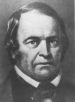
Perhaps the earliest man to influence Ellen Harmon was William Miller, the fire-and-brimstone preacher who calculated that Jesus would return in 1843 or 1844. Ellen was an impressionable twelve-year-old when Miller came to her hometown of Portland, Maine.1 Impressed by Miller's confident manner of speaking and terrified by his frightening descriptions of judgment, she quickly adopted his teachings about the imminent return of Christ without fact-checking his dubious calculations for accuracy.
So enamored was she with "Prophet Miller" that she regarded him highly for the remainder of her life, mistakenly equating him with such real Bible heroes as Elijah and John the Baptist. She adopted the theology of Miller and his associates—not only in regards to the imminent return of Christ and severe judgment awaiting the masses of mankind, but she also adopted the Millerite theology that those who rejected the truth about the return of Christ in 1844 were part of Babylon. She wrote that in 1844, "many left the fallen churches."2 This "coming out of Babylon" included herself and her family, who left the "fallen" Methodist Church. For the remainder of her life she taught that the second angel's message of Revelation 14 meant that believers must leave Babylon and join the SDA sect. Like Miller, Ellen White constantly harped upon the judgment of God and stressed the imminence of Christ's return, although she refrained from setting exact dates after 1850.
Joseph Turner—Inspiration, Coincidence, or Fabrication?
In 1845, Elder Joseph Turner was a leading figure among the Adventists. In January, Turner published an article in the Advent Mirror proposing that the coming of the Bridegroom had already taken place in heaven, and that Christ had moved "within the veil" in the heavenly sanctuary.
In mid-February of 1845, Ellen claimed to have received a vision revealing the same truth. Some Adventists were suspicious of this. One of them was Joseph Bates. He wrote Ellen a letter and asked where she acquired her teaching on the Bridegroom. While Bates does not state his reason for asking this question, one can presume that he was concerned because her views were so nearly identical to Turner's article. Perhaps he wanted to find out if Ellen had acquired the teaching from him.
By the time Mrs. White wrote back to Bates in 1847, the relationship between Turner and the Whites had soured. Turner had become increasingly fanatical. Even more embarrassing for the Whites, he started claiming Ellen's visions were the product of mesmerism. It would have been terribly humiliating for Mrs. White to admit that one of their major doctrines originated with a man who was now a "fanatic" who doubted her prophethood. Thus, Mrs. White wrote back assuring Bates the doctrine came straight from God, not Turner:
Brother Bates,
you write in a letter to James something about the Bridegroom's coming, as stated in the first published visions. By the letter you would like to know whether I had light on the Bridegroom's coming before I saw it in vision. I can readily answer, No. The Lord showed me the travail of the Advent band and Midnight Cry in December, but He did not show me the Bridegroom's coming until February following.Perhaps you would like to have me give a statement in relation to both visions. At the time I had the vision of the Midnight Cry I had given it up in the past and thought it future, as also most of the band had. I know not what time J. Turner got out his paper. I knew he had one out and one was in the house, but I knew not what was in it, for I did not read a word in it. I had been, and still was very sick. I took no interest in reading, for it injured my head and made me nervous.
After I had the vision and God gave me light, He bade me deliver it to the band, but I shrank from it. I was young, and I thought they would not receive it from me. I disobeyed the Lord, and instead of remaining at home, where the meeting was to be that night, I got in a sleigh in the morning and rode three or four miles and there I found J. T. [Joseph Turner]. He merely inquired how I was and if I was in the way of my duty. I said nothing, for I knew I was not. I passed up [to the] chamber [bedroom] and did not see him again for two hours, when he came up, asked if I was to be at meeting that night. I told him, No. He said he wanted to hear my vision and thought it duty for me to go home. I told him I should not. He said no more, but went away. I thought, and told those around me, if I went I should have to come out against his views, thinking he believed with the rest. I had not told any of them what God had shown me, and I did not tell them in what I should cut across his track.
All that day I suffered much in body and mind. It seemed that God had forsaken me entirely. I prayed the Lord if He would give me strength to ride home that night, the first opportunity I would deliver the message He had given me. He did give me strength and I rode home that night. Meeting had been done some time, and not a word was said by any of the family about the meeting.
Very early next morning J. T. called, said he was in haste going out of the city in a short time, and wanted I should tell him all that God had shown me in vision. It was with fear and trembling I told him all. After I had got through he said he had told out the same last evening. I was rejoiced, for I expected he was coming out against me, for all the while I had not heard anyone say what he believed.3
Notice the facts of this situation:
- Mrs. White was in Turner's house at least two hours and was apparently alone for awhile.
- She was aware that Turner's recent article was in the house. Either she saw it or someone told her it was there.
- She had both the time and the opportunity to read the article.
- She had a very intense interest in that particular subject.
- Despite her profound interest in the subject, she claimed she did not read the article because she felt "sick."
- That evening she arrived at the meeting at her family's home after Turner had made his presentation.
- She claims that her family did not say a word about the presentation to her, despite her and her family's profound interest in the subject.
- When she finally related the vision to Turner, he replied that he "told out the same last evening."
It is difficult to believe Mrs. White did not sneak a peak at Turner's article while she was in his house for over two hours. Furthermore, it seems nearly unbelievable that her own family did not say a single word to her about Turner's presentation in their home a few hours earlier. This was a very important topic of discussion among Adventists at that time. It is hard to believe an important doctrinal presentation could be made in her own home to her own family and friends, and yet none of them said a single word to her about it.
What about Turner? Did Mrs. White's vision convince him of her prophethood? Not exactly. Shortly afterward, they became bitter enemies, each making accusations against the other. Mrs. White writes:
Joseph Turner labored with some success to turn my friends and even my relatives against me. Why did he do this? Because I had faithfully related that which was shown me respecting his unchristian course.4
His "unchristian course" no doubt included questioning her prophetic calling. It is obvious that Turner had serious misgivings about the inspiration of Sister White, even going so far as to convince her friends and relatives to stop following her.
Early Adventist minister Isaac Wellcome also noted the similarities between the visions of Ellen and the preaching of Turner. He noted...
These visions were but the echoes of Elder [Joseph] Turner and others' preaching...5
Thus, from the very beginning of her prophetic career, Mrs. White followed a pattern of appropriating the thoughts, ideas, and doctrine of other leading brethren and incorporating that content into her visions.
William Foy—Inspiration or Coincidence?
It is clear that early in her prophetic career, Ellen Harmon was obtaining the material for her visions from others. In fact, at least one of her very first visions appears to have been appropriated from the prophet William Foy.
As a teen-ager, Ellen went to hear Foy speak about his visions on a number of occasions. Shortly after her first vision in 1844, Ellen met with Foy and she "had an interview with him."6 Later that evening she attended a meeting and was invited to share her vision. She did not realize that Foy was in the audience. As she began speaking, Foy leaped to his feet and declared it was just what he had seen! Oddly enough, he excused himself from the meeting and no further contact between him and Ellen White was ever reported after that event. Later, in 1845 when he published his visions, he wisely had them copyrighted.
Joseph Bates—Inspiration or Fabrication?
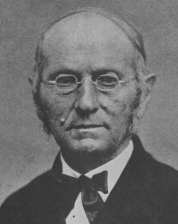
Regarding Joseph Bates, one may wonder if he found Ellen White's explanation of the Joseph Turner situation believable. What is known is that Bates had serious doubts about whether this young, teenager was truly a prophetess of God.
When the Whites first met Joseph Bates they were poor and in need of an influential friend. Bates, on the other hand, was always looking for someone gullible enough to believe his wacky prophetic views. Bates had strong convictions about the seventh day Sabbath being the Seal of God, the Mark of the Beast being Sunday-keeping, the door of salvation was shut for non-Adventists, and that Christ was returning in 1851.
Rather than fact-check Bates' ideas—which were devoid of both common sense and good Biblical scholarship—the Whites jumped onboard the Bates' caravan as it careened towards destruction. The Whites agreed with Bates on the shut door of salvation and the return of Christ in 1851. However, at first, they saw little value in the Sabbath or his teachings on the Mark of the Beast. Eventually, Bates managed to convince the Whites to keep the Sabbath with him from 6pm to 6pm, and it was not long before Ellen White was having visions endorsing Bates' view of the Sabbath. The Whites eventually adopted Bates' views on the Mark of the Beast and the Seal of God. Soon, these subjects started appearing in Ellen White's visions, as well as in the writings of her and James.
At the beginning of their rocky relationship, Bates had some serious doubts about Mrs. White's gift. However, a vision on Bates' favorite subject—astronomy—finally convinced him she was authentic. A year earlier, Bates had published a 39-page tract entitled The Opening Heavens. The Whites no doubt knew that he was fond of Astronomy. As Mrs. White pretended to be in vision, Bates watched in glee as the teen girl made motions as if flying through space. Then, he listened intently while she described Jupiter with its four moons, Saturn with its seven moons, and Uranus with its six moons. Bates must have been pleased to hear that Jupiter was inhabited by "a tall, majestic people" who had never sinned. Mrs. White describes what happened next:
After I came out of vision, I related what I had seen. Elder Bates then asked if I had studied astronomy. I told him I had no recollection of ever looking into an astronomy.7
While Bates was utterly convinced by this charade, it became apparent to later generations that she did not obtain her knowledge from God. God never showed her a tall, majestic people inhabiting Jupiter because decades ago scientists proved that Jupiter is uninhabitable. In fact, the surface of the planet is liquid, not solid. The pressure on the surface is strong enough to pulverize the strongest metals. While Mrs. White got close enough to Jupiter to see its inhabitants, when it came to Jupiter's moons, she only saw exactly what astronomers of her day had seen through their telescopes and what Bates had written in his books: 4 of its 97 moons. Mrs. White's knowledge of Astronomy—rather than being divine—was limited to knowing what could be obtained from any newspaper or library.
In addition to Astronomy, Bates was also something of a health nut and he introduced the Whites to health reform. He avoided tobacco, did not drink alcohol, tea, or coffee, did not eat meat, and avoided butter, cheese, and rich pastries. The Whites gradually adopted these practices and they became the core of Ellen White's health reform vision of 1863.
James White

Perhaps the person with the most influence over Ellen was James. The Whites' early friend, Lucinda Burdick, testified that James controlled Ellen's visions. D.M. Canright also observed the influence that James had upon Ellen. In chapter 8 of his book, Seventh-day Adventism Renounced, Canright writes:
Mrs. White originates nothing. In her visions she always sees just what she and her friends at the time happen to believe and be interested in. Her husband and other leading men first accept or study out a theory and talk it till her mind is full of it. Then when she is in her trance that is just what she sees. One who has been all through the Advent work and well knows, says: 'The visions have brought out no points of faith held by Seventh-day Adventists.'Mrs. White herself confesses that she is influenced by others in writing her 'Testimonies.' Thus: pages 138-139. 'What appeared in Testimony No. 11, concerning the Health Institute should not have been given until I was able to write out all I had seen in regard to it.... I yielded my judgment to that of others and wrote what appeared in No. 11.... In this I did wrong.' Testimonies, Vol. I, page 563. She here "lets the cat out of the bag." She made such a blunder that she was compelled to blame some one else for it and so to tell the truth that she was influenced by others to do it! Fine inspiration.
Elder White was well aware of how she was influenced by others to see and write as they impressed her to do. Hence he was very jealous of having leading men talk anything to her alone opposing his views, for he feared she would then have a revelation favoring them and opposing him as indeed she did towards the last. Thus he wrote: 'The pressure has been terribly hard on my poor wife. She has been impressed very much by Elders Butler and Haskell." Again: "I think my wife has been more severe than the Lord really required her to be in some cases. Satan has taken great advantage.... Elders Butler and Haskell have had an influence over her that I hope to see broken. It has nearly ruined her. These men must not be supported by our people to do as they have done.' James White, Battle Creek, May 25, 1881. That shows the confidence which her own husband had in her revelations.
Health Teachings—Was it God? Or Dr. Jackson?
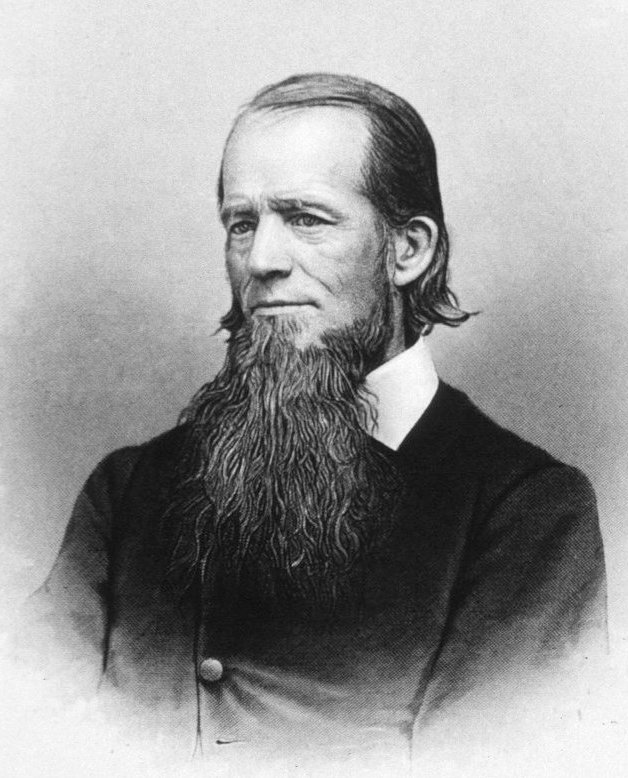
Before 1863, the Whites manifested sparse interest in health reform, other than joining Bates in giving up coffee and tea. They continued to drink wine, eat meat and use dairy products along with indulging in an occasional pastry. All that changed, however, in January 1863, when the White boys became ill with Diphtheria. James had the good fortune of coming across an article about curing Diphtheria written by Dr. James Jackson, a health-reformer known nationally for his water treatments.
In 1863, the Whites ordered some of his books, and in 1864 they went on the first of several trips to Dansville, New York, where they stayed at his water-cure clinic. During these visits, they became personally acquainted with the doctor. They learned that he encouraged his patients to eat an austere diet. No red meat, sugar, coffee, tea, alcohol, or tobacco were permitted at his institution; instead, the emphasis was on fruits, vegetables, and unprocessed grain. Jackson also promoted a two-meal-a-day diet.
While at the Dansville Clinic, Mrs. White also had the opportunity to meet Dr. Harriet Austin. Dr. Austin advocated a reformed style of dress for women. Although Mrs. White had previously written a testimony against the reformed style of dress, her experience at Dansville apparently changed her mind. It was not long before a testimony came out in support of the reform dress.
Not surprisingly, during this time period Mrs. White began having visions about health. She and James began travelling around the churches sharing the health message Ellen had supposedly received from God. Some of those attending happened to be familiar with Dr. Jackson. They quickly recognized that James and Ellen were merely reciting Jackson's health teachings—not any new revelation from God. They began questioning whether her health message had originated with God or Dr. Jackson. That question is still being debated today.
Appropriated the 1888 Message
Less than three months before his death in 1881, James warned others that General Conference President G.I. Butler and California Conference President S.N. Haskell "have had an influence over her [Ellen White] I hope to see broken. It has almost ruined her."8 This is a serious accusation. Did that ruinous influence taint her messages from God?
After Mrs. White returned from her European vacation (mission trip) in August of 1887, Butler's influence appeared to wane but S.N. Haskell's influence was as strong as ever. As the 1888 General Conference Session approached, S.N. Haskell and W.C. White aligned with the theology of the young, West Coast preachers of "righteousness by faith"—A.T. Jones and E.J. Waggoner. After arriving in America, she spent considerable time in St. Helena, California, with her son Willie, before attending the 1888 Conference.
When Mrs. White arrived at the 1888 Conference, she feigned neutrality but it quickly became evident that she had already sided with Jones' and Waggoner's interpretation of the law in Galatians 3—even though that interpretation was contrary to her own vision on the subject in the mid-1850s! Sect administrators were horrified that Mrs. White was backpedaling on her earlier vision. This would play into the hands of D.M. Canright, who had recently published a book shredding the sect and its prophet. Her reversal on this subject would cast substantial doubt on her "visions." If she reversed this vision, what other visions were also wrong and needed reversing? Sect leaders feared to open that pandora's box. In their minds, the only rational explanation for her behavior was that she had been influence by W.C. White, Jones, and perhaps others. Thus, as Mrs. White sided with the young preachers and against the sect's administrators, those leaders began whispering that Willie was now pulling the puppet's strings.
While it was likely true, Mrs. White was nonetheless irked by the charge. If this became widely known, it would destroy her influence among the SDA rank-and-file. Shortly after the conference ended, she wrote a letter denying changing her position on Galatians:
Because I came from the Pacific Coast, they would have it that I had been influenced by W. C. White, Dr. Waggoner, and A. T. Jones.9...my testimony was treated with indifference as idle tales. I was charged with being influenced by my son W. C. White, Elder A. T. Jones, [and] E. J. Waggoner.10
As pressure mounted, she wrote indignantly:
When I plainly stated my faith [in Jones and Waggoner's teachings, which included the new view of the law in Galatians 3] there were many who did not understand me and they reported that Sister White had changed; Sister White was influenced by her son, W. C. White, and by Elder A. T. Jones.11
By 1889, the situation had grown so dire that Ellen White was throwing a tantrum, refusing to attend camp meetings until the brethren stopped proclaiming she was under the influence of others:
I said that as long as my brethren thought that I was influenced in my judgment and work by W. C. White, A. T. Jones, or Dr. Waggoner, they need not send for me to attend their camp meetings or conferences, for I could do them no good if I did come.12
Despite her denials about being influenced, sect leaders continued to doubt her. In 1890, she lambasted Uriah Smith for expressing his opinion about her true source of inspiration:
When you have stated that Sr. White was influenced by W. C. White, A. T. Jones, and E. J. Waggoner, [you have planted] in hearts infidelity that has been nourished and has borne fruit.13
Even into 1891, the doubts among sect leaders continued to swirl. Mrs. White wrote to O.A. Olsen regarding several SDA leaders in executive roles:
Dan Jones, Eldridge, and A. R. Henry do not believe in the testimonies. I know whereof I speak. They have a power, but Dan Jones is THE great instigator. I have heard him talk in reference to WCW. They think he informs me of things going on among them.14
The accusations gradually subsided after sect leaders exiled Mrs. White to Australia in late 1891. Out of sight, out of mind. However, even in Australia, doubts continued to swirl. In 1898, one of her most adamant supporters, S.N. Haskell—a man whom James suspected was influencing his wife—accused W.C. White of influencing the prophet.15
A Disciple of Jones and Waggoner
Rather than send the Righteousness by Faith message through the sect's self-appointed prophetess, it seems that God sent the message through two young ministers: A.T. Jones and E.J. Waggoner. One evidence that Ellen White was influenced by Jones and Waggoner is that she accepted their theology of Righteousness by Faith. This was essentially the same message taught by the great Protestant reformers for centuries, but apparently the SDA sect had lost sight of the message in their legalistic zeal to promote the Sabbath message.
After many of the older brethren at the 1888 Conference resisted the message because it contradicted one of Mrs. White's earlier visions, Mrs. White endorsed it:
The message given us by A. T. Jones, and E. J. Waggoner is the message of God to the Laodicean church, and woe be unto anyone who professes to believe the truth and yet does not reflect to others the God-given rays.16
Mrs. White even went so far as to claim she had known the 1888 message all along. When questioned about it, she boasted that it was the message she had been preaching for 45 years:
I have had the question asked, what do you think of this light which these men are presenting? Why, I have been presenting it to you for the last forty-five years,--the matchless charms of Christ. This is what I have been trying to present before your minds.17
At first, she said she had been presenting the message for 45 years. Then, in the next sentence, she said she had been trying to present it. Was she trying to present it? Or did she actually present it?
A review of the books and articles written by Ellen White over the first 45 years of her ministry reveals little, if any, of the gospel or Righteousness by Faith. In fact, the reason that many of the brethren gave for rejecting the 1888 message is because they felt it contradicted the earlier visions and writings of Sister White. Rather than admit her mistake, Mrs. White did what any clever corporate leader would do: She blamed those under her! In 1889, Mrs. White put the blame on SDA ministers for over-emphasizing the law:
The ministers have not presented Christ in his fullness to the people, either in the churches or in new fields, and the people have not an intelligent faith. They have not been instructed as they should have been, that Christ is unto them both salvation and righteousness.18
It is always easier for the teacher to blame the students than for her to take credit for her own horrendous failure. If the SDA ministers and people were not instructed as they should have been, then why hadn't the "prophet of God" been instructing them on this subject for 45 years?
After 1888, Jones and Waggoner began touring the SDA churches presenting the message of Christ's righteousness. In 1890, E.J. Waggoner published a 96-page book entitled Christ and His Righteousness. Mrs. White followed in 1892, with her own book about Jesus, the 126-page Steps to Christ. She later followed that book with Desire of Ages and Christ's Object Lessons. Following in the foot-steps of Jones and Waggoner, her writings after 1888 became much more Christ-centered and righteousness-by-faith oriented. Thus, she appropriated the righteousness-by-faith message as her own, began preaching it, and claimed she had known it all along for 45 years, but had somehow failed in trying to communicate it.
To top it all off, despite the fact that she endorsed Jones and Waggoner more than 200 times in her writings, both men ended up rejecting her prophetic claims and leaving the SDA sect.
Conclusion
It is a known fact that the content of Mrs. White's visions matched whatever the strong men in her life were emphasizing at that time. For example, in one of her very earliest visions, before she had yet adopted the doctrine of soul-sleep, she saw brethren who had passed away in heaven. After Bates and James adopted the soul-sleep doctrine, she never saw another dead saint in heaven. Thus, these visions (or hallucinations) were the product of her own mind, whether triggered by James, or her health problems, psychological trauma, or the religious fervor of her day. Rather than discount these visions as utter nonsense, the strong personalities that surrounded her most of her life most likely realized the tremendous benefit of having a prophet to validate and verify what they were teaching. Thus, Ellen White was encouraged to believe these events were from God. Not knowing any better, she came to believe she had a divine calling.
Unwittingly, she became a pawn in the hands of the strong-willed executives of the early SDA Church. This can be shown by the fact that her visions nearly always agreed with the theology and teachings of a strong personality that she was associated with at the time.
- Her earliest visions nearly always agreed with her close associate Joseph Bates, until they had a falling out
- Her visions nearly always agreed with James White, until the late 1870s when other Church leaders, such as G.I. Butler and S.N. Haskell, began to have more influence over Ellen White (much to James' chagrin)
- In the late 1880s, Ellen White sided with A.T. Jones, became a convert to the "righteousness by faith" message of Jones and Waggoner, began receiving messages from God endorsing them, travelled with them to camp-meetings, and began publishing books emphasizing Jesus
- After Jones rejected her, Mrs. White relied primarily upon W.C. White for inspiration, as will be shown in part 2 of this study
Thus, Mrs. White was dominated by the strong personalities around her. She had a strong sense of duty and felt keenly the need to live up to the expectations of those around her. Unable and unequipped to carry the burden of being a prophet on her own shoulders, she turned to the leading brethren who, with few exceptions, shaped and moulded her messages. Sincerely desiring to guide her sect in the right path, she made up for her lack of inspiration by appropriating the ideas, thoughts, and writings of others as a source of inspiration for her sect.
See also