
A Straight Line of Truth?
Mrs. White's Shifting Views of the Time of Trouble
By , May
Ellen White, 19051
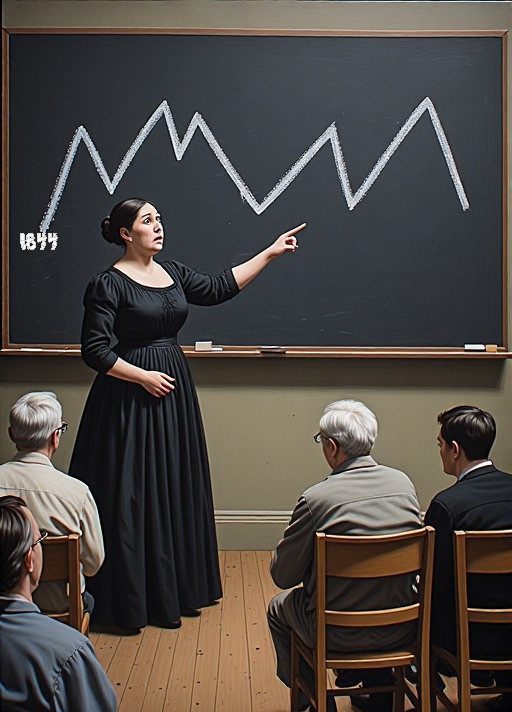
Here is a simple test for anyone claiming to be a prophet of God. She makes a declaration—in vision, no less—that a specific, momentous event has already begun. Then, starting the very next year and continuing without interruption for the next sixty-seven years, until the day she dies, she insists that same event has not yet begun and is still coming in the future.
Does that prophet pass or fail the test? One doesn't need a theology degree to answer that question. One just needs to be able to read.
That is precisely what Ellen G. White did with the "Time of Trouble." And yet Seventh-day Adventists continue to regard her as a messenger of God whose writings carry "continuing and authoritative relevance." The historical evidence will be presented below. Evaluate it and determine whether it resembles anything close to the "straight line of truth" she boasted about her writings in 1905.
The Vision That Started It All
On November 18, 1848, in Dorchester, Massachusetts, Ellen White claimed to receive a vision. What she proclaimed in that vision is unambiguous, and it is devastating to her prophetic credibility. She declared:
The time of trouble has commenced, it is begun. The reason why the four winds have not let go, is because the saints are not all sealed.2
This is not a prediction. Ellen White, speaking from what she and her followers claimed was a direct vision from God, announced in the present perfect tense: it has commenced. It is begun. The year was 1848.
Her associate Joseph Bates, who was present and transcribed the vision word for word, was thoroughly convinced. Believing Ellen White was delivering news from heaven, he immediately wrote a tract with the purpose of convincing his fellow Adventists that Ellen White's vision was correct — the time of trouble had already begun. This deluded yet sincere believer in Mrs. White wrote: "And now the time of trouble has began..." and "I think we have clearly proved that the time of trouble has began."2 Bates' mind may have been confused, but he wasn't confused about what Ellen said. He was there. He heard her. He believed her. He shouldn't have. And neither should you.
The Very Next Year: Never Mind
The ink was barely dry on that vision when Mrs. White began walking it back. In January 1849—barely two months after declaring the time of trouble had "commenced"—she wrote that the time of trouble "had not yet commenced." By June of that same year she was writing about it in the future tense: "The time of trouble is coming."3
Let that sink in. In November 1848 it had begun. By January 1849 it had not yet begun. By June 1849 it was coming. This is not a prophet receiving progressive revelation. This is a person who stated a falsehood while in vision, realized she was wrong, and began quietly reversing course. This is one reason why many of her early critics complained that her later visions contradicted her earlier ones.
The word for that is false prophecy—not "progressive revelation," not "the Spirit leading the church into greater light." It is a vision that failed and had to be cancelled out with a new vision. Of course, this vision conveniently disappeared from Ellen's published writings. The only reason it is available today is because Bates published it in his tract and that tract was preserved.
Sixty-Seven Years of "Coming Soon"
What followed the failed 1848 vision is remarkable in its own right. For the rest of her life—from 1849 until her death in 1915—Ellen White essentially had one message about the Time of Trouble: it's just around the corner. Year after year, decade after decade, she assured her followers that the Time of Trouble was imminent. The following is not a selective cherry-picking. It is a representative chronicle:
- 1849 — "...the time of trouble, such as never was, had not yet commenced" and "The time of trouble is coming..."3
- 1850 — "...when the time of trouble such as never was, shall come..."4
- 1854 — "...be prepared for the events which are just before us, the time of trouble..."5
- 1855 — "I then inquired if James would be spared or would be removed before the time of trouble."6
- 1858 — "I saw that a time of trouble was before us..."7
- 1859 — "There is a time of trouble just before God's people..."8
- 1860 — "The time of trouble is before us..."9
- 1884 — "The time of trouble such as never was, is soon to open upon us..." and "...in that time of trouble which is coming upon all the world..."10
- 1885 — "...we are about to enter upon the time of trouble such as never was, the fewer the marriages contracted, the better for all..."11
- 1886 — "The end of all things is at hand. The time of trouble is about to come upon the people of God."12
- 1888 — "The 'time of trouble such as never was,' is soon to open upon us..."13
- 1889 — "...we are about to enter upon the time of trouble..." and "...the time of trouble that is before us..." and "Just before us is a time of trouble such as never was..."14
- 1890 — "There is a time of trouble just before us..."15
- 1894 — "We are in the very shadow of the time of trouble which is fast approaching..."16
- 1895 — "Our work will soon be closed up, and soon the time of trouble such as never was will come upon us..."17
- 1900 — "When I think of the time of trouble that is just upon us..."18
- 1903 — "...a time of trouble such as has not been since there was a nation is soon to come..."19
- 1904 — "In the time of confusion and trouble before us..." and "...soon there shall be a time of trouble as never was..."20
- 1906 — "The time of trouble is very near us now" and "The time of trouble is near..."21
- 1908 — "The time of trouble is about to come upon the people of God."22
- 1909 — "A time of trouble is before us" and "...soon the time of trouble, such as never was, will come upon us..."23
- 1911 — "The 'time of trouble, such as never was,' is soon to open upon us..." and "...soon the time of trouble such as never was will come upon us..."24
- 1912 — "The 'time of trouble, such as never was,' is soon to open upon us..." and "Soon the time of trouble will break upon us..."25
- 1915 — "...soon the time of trouble, such as never was, will come upon us..."26
She died in 1915. The Time of Trouble—which was "just before us" in 1858, "very near us now" in 1906, and "about to come" in 1908—had not arrived. It still hasn't. The "straight line of truth" ran for sixty-seven years and went nowhere.
Ellen White's Disturbing Flip-Flops
Here is where it gets confusing. On several occasions, when catastrophic world events were erupting around her, Ellen White would swing back into panic mode and declare that the Time of Trouble had, in fact, already begun—only to quietly retreat again when the crisis passed.
In 1896, she wrote: "In this time of trouble..."27—present tense, as if it were already underway. What was happening in the world in 1896? Europe was in turmoil, the Ottoman Empire was massacring Armenians (the Hamidian massacres of 1894–96 killed up to 300,000 people), and political upheaval was spreading across continents. It looked like the end times. So Ellen said it had begun.
By 1900, she wrote about it being yet future, but hedged her bets:
When I think of the time of trouble that is just upon us, or I may say has begun, but as yet has not burst upon us to the full...28
Read that sentence carefully. "Just upon us, or I may say has begun, but as yet has not burst upon us to the full." What? Which is it? That is not prophetic clarity. That is a woman trying to cover every possible base in a single sentence. Has it begun or hasn't it? She doesn't know. She hedges. A genuine prophet doesn't hedge like this—she announces. What was happening in 1900? The Boer War was raging, the Boxer Rebellion was erupting in China, and global tension was at a fever pitch. Once again, world events appear to be driving Mrs. White's "visions," not the other way around.
In 1904, she wrote two strikingly different things. In one letter she declared: "The wars and rumors of wars, the destruction by fire and flood, say clearly that the time of trouble which is to increase until the end is already in the world."29 And in another: "Let all read and understand the prophecies of this book, for we are now entering upon the time of trouble..."30 Not "it is coming." Not "it is before us." Already in the world. Now entering. What was happening in 1904? The Russo-Japanese War had begun. It was one of the most devastating conflicts the world had seen in decades. After the war ended, in 1906, she wrote about the time of trouble being in the future.21
Then, in 1907, comes the most explicit reversal of all: "The time of trouble has already begun."31 No hedging this time. Just: it has begun. This echoes almost word for word her original 1848 vision. What triggered her in 1907? She was being abandoned by prominent leaders and physicians in Battle Creek who were fed up with her false testimonies and manipulation by her counselor — W.C. White. J.H. Kellogg, A.T. Jones, and other leading individuals in Battle Creek were abandoning Ellen White's sinking ship. She viewed Kellogg as the "alpha" of apostasy and that the enemy was bringing into the SDA Church "the omega" heresy.32 In her mind, the SDA sect was the center of all Bible prophecy, so if her followers were abandoning her — the sect's Spirit of Prophecy — that must be a sign of the final apostasy and the imminent end of the world.
The next year, after the crisis had abated, she said the time of trouble was yet future.22
This is anything but a straight line of truth. After each of these "it has begun" moments, the proclamation was quietly dropped and the language returned to "before us," "soon to come," "just ahead." If the Time of Trouble had truly begun in 1848, or in 1896, or in 1904, or in 1907, why did Ellen White keep announcing it as future for years afterward? Because none of those announcements were from God. They were reactive statements driven by current events—the same thing any anxious religious leader might say when the newspaper was full of catastrophe.
The Test of a Prophet
The Bible is not ambiguous about how to identify a false prophet:
When a prophet speaketh in the name of the LORD, if the thing follow not, nor come to pass, that is the thing which the LORD hath not spoken, but the prophet hath spoken it presumptuously: thou shalt not be afraid of him (Deuteronomy 18:22).
In 1848, Ellen White spoke "in the name of the LORD"—in vision, a mode she and her followers regarded as the highest form of divine communication—and declared that the Time of Trouble had begun. That declaration did not come to pass. By the Bible's own standard, that makes her a false prophet. Period.
But we have much more than one failure. We have a pattern of failure: sixty-seven years of "coming soon" that never came, punctuated by several emergency declarations that the trouble had "already begun," each one quietly retracted when the crisis at hand subsided. This is not a "straight line of truth." This is a tangled web of contradictions driven by circumstances, and no amount of mental gymnastics can straighten it out.
The Excuses
At this point, the SDA apologist will begin warming up several well-rehearsed defenses. Let us address them directly.
Objection #1: "The Time of Trouble has two phases—a 'little' time of trouble and the 'great' time of trouble. Mrs. White was referring to different phases in different statements."
This explanation is creative but entirely post-hoc. There is no such distinction in Ellen White's 1848 vision. She did not say "a little time of trouble has begun." She said the time of trouble had begun—using the same language she and her contemporaries used for the eschatological event described in Daniel 12:1. Joseph Bates, who was present and who believed her, did not understand her to mean some preliminary mini-trouble. He wrote that "the time of trouble has began" with full eschatological weight. Furthermore, if Adventism's "two-phase" framework were the correct interpretive key, why did Ellen White never use it to explain the contradiction herself? She had sixty-seven more years to do so. She didn't. The "two-phase" defense was invented by later apologists to rescue a failed prophecy, not by the prophet herself.
Objection #2: "Prophecy is conditional. God may delay events based on the response of His people."
If any failed prophecy can be explained by God's sovereign choice to delay it, then no prophetic claim can ever be falsified, ever. Moreover, genuine conditional prophecy in Scripture is always explicitly framed as conditional (see Jonah 3, Jeremiah 18). Ellen White did not say in 1848, "The time of trouble has begun, unless the little flock refuses to fork over their money to finish the work." She made an unconditional declaration in vision. The conditions are being smuggled in by apologists retroactively.
Conclusion: The Crooked Line
In 1905, Ellen White boasted that "the straight line of truth presented to me when I was but a girl is just as clearly presented now." On the subject of the Time of Trouble, this claim is demonstrably false. In 1848, she announced it had begun. From 1849 to 1915, she repeatedly announced it was coming. In 1896, 1900, 1904, and 1907, she announced it had begun again—each time coinciding with major world crises, each time quietly retracted as the crisis passed.
The line is not straight. It is not even close to straight. It zigzags across sixty-seven years of unfulfilled predictions, bending with the news of the day, doubling back on itself whenever current events seemed to demand it, and ending in 1915 with the Time of Trouble still firmly in the future.
The Dorchester vision of 1848 was suppressed for over 160 years. It was only released by the White Estate in 2014. Now we know why the delay. It is the first and most damning piece of evidence that Ellen White was not receiving messages from the God of the Bible. A true prophet of God does not reverse the plain meaning of her own vision in a mere two months.
By the biblical standard—the only standard that matters—Ellen White spoke presumptuously. The thing she declared in vision did not come to pass. "Thou shalt not be afraid of him."