
Ellen White's Harsh Treatment of Others
By , last updated June
Ellen White, Testimonies vol. 5 (1882), 677
In Seventh-day Adventist [SDA] history, Ellen G. White is almost universally cast in a soft, nostalgic glow—portrayed as a warm, maternal figure of gentle kindness. To be sure, she was entirely capable of displaying these traits. In her public writings, she championed gentleness with unmatched eloquence, frequently warning her followers that Christ Himself is personally wounded by our severe treatment of others:
He [Christ] hears the harsh, severe judgment passed on those that He, in infinite love, is presenting to His Father. He hears every sigh of pain and sorrow caused by human harshness, and His Spirit is grieved.1
For White, unkindness was not merely a bad habit; it was a symptom of deep spiritual decay. She identified its root cause as "unholy ambition":
To be unkind, to denounce others, to give expression to harsh, severe judgments...is the sure evidence of an unsanctified ambition...2
She was relentless in holding others to this standard. She admonished ministers that "severe words and harsh manner of speech show that you have not learned from Christ."3 She explicitly warned prominent leader A.T. Jones never to speak "sharp, critical, blunt, or severe words" to his brethren.4 Most severely, she declared that a "harsh, over-bearing, and passionate" disposition would outright "exclude their possessor from Heaven."5 By her own pen, gentleness was an absolute prerequisite for salvation.
But did the prophet live by the sword of her own testimonies?
While the official church narrative maintains the portrait of a sweet, saintly grandmother, the historical record tells a vastly different story. When her authority was challenged or her personal dictates were ignored, the maternal facade evaporated quickly. Eyewitness accounts and private correspondence reveal a woman who frequently treated her closest followers with cold callousness, manipulation, and intense severity. The stark contrast between the gentle spirit she demanded of others and the iron rod she wielded in private exposes a profound, uncomfortable double standard at the very foundation of her ministry.
Harsh Treatment of Her Followers
Over the course of her entire 70-year ministry, Ellen White ruled her sect with an iron fist. She had little tolerance for those who doubted her or her testimonies, and even less mercy for those who dared to touch her royalties. This article will document a number of cases where White treated people with extreme harshness or severity.
SDA Congregations
Ellen White set a high standard that she expected her followers to adhere to. If they failed in any way, they would hear from her — sometimes in the must publicly humiliating way possible. She was apparently fond of standing up in church and rebuking the sins of the audience from the pulpit — including private "sins" such as masturbation. More than one SDA congregation experienced the unrestrained wrath of Ellen White. Dr. Ronald Graybill, former associate secretary of the White Estate, relates one such incident:
James [White] defended the style as well as the content of his wife's messages by putting her sharp rebukes in the best possible light. She called the congregation in Wright, Michigan, together one afternoon in 1867 to hear her read 51 pages of 'testimony' she had written concerning various church members. 'Those reproved,' James reported, 'were, of course, surprised to hear their condition described, and were thrown in great trial.'6
Imagine the utter humiliation of having the prophet parade your "sins" — even your most private and personal ones — in front of the entire congregation! Worse yet, those "sins" may or may not have been accurate, depending upon whom the prophet obtained her information from!7
Here is one example of how Mrs. White used a "testimony" to brutally deride Sister B, a church member struggling with illness and depression:
I was shown... You have been sympathized with too much... In your present state of mind you are not fit to marry. There is no one that would wish you, in your present helpless, useless condition. If one should fancy he loved you; he would be worthless; for no sensible man could think for a moment of placing his affections upon so useless an object... At the present time your condition is not acceptable in the sight of God...8
Ellen called this woman useless and unworthy of any man's affection. What is ironic about this harsh statement is that Mrs. White was often herself in an ill and depressed condition!
One subject that particularly ignited Prophet White was SDA members joking and expressing any humor. One Sabbath afternoon in 1868, at a church meeting in Tuscola, White launched into a tirade against the "sin" of "jesting, joking, laughing."9 She openly rebuked several members of the congregation for expressing humor. Brother and Sister Doud were displeased with the open rebuke. The next day, Brother Doud rightly rebuked White for "not telling the fault" in private.10 Meanwhile, Mrs. Doud was reduced to tears. She told White, “You have killed me, you have killed me clean off. You have killed me.” White callously replied, "That is just what I hoped the message I bore would do."11
Another victim of White's wrath was Sylsbre Rumery (1820-1884) of Allegan County, Michigan — a wealthy farmer and businessman who joined up with the Adventists around 1856. White, who was harping on the imminent return of Jesus, was apparently disappointed because Rumery did not sell his lands and fork over his substantial fortune to the Whites so that "the work" could be finished.
He probably resisted surrendering his land to the Spirit of Profits because he felt this would be robbing his three sons of their future livelihood. In farming communities, land was often passed down by farmers from generation to generation. As farmers, this land was their only means of making a living. As his sons became adults, the land would be divided and passed down to them to provide them and his grandsons the land to farm and make a living. Wisely, he was not favorable to giving it up to the Whites. Ellen responded with a brutal testimony written to the local SDA church where he attended:
The case of Bro. Rumery is fearful. This world is his god. He worships money. ... Upon this subject he is insane... His life has been a terrible mistake. ... Satan has taken possession of his mind...12
When it came to money, White surely didn't beat around the bush.
Treatment of Children
One of the most shocking aspects of Ellen White's behavior is the harsh statements she made to and about children. For example, in one church where the parents were hesitant about following all of White's dietary restrictions, she wrote a testimony about their children being: "corrupt as hell itself...Satan has obtained control of them."13
Perhaps the most chilling display of White’s severity can be found in her obsessive crusades against "secret vice" (masturbation). In one instance, she was asked to pray for a sick child whose father engaged in masturbation. Instead of praying for the child, White reacted with vitriol. In her eyes, the father's private activities stripped the entire family of their humanity. In a stunningly callous testimony, she condemned not just the father, but his innocent, unborn offspring to a hopeless existence:
Children born to parents who are controlled by corrupt passions are worthless. What can be expected of such children but that they will sink lower in the scale than their parents?14
White’s determination that children are born "worthless" because of their parents' private habits betrays her demented worldview. Rather than viewing children as precious souls to be saved, White treated them as defective biological products, permanently stamped with the moral decay of their parents. One wonders how the thousands of SDA parents struggling with guilt under her extreme health reforms felt knowing their prophet had already written off their children as garbage.
For a prophet who claimed to receive visions from a Savior who welcomed little children, White’s decree that a child could be born spiritually and physically devoid of value is incredibly dark. By writing off these children as unsalvageable failures from birth, she abandoned the gospel of redemption in favor of the poison of eugenics.
Children born to truly bad parents — such as Ellen White, who often abandoned her small children to be raised by others — do have a greater struggle in life, but it is wrong to label them as "worthless" or assume their cases are hopeless. Many children have overcome horrific abuse and abandonment to lead tremendous lives. One of the countless examples is Bart Millard, the lead singer of the Christian band MercyMe. Bart was abused by his alcoholic father and abandoned by his mother. However, he rose above those trials to become an outstanding person who led many people to Jesus through his music.15 Was he "worthless?"
It turns out that Ellen White regarded many people as "worthless." For example, in her infamous book Solemn Appeal, she wrote: "A large share of the youth now living are worthless." Similar crass denunciations can be found in many of her letters and testimonies.16
Treatment of her own children
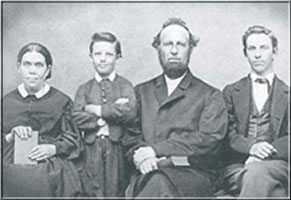
The Whites' son Edson — oft abandoned to be raised by others while the Whites traveled — was a particular challenge for the Whites. Graybill explains how Edson was viewed by Ellen and James:
Edson often found himself left in the care of one family and then another. When his parents were with him, they interpreted his frequent illnesses as a part of Satan's attack on the fledgling movement and his healings as evidence of God's endorsement of their public efforts. Thus even in his sufferings he was only an adjunct to their careers.17
A nomadic childhood was not Edson's only burden. He also chafed under the constant unfavorable comparisons which his parents made between him and his brother Willie. From the time Willie was born, Edson received constant rebuke and condemnation, while his little brother got constant praise and encouragement. Willie was a 'good natured' baby who seldom cried; Edson had 'more life and roughery.'18
Edson seems to have been caught in a vicious cycle. Because he often failed, he was expected to fail, and probably because he was expected to, he failed again and again. Doubtless he was plagued by guilt as well; for the advice and rebuke he received was overlaid with a heavy sense of sinfulness and neglected 'duty.' Ellen often reminded him that his life was 'a mistake,' 'worse than useless' and 'a failure'.19
As for the "good" son, Willie, Mrs. White reminded him, "naughty children, God does not love."20
Ellen White was actively dismantling the self-worth of her own flesh and blood. To tell a struggling child that their very existence is a "mistake," "worse than useless," and "a failure" is a form of emotional cruelty that is hard to overstate—especially when delivered by a mother who claims to speak with the absolute authority of God Himself.
By weaponizing her "visions" against her own children, White did not act as a loving guide; she acted as a cosmic judge. When her children were sick, they were not treated with simple maternal comfort; they were exploited as theatrical props in a grand supernatural drama between God and Satan. When her children acted like normal, energetic boys, they were branded as "naughty" outcasts whom "God does not love."
This toxic parenting style reveals a profound psychological double standard. The woman who warned others that "harshness will exclude its possessor from Heaven" spent decades systematically crushing the spirit of her eldest son under a mountain of divine condemnation. In the end, the Whites' domestic reality did not reflect the tender, Christ-like grace they preached. Instead, it resembled a cold, performance-driven hierarchy where children were valued only if they served the "public career" of the prophetess.
Hash Treatment of Co-Workers
Ellen White's harsh treatment of the people she worked with — the ones who were helping her build her publishing dynasty — is nothing less than heart-rending.
Fannie Bolton

Fannie Bolton worked as an editor writing and revising White's books, articles, and letters. Fannie's spirit was grieved when she saw some of the harsh writing in some of White's letters. In 1892, she wrote to White expressing how painful it was for her to have to edit those harsher testimonies. Fannie wrote that she had, "often, I might say always, wished that I need have nothing to do with those that were cutting. ... I have often wondered if your words were not unnecessarily sharp."21 Fannie was also exasperated by White's habit of speaking about Fannie's "faults and wrongs to others."22
In 1895, when Fannie objected to White's long-standing practice of stealing the writings of others and putting them in the prophet's books without giving proper credit, Ellen slapped her in the face.23 She was henceforth terminated from White's employment. To rub salt into her wounds, White wrote her a stinging testimony. Fannie claimed to be "absolutely guiltless" of the wrong that White accused her off, confessing that the letter "cut me terribly."24
Later, White made it difficult for Fannie to find work writing for the sect's papers. Fannie wrote that White "cut me off from all channels in the papers, wrote unjustly and cruelly concerning me, and brought me down to a bed of death."25 While Fannie physically survived the brutal onslaught, it was too much for her sensitive psyche to bear. G.B. Starr reports she "was confined in the asylum at Kalamazoo, Michigan, for several years."26
J.N. Andrews
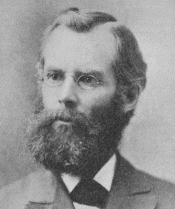
J.N. Andrews is another example of an SDA worker who experienced the wrath of Ellen White. In 1860, White wrote a 24-page testimony to Andrews and his wife, complaining about him refusing to accept her "testimonies":
I saw that Bro. John had suffered in his mind extremely. ... Bro. John has been driven to almost insanity. ... I saw that his family do not stand clear. ... They will not stand in the light until they wipe out the past by confessing their wrong course in opposing the testimonies given them of God. ...He unsettled the mind of Henry Nichols in regard to the visions, and Henry has never recovered. ... The visions are either of God or the Devil. There is no half way position to be taken in the matter.27
Despite his doubts regarding White's inspiration, Andrews, like Fannie, continued to serve the sect. In addition to the ongoing challenges of having to work with Ellen White, Andrews suffered many tragedies in his personal life. In 1872, his wife Angeline died. In 1874, he sailed to Europe as a missionary with his two children but returned four years later to the United States to bury his brother who died in his absence. That same year he buried his daughter, Mary. Andrews was in poor health and did not return to Europe until the following year. Joseph Smoot, in the spring 1984 issue of Adventist Heritage, reports that in 1883, Mrs. White wrote a letter to B.L. Whitney sharply criticizing Andrews:
She said Andrews had 'given the impression of suffering when he has endured no more than ordinary laborers in their first experience in this work.' She regarded Andrews as having 'a diseased mind.' Mrs. White thought that John Andrews would die and said she 'could not pray for his life, for I consider he has held and is still holding [up] the work in Switzerland.' ... She concluded that she did not want Andrews 'injured, neither do I want the cause of God to bear the hindrance and the mold of his diseased imagination.'28
It is astonishing that White could not even bring herself to pray for Andrews, a pioneering missionary and author who had devoted his entire life to the work of the SDA Church! Contrast this with Stephen who prayed for his murderers while they were stoning him to death. Contrast this with Jesus who not only asked God to forgive those who were murdering him, but also said, "pray for them which despitefully use you." (Luke 6:28)
White then wrote Andrews a letter that Smoot describes as "the most severe rebuke she had ever given to him."
She said that 'if you go down into the grave, I do not want you should go down in deception.' ...she proceeded to enumerate his character defects. Feeling that the Andrews and Stevens families had been a bad mix from the beginning, she believed they had fostered his desire "to crave for sympathy, to love to be pitied, to be regarded as one suffering privations and as a martyr. She told him of his sin of dwelling on himself, of mourning for his wife and daughter as he had done... Dwelling at length on his rejection of her counsel regarding remarriage [he never did], she told him that he had not been a good father to his son, Charles.29
Smoot concludes "this letter must have broken Andrews' spirit and will to live." Andrews died a few months later on Oct. 21, 1883.
Uriah Smith

Uriah Smith was an SDA pioneer who, early in his career, defended Ellen White from her many critics. He was editor of the Review and author of the now infamous book Daniel and the Revelation.
His strong belief in Ellen White caused a falling out with her at the 1888 Minneapolis General Conference session. Smith, alongside G.I. Butler (then GC President), struggled to fully embrace the messages of righteousness by faith presented by E.J. Waggoner and A.T. Jones because Waggoner contradicted an earlier vision of Ellen White on Galatians 3. Smith and Butler mistakenly thought Ellen White's visions were light from God that could not be overruled by Waggoner. Thus, they stubbornly refused to accept Waggoner's teachings, remaining faithful to White's earlier vision. This antagonized White because she had already decided to throw her support behind Waggoner.
If there was one thing Ellen White could and would not tolerate, it was disobedience from her disciples. In 1890, she wrote Smith a stinging testimony:
After your course of action has unsettled the minds and faith in the testimonies, what have you gained? If you should recover your faith how can you remove the impressions of unbelief you have sown in other minds? Do not labor so hard to do the very work Satan is doing.30
After some more acrimonious letters accusing him of doing the work of Satan, Smith eventually backed down and "repented" of his disbelief in the prophetess. However, he never made any further attempt to defend her testimonies.
G.I. Butler
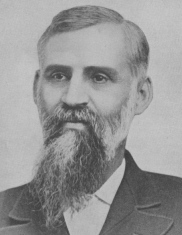
G.I. Butler was the president of the SDA General Conference when he endured a scathing attack from Ellen White. Like Smith, in the aftermath of the 1888 session, he sought to hold the sect to the position on Galatians 3 that White established from an earlier vision. He seemed to be surprised not only that White changed her position (which, after all, was based on her own vision), but that she actively opposed him because he insisted on the sect keeping their doctrines consistent with her earlier vision. He describes the assault he endured in a letter to J.H. Kellogg:
Sister White called me up to your Hospital, and talked to me two or three hours, when my head seemed as though it would just about wreck me. It seemed as though it would split. I nerved up, with every ounce of energy I had, and listened to it all. Some things, I tell you, were about as cutting as a man could hear. Occasionally I would throw in a word. She said, 'you ought to have been out of office for years.'31
William Farnsworth
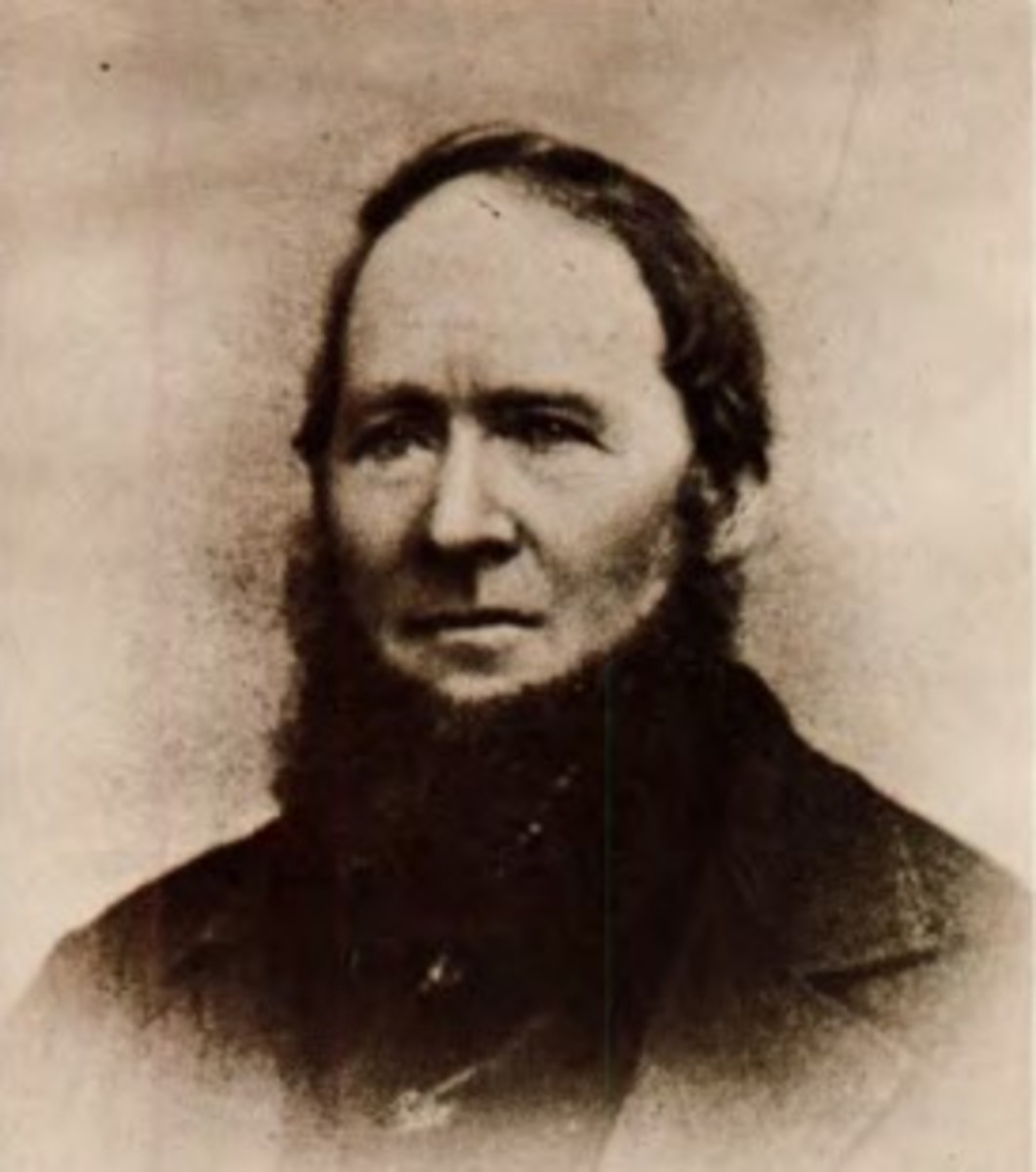
William Farnsworth was an SDA pioneer and one of the founders of the Washington Seventh-day Adventist Church. Although not wealthy, Farnsworth made a reasonable income from his large farm. Like many farmers in that era, he had a large family. The SDA Encyclopedia reports he fathered 22 children. This put him at odds with Sister White, who adopted the now-debunked doctrine of vital force in the mid-1860s. According to this false teaching, every sexual act drained vital force from the body, making it more susceptible to disease and destroying spiritual capacity. Child-birth was thought to be especially draining upon women. All the while Ellen White was warning her sect of the terrible dangers of marital excess, Farnsworth was a living testimony that her theories were utter nonsense. Not only was he blatantly ignoring her testimonies by eating pork and having an occasional cigar, he was obviously having frequent marital activity with seemingly no ill effects. Even more unnerving, the man was happy. Burned to the core, White blasted him with a blistering testimony for failing to curb his behavior:
I was shown the case of Brother William Farnsworth. He was shown me enshrouded in darkness, which darkness was not relieved by rays of light from Jesus. ... He has been selfish, gratified his appetite, his lustful passions, to the destruction of his own spirituality. ... These testimonies which he has professed to believe were direct from God, he has not regarded or lived according unto. ... I was shown that you have increased your family without realizing the responsibility you were bringing upon yourself. ... Your first wife ought not to have died, but you brought upon her cares and burdens which ended in the sacrifice of her life. ... The result of eating food not the most healthy, and by violating the laws which God has established in our being, has brought disease and premature death upon the elder class of your children. Disease has been transmitted to your off-spring and the eating largely of flesh meats has increased the difficulty. The eating of pork has awakened and strengthened a most deadly humor in the system. Your offspring are robbed of vitality before they are born. ... Your cattle have received in many respects better treatment than your children. Your wife now living has a hard lot. Her vitality is nearly exhausted.32
Obviously annoyed that Farnsworth was not adhering to her testimonies, White blamed Farnsworth's behavior for the death of his first wife, the destruction of the vitality of his second wife, and the death of his children (six died before age 25—one from a horse accident, not disease). However, it must be pointed out that less than one fourth of Farnsworth's children died of disease whereas half of the prophet's children died of disease. She claimed his offspring were being robbed of their vitality by his meat diet, but the facts prove her presumption to be false. Nearly all of his children lived into their seventies and eighties, with one reaching 101. Farnsworth wisely ignored the prophet's rancid testimony and kept having children—three more of them— until his wife entered the age of menopause. Farnsworth's vitality-deprived wife lived to the ripe age of 88, and Farnsworth himself died of old age at 81, leaving behind a testimony for the world that Ellen White's testimonies were best handled by ignoring them entirely.
U.S. President Abraham Lincoln Insulted

No one was above Mrs. White's insults. D.M Canright describes how White rejected the pleas of President Lincoln for a day of prayer and fasting for the war-wracked nation:
Mr. Lincoln, in his need, asked the prayers of all Christians, and appointed days of fasting and prayer. Of these Mrs. White said: 'I saw that these national fasts were an insult to Jehovah. . . A national fast is proclaimed! Oh, what an insult to Jehovah!' (Testimonies, Vol. I., p. 257). That was the way she sympathized with Mr. Lincoln and the nation in the hour of need.
A day before the awful battle of Gettysburg, on which the destiny of the nation would turn, Mr. Lincoln spent the night in agonizing prayer to almighty God. So his biographer testifies. But neither Mrs. White nor any of her followers offered a single prayer for him or the nation. I was with her - and with them - and know. During the entire twenty-eight years I was an Adventist I never offered one prayer for the President, for Congress, for a Governor, or any one in authority. I never heard Mrs. White, Elder White, or any one of them, do it. I have often attended their large meetings since then, but never heard a prayer offered for any Government official.33
Conclusion
Contrast Mrs. White's behavior with that of the Apostles. Paul instructed the Galatians to restore one caught in sin with a "spirit of gentleness" (Gal. 6:1 NKJV). He told Timothy to correct believers "with gentleness" (2 Timothy 2:25 NASB).
At one point White seemed to regret that she and James were actively involved in being "accusers of our brethren," calling it "the work Satan is engaged in."34 She asked James to forgive her for "any words of impatience" and felt regret for her "hardness of heart, and because my life has not been more in accordance with the life of Christ...I weep over my own hardness of heart, my life which has not been a correct example to others."35
Late in life, Mrs. White wrote, "No harsh words are to be spoken by a Christian to anyone, old or young. Such words are prompted by the enemy."36 If harsh words are prompted by Satan, then whose words ended up in her testimonies? God's or Satan's?