
Ellen White Exiled to Australia: Three Reasons
By , last updated May
(Ellen White, Manuscript 26, 1905

When Ellen G. White stepped off the ship in Sydney, Australia on December 8, 1891, Seventh-day Adventist [SDA] leaders proclaimed it a vital mission to help establish Seventh-day Adventism in Australia. But behind the official narrative lay a more complex and perhaps sinister reality. Was her mission trip truly a divine calling? Or was it a strategic exile designed to silence a prophet whose criticisms had grown too uncomfortable for sect leaders to bear? Sister White's nine-year Australian sojourn would prove to be one of the most controversial periods in SDA history. This article will delve into the reasons why sect leaders longed to rid themselves of their own prophet.
Ellen White's Initial Lukewarm Response to Her Exile
In early 1891, Mrs. White was not planning on going to Australia. She had recently "purchased a lot in Petoskey, in a resort area on Lake Michigan, and was having a home built."1 At age 63, she no doubt looked forward to retiring in this privileged, upscale community near the heart of the SDA work. In addition, she was not in the best health. Her ankles and hip bothered her, making it difficult, at times, for her to walk without assistance.2
SDAs first established their work in Australia and New Zealand in 1885. By 1891, they had already convinced 700 Australian Christians to adopt Seventh-day Adventism. At the 1891 General Conference Session in Battle Creek, emphasis was placed upon further evangelizing this already-Christian nation. Mrs. White appears to have been caught somewhat by surprise that the Foreign Mission Board had chosen her to go to Australia. The final decision was left with Mrs. White, and she pondered it for several months. Meanwhile, it was also decided that her counselor, W.C. White, would travel with her, along with several of her servants (May Walling, Fannie Bolton, and Emily Campbell).
Mrs. White had an ominous feeling about this "call." In August of 1891, she wrote in her private diary that the was "troubled." She stewed over the fact that she had suffered "much loss" of wealth when she travelled to Europe. Would the same happen in Australia? She also seemed worried that SDA leaders were "very persistent that my special work should be to go to Europe and to Australia."3 Did they have ulterior motives? Remarking that she had no "light to leave America for this far off country," despite frequent communications with her spirit guide, she wrote that she could not "understand this matter." She believed her place was at the heart of the work, where she could more easily influence and control it. However, after much encouragement from SDA leaders, she finally caved in to their will. On Nov. 12, 1891, against her better judgment, Mrs. White and her group set sail for Australia.4
Ellen White's Later Full-Blown Opposition to Her Exile
This episode is a classic clash between a prophet demanding unfettered influence over SDA institutions and their decision-making, operating as a law unto herself, and a corporate bureaucracy embarrassed by recent revelations about her from D.M. Canright, striving distance themselves from her while controlling the damage her behavior was causing to the organization. By 1891, the General Conference machine had outgrown its founder. They didn't need a living, breathing, micro-managing dictator hovering over their desks in Battle Creek; they needed a compliant figurehead. Unable to strip her of her prophetic title without collapsing the entire facade, the administrative elite chose the next best option: they engineered a geographical assassination, utilizing the guise of "foreign mission" to banish her to the opposite side of the planet.
Eventually, as her exile dragged on toward the five-year mark, it dawned on her that the Battle Creek leaders had no plans to bring her back. It seems they were content with her absence. After nearly five years in Australia, in a bitter letter to General Conference President O.A. Olsen, Mrs. White "revealed the entire workings that led" her "to Australia."5 She wrote:
The Lord was not in our leaving America. He did not reveal that it was His will that I should leave Battle Creek. The Lord did not plan this, but He let you all move after your own imaginings. The Lord would have had W. C. White, his mother, and her workers remain in America, we were needed at the heart of the work, and had your spiritual perception discerned the true situation, you would never have consented to the movements made. But the Lord read the hearts of all. There was so great a willingness to have us leave that the Lord permitted this thing to take place. Those who were weary of the testimonies borne were left without the persons who bore them. Our separation from Battle Creek was to let men have their own will and way, which they thought superior to the way of the Lord.6
From this letter it is possible to decipher at least two reasons why Mrs. White was exiled:
- Her often harsh and overbearing "testimonies" had wearied the SDA people who were tired of being targets for her brutal arrows.
- SDA leaders disdained having the prophetess and Willie constantly meddling with how they were leading.
In the same letter, she continued on, casting the blame for her decision to leave on Olsen:
Had you stood in the right position, the move would not have been made at that time. The Lord would have worked for Australia by other means, and a strong influence would have been held at Battle Creek, the great heart of the work. There we should have stood shoulder to shoulder, creating a healthful atmosphere to be felt in all our conferences. It was not the Lord who devised this matter. I could not get one ray of light to leave America. ... When we left, relief was felt by many, but not so much by yourself, and the Lord was displeased, for He had set us to stand at the wheels of the moving machinery at Battle Creek. ... Elder Olsen had not the perception, the courage, the force, to carry the responsibilities; nor was there any other man prepared to do the work the Lord had purposed we should do. I wrote to you, Elder Olsen, telling you that it was God’s design that we should stand side by side with you, to counsel you, to advise you, to move with you. ... But this counsel was not considered a necessity. That the people of Battle Creek should feel that they could have us leave at the time we did, was the result of man’s devising, and not the Lord’s. ... The Lord designed that we should be near the publishing houses, that we should have easy access to these institutions that we might counsel together. Because of the moves that have been made, many publications that should have been issued before this have been retarded; the great amount of writing that has been necessary in order to communicate with America has hindered this work.
Here it is evident that Mrs. White saw her and W.C.'s role as being at the center of the work in Battle Creek, where they could control the sect. It is further obvious that the sect's leaders did not want her constantly interfering in their work. How did this situation come about? How did she descend from the beloved prophetess—leading and guiding the work—to such an annoyance and hindrance that it would be a "relief..to many" that she was removed from America?
REASON #1: Ellen White's Post-1888 Tirades
At the 1888 General Conference session, a serious power-struggle evolved within the SDA sect. Each side attempted to enlist the prophetess to join them. On one side was the old guard who were preaching the same message Mrs. White had preached and endorsed for 44 years. Their mantra was to "stand by the old landmarks," which they learned from Sister White writings and believed had been forever established by her earlier visions. On the other side were a couple of young and popular West Coast preachers, Alonzo Jones and Ellet Waggoner. These men were promulgating a new message that, in part, contradicted one of Ellen White's earlier visions.
By 1888, W.C. was already in lockstep with the new preachers. While Mrs. White feigned neutrality at the 1888 session, by 1889 she made her position clear. She endorsed the new preachers and their message. Even more troubling to the old guard, she began unleashing stinging criticisms upon the old guard.
Corporate leaders crave stability—especially doctrinal stability. Especially when it concerns foundational pillars like the law of God. And especially when those pillars had already received the visionary stamp of approval from their prophet. To the old guard, it was almost unthinkable that Mrs. White could now be softening or altering a position she had supposedly seen in vision and that Adventists had been preaching for decades.
How could the sect have been so wrong for so long while guided by a living prophet? They knew ordinary SDAs would struggle to make sense of it. To critics like D. M. Canright, this played into his storyline of a bumbling prophet. Accusations would inevitably follow: that she was being influenced by others, that she was a false prophet, that this "new light" had strangely come through two young preachers instead of through the denomination's appointed mouthpiece of God. Had heaven stopped speaking to her? How could a prophet-led church be so terribly wrong on such an important subject — for decades?
These were dangerous questions for a movement already battling defections and public criticism. More controversy meant more members leaving the fold, and fewer members meant less tithe money flowing into Battle Creek. Needless to say, the SDA leadership was deeply unsettled by the entire affair.
To understand the sheer magnitude of this betrayal, one must realize exactly what the old guard was desperately trying to protect. For decades, the foundational bedrock of Seventh-day Adventism was built upon a rigid focus on the Ten Commandments. For SDAs, the Ten Commandments were a salvational issue. This was the theological hill the pioneers were prepared to die on. Yet, following the explosive 1888 Minneapolis session, Ellen White completely turned on them. She openly scoffed at the frantic warnings of the General Conference president, refused to defend the traditional authority of stalwarts like Uriah Smith, and aggressively championed the brash, progressive duo of Jones and Waggoner.7 She was actively dismantling the very doctrinal pillars she had spent forty years helping to build. To the old guard, she was no longer a reliable anchor; she was a theological loose cannon tearing up the ship from the inside. Exile wasn't just an option — it was necessary to save the corporation from self-destruction.
Because of her inexplicable reversal from her prior vision-inspired position, the old guard became suspicious that she was no longer operating under her own will but Willie's will. Thus, they distanced themselves from her. Mrs. White felt their rejection keenly. After the 1888 meetings she lamented: "My testimony was ignored."8 In 1889, she wrote that those at the 1888 session "refused" to receive her message and made unflattering comments about her and Willie.9 Like a child who did not get her way, she pouted—refusing to attend camp meetings in 1889 because the brethren lost faith in her prophetic calling:
But since some of my brethren hold me in the light they do, that my judgment is of no more value than that of any other or of one who has not been called to the special work, and that I am subject to the influence of my son Willie or of some others, why do you send for Sister White to attend your camp meetings or special meetings? I cannot come. ...my brethren who are acquainted with my mission and my work, trifle with the message that God gives me to bear...10
In the above letter, Mrs. White clearly enunciated the concerns sect leaders had with her:
- Lacked superior judgment - It seems that from their own personal experiences with the prophet, sect leaders did not perceive anything particularly divine or inspired about her judgment. To them, it appeared her judgment was no better than theirs.
- Questioned her call - After 1888, some were questioning whether she was still a true prophet or if she had been compromised. By contradicting her earlier vision-inspired position at the 1888 session, she created a dilemma within the sect. Both positions could not have come from the Lord. This gave her the appearance of a prophet who prophesied whatever way the wind was blowing.
- Under the influence - Substantial evidence indicates that Mrs. White was not formulating her own opinions but was being influenced heavily by leading men in the sect. Perhaps the old guard felt slighted because, in the past, they were the ones who were influencing Ellen White. As long as she was speaking the words they put into her mouth, they were fine with her prophethood. Now that they had lost control over her to Willie, Jones, and Waggoner, they questioned her call.
The doubts about Ellen White did not settle quickly after the 1888 session. They continued to swirl into the 1890s. In early 1890, Mrs. White complained that the brethren were not listening to her, exhibiting "resistance of the light and warnings that God has given through me...you have cast aside the word of the Lord as unworthy of notice."11 She complained that "men in responsible positions" had "set themselves against my message...I have not strength to contend with the spirit of resistance, the doubts and unbelief which have barricaded their souls."12
To be fair, one can certainly understand the difficult position into which Mrs. White placed the old guard. They felt they were being true to the "old" Ellen White. They were confused and exasperated that she had shifted her position—a position established by her own vision! Consider the logical dilemma. If they accepted the new position as correct, then Mrs. White had seen a false vision, which called into question whether any of her visions were true. It would pretty much confirm what critic D.M. Canright had been saying recently. It would overthrow sect members' faith in the SDA prophet, causing them to realize the Spirit of Prophecy was all a hoax to delude people into thinking that SDAs were "the remnant." However, if they held to the old position, they would be assaulted, criticized, judged, and condemned non-stop by the relentless prophetess whom many SDA lay people still continued to hold in high regard. They were between a proverbial rock and a hard place!
Pumping up Ellen White as a true prophet worked well enough for the old guard for decades while she was having visions endorsing their theology. Yet now, she had was becoming increasingly uncontrollable and risked sinking the entire facade they had built. Thus, the old guard sought to expel Ellen White because her nonstop tirades against them were undermining their authority and were a continual source of irritation and embarrassment.
REASON #2: Bad Press
It is understandable why the old guard wanted Ellen White out of the way. She had become more of a hindrance than a help. Her reputation had taken a huge hit in the 1880s. Now, she was becoming an impediment to the sect's growth and progress in a more modern America.
It started in 1882, when General Conference President George Butler published a book containing what he thought were the earliest writings of Ellen White. This was done in hopes of silencing vocal critics who called out that Ellen White taught the shut door of salvation from her visions but later had it scrubbed from her writings. What Butler failed to realize is that the earlier writings he was given to refute the critics were themselves a "scrubbed" version of her earlier visions produced after James White deleted out offensive material from his wife's visions. In 1883, A.C. Long published an eye-opening document containing Ellen White's true early visions. This incident exposed the fraud that was practiced by the Whites. Many SDAs, including Butler, began to realize their prophet was not as godly they had imagined her to be.
In 1883, the problems continued to mount. Ellen White's latest production, Sketches From the Life of Paul, was discovered to be a thinly veiled plagiarism of Conybeare and Howson's The Life and Epistles of the Apostle Paul. When rumors of massive copying began circulating, Battle Creek leaders were further embarrassed because they had been promoting the book as light from heaven.
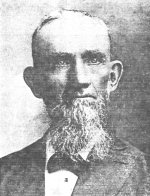
Several years later, the problem was compounded when leader D.M. Canright left Seventh-day Adventism. Rather than remaining silent, as Mrs. White had hoped he would, Canright exhibited the same fervor in tearing down the sect as he had in building it up. In 1889, he published his book Seventh-day Adventism Renounced, which had a lengthy chapter exposing Ellen White as a false prophet. His revelations began circulating widely both within the SDA sect and in the larger American Christian community.13 Many SDAs and non-SDAs had their eyes opened to the true nature of the so-called prophet.
All this negative press about Ellen White was impacting the SDA sect in America. She was rapidly losing influence. Some non-SDAs would no longer attend a camp meeting where Ellen White was preaching. In Australia, her fallacies were not yet widely known. Leaders no doubt felt it was prudent to move her out of the limelight so the sect would not be tarnished by her sullied reputation.
REASON #3: Incessant Micro-Management
A third reason for exiling Ellen White was her perpetual attempts to micro-manage and control the sect's institutions, including publishing houses and sanitariums. In the mid-1880s, and continuing for more than a decade, she battled repeatedly with SDA publishing houses over the amount of her royalties. Relations became so strained in the early 1890s that she eventually took her latest book—Steps to Christ to a non-SDA publisher in 1892.
Aside from her battles over royalties, Mrs. White meddled with the personnel and management of various SDA institutions. She fired off a constant barrage of "testimonies" that undermined and annoyed the people charged with running those institutions. While it is impossible to present all the instances of Mrs. White's meddling, a couple of the most bizarre cases are presented below.
Case #1: Encourages Brother Craig to Dump His Wife
Brother Craig worked at the SDA Chicago Mission, which was established around 1884. The mission's main objective was to send literature evangelists door-to-door in Chicago to evangelize lower-income areas. In addition, the mission provided some food and other assistance to the needy.14 It also served as a training ground for individuals interested in city mission work. While Mrs. White apparently approved of Brother Craig, she had nothing good to say about his wife. It seems the wife spoke out against the Starrs, who were leading the mission. In 1889, Mrs. White wrote the Craigs a letter in which she described Mrs. Craig as follows:15
- "She has a pretty face, but her heart is wilful and perverse."
- "Satan works through this woman."
- "...she is really insane."
- "Should he [Brother Craig] be separated from her, for one year at least...it would [be] far better for him..."
When Brother Craig failed to exile his own wife as Mrs. White had commanded, she wrote him an even longer letter in 1890, filled with even more vicious attacks upon his wife. She described Mrs. Craig as a "fit subject for the insane asylum," controlled and possessed by demons, "bold, exacting, tyrannical," and Satan has "almost complete control of her will, her mind, and her judgment." Once again, Mrs. White recommended that Brother Craig send his wife away, calling their marriage "a snare of Satan." If she committed suicide, Mrs. White wrote coldly, "It would be better to look upon her silent in death than to allow her to murder not only her own soul but that of her husband, and be the means of destroying many others." In the same letter, she addressed Mrs. Craig directly, telling her: "Thank God, you have no children to reproduce your characteristics." Finally, she addressed Mrs. Craig's mother directly: "Your daughter is an offense to God."16
Despite this brutally vicious attack, Brother Craig continued to refuse the prophet's demand to exile his wife. Finally, in 1891, apparently infuriated by his lack of obedience, Mrs. White responded with a fiery testimony. She said she was refusing to visit the Chicago Mission that year because "I have learned that your wife and her mother are in the mission, and I could not think of going there to meet this element." Since her earlier appeals did not work, in this letter she brings in the big guns. Her spirit guide shows up to throw some of his own fiery darts at Mrs. Craig: "Said my guide...'an agent through whom Satan will work.'"
At last, the real reason for Mrs. White's rage is revealed. Mrs. Craig, "will not listen to God’s words coming to her by pen or voice." In other words, she had little regard for the SDA prophetess. Mrs. White would tolerate many things, but she would not tolerate an SDA doubting her — especially someone working in an SDA institution. That was a grave offense! Mrs. White called her "a hater of God." Once again, she called upon Brother Craig to either separate from his wife or separate from the work.17
After this letter, Brother Craig disappeared from SDA history. His side of the story will never be told, but these three letters illustrate how Ellen White meddled in the affairs and even the personal lives of people working in SDA institutions. The viciousness of her attacks was an embarrassment to the sect. It is no wonder that sect leaders wanted her exiled.
Case #2: Battling Burke at St. Helena

The St. Helena Sanitarium was established by SDAs in 1878 to serve the affluent in that community. Doctor Willard P. Burke was employed as a physician at the sanitarium around 1886. At some point he had a falling out with Ellen White and left the clinic. However, he later returned and Mrs. White reported in 1888 that "he took his position on the testimonies, all of them."18 She was willing to accept him back so long as he obeyed her as the voice of God. Over time, Burke took on more of a leadership role in the institution. As late as May of 1890, Mrs. White was extolling him "as a man can do and has double work to perform."19 In the same letter, she especially appreciated that he "heartily endorsed all the close, pointed testimony read" on May 23 at St. Helena. (It seems like those who endorsed Mrs. White's "pointed" testimonies often got a pat on the back from her).
Not long after, the two began butting heads over Mrs. White's attempts at micro-managing the sanitarium staff. One incident involved Head Nurse Ings. Burke believed her bedside manner was angering patients. Mrs. White dismissed his concerns, writing: "It is not following the directions of Christ to listen to the reports of unbelievers."20 She later explained:
And yet it is expected of Dr. Burke and yourself, and those united with you in the work of accusing, that Sr. White will through her influence remove Sr. Ings from the Sanitarium, because of statements and accusations made by sick patients who hate the truth. One of these patients was asked if she would go to hear Mrs. White speak. She answered, "No, I am not going to hear that fool speak."21
One can certainly understand why Mrs. White dismissed these patients' complaints. They did not believe she was a prophet and one even called her a "fool." Since she believed herself to be the Spirit of Prophecy, anyone who rejected her rejected God and was not to be trusted. Thus, if non-SDA patients claimed mistreatment in SDA sanitariums, their complaints carried little weight with her.
Of course, Mrs. White's absurd stance did not sit well with Burke. Just because a patient was not fond of Ellen White did not automatically mean their feedback about their patient care was irrelevant. He was trying to run a successful business and this type of business depended upon good reviews to get new patients. If Ings was offending people, it was bad for business, and he disagreed with the prophet.
A second problem was that the SDA employee responsible for keeping the bathrooms clean objected to working on Sabbath. It seems that Burke viewed this as a genuine health and safety concern. Thus, he fired the SDA employee and hired a Catholic woman who no qualms about working on Sabbath. He eventually hired other Catholic women, placing some in management roles.22 Mrs. White was indignant. She complained that he was "working into different positions unbelievers and these have a controlling influence."23 In addition to objecting to work being performed on the Sabbath, she also lamented: "Unbelieving patients would order chickens cooked on the Sabbath."24 Apparently, Burke cared more about the health and comfort of his patients than he cared for Ellen White's Old Testament Sabbath restrictions regarding cooking food on Sabbath.
All these conflicts boiled over when Mrs. White visited the sanitarium in 1891 to impose her will. A contentious meeting was held and Burke was shocked by the prophet's behavior. He later wrote to her and reprimanded her:
When over to campmeeting at Healdsburg I asked your help in removing sister Ings from the Retreat. I did this, because you told me sometime ago, just before leaving for the east that when I thought sister Ings ought not to stay longer you would call her to yourself and not make any jar in the work, because she would do just what you wanted her to do. Now when you came over here to the Retreat, you behaved yourself so badly, when before sister Ings and sister Gates in counsel, and made such remarks that I declined having counsel with you. Such conduct is so unlike the Ambassador of Christ, and like the evil one. I would not counsel with you when such a spirit controlled you, no matter how much you say the Lord of Heaven shown you thus and so. WORKS speak louder than words.What Sister Gates has told you is true. Your denial of it notwithstanding. Proof of this is abundant, but what good is proof with you? When you are wrapped up with any one, there, that ends it, right or wrong.25
Mrs. White's rude behavior and refusal to listen to evidence angered Burke. It seemed to Burke that she behaved substantially different than her writings intimated. His refusal to meet with Sister White antagonized her. In her mind, to insult her — the Spirit of Prophecy — was to insult God. She wrote:
You have not denounced and rejected me, but you have rejected Him who hath appointed me my work, who hath bidden me speak the word which He has given me.26
Astonishingly, to reject Mrs. White, regardless of how badly she behaved, was to reject God! Later, she accused him of being "guilty of wrong and sin" by refusing "to come to the light [herself] lest his deeds should be reproved."27 In the same letter, she explained that Burke could no longer be trusted because he had denounced Mrs. White and her work.
On her journey to Australia, it seems Mrs. White was still rankling about the incident with Burke. Having received news of Burke's resignation, her takeaway was that the sanitarium should not hire those "who have no faith in the testimonies of reproof which the Lord sends," meaning anyone who doubted her calling.28 In the same letter, she had some final scathing digs for Burke, calling him spiritually blind: "He sees nothing clearly."
The interaction with Burke is a microcosm of how Mrs. White interposed herself into the operations of SDA institutions. It reveals that not only was Mrs. White meddling in how sanitarium leaders managed their institutions, but she displayed such an offensive demeanor that eyewitnesses questioned her Christian experience and concluded she was possessed by an evil spirit. One of St. Helena's leading doctors, Burke, was so offended by her behavior that he left. This behavior, repeated in many other cases after her return from Europe, was yet another probable reason that sect leaders sought to rid themselves of her overbearing presence.
Case #3: Micro-managing in Cooranbong
If sect leaders hoped an ocean would cure her obsession with absolute control, they were dead wrong. Once dropped into the rural outpost of Cooranbong, Australia, White simply redirected her overbearing micro-management onto the local populace. She instantly began sticking her nose into the minutiae of the Avondale school, banning any type of dating, even among adults. She famously forbid students from playing simple games like cricket and tennis, telling them if they wanted to play such games they should quit their education at Avondale.29
Meanwhile, with Sister White 9,000 miles away, Battle Creek College administrators coddled a flourishing student sports culture of baseball, rugby, and boxing. When she finally became aware of it, Mrs. White fired off scathing denunciations in 1893 demanding a halt to these "devices of Satan." President W.W. Prescott initially capitulated, yet sports quietly return a mere three years later.30
Administrators in Australia could not so easily avoid the overbearing prophet. Local administrators fiercely pushed back against her draconian rules. In 1900, the Avondale administration directly defied her by authorizing Sunday cricket and a campus holiday dedicated to tennis and relay races. That night Ellen had a "vision" to inform her that students "playing games of tennis and cricket" was "a species of idolatry."31 The next morning she went to President C.B. Hughes and reprimanded him, demanding to speak to the students. At an assembly of the students later in the week, Mrs. White delivered a pointed testimony against sports. Hughes was exasperated and began to doubt Ellen White's calling, later admitting that "it was the beginning of one of the darkest experiences of my life. I felt that Sister White was unreasonably extreme in the matter."32 The students were also irritated by the prophet's suffocating dictates and rebelled by playing sports that Sunday. However, Mrs. White continued to press her case and the school board finally relented and banned sports.33
Her Australian tyranny extended even into the farmyard. She publicly blasted the traditional Australian method of tying a cow's hind leg during milking — a practice done for the safety of workers — calling it a "barbarous practice."34
Perhaps most bizarre was her volatile flip-flopping on health reform. She ate meat during her first years in Australia, but in 1894, after being publicly confronted at a camp meeting by a Catholic temperance worker regarding animal suffering, Mrs. White abruptly ended her own occasional meat-eating.35 Yet, her fanatical dedication to vegetarianism was highly selective. When a destitute, local family refused to accept her vegetarian rations, she ordered her servant, Sara McEnterfer, to make chicken soup for them.36 With the meat in their belly, Mrs. White reported, "they soon recovered."
Whether it was student recreation or defying her own health message, Ellen White was a loose cannon. It completely vindicates the American leaders. If she was this suffocating over cricket matches and barnyard animals, she must have been an absolute nightmare to deal with at the corporate headquarters.
Mrs. White wanted to stay in Australia. She had built a home and wrote that leaving "was against my wishes, for I wanted to remain in Australia."37 However, the feeling was not necessarily mutual. Australian leaders and educators grew deeply tired of Ellen White's overbearing presence. While the official church narrative frames her Australian years as a period of harmonious pioneering, her aggressive micro-management caused severe internal friction. To facilitate her departure, the Australian Union Conference stepped up to finance her voyage home. While the official stance was that they were graciously sending her back to help manage the growing structural crisis back in America (specifically the John Harvey Kellogg crisis), the visual reality was undeniable: the administrative machine eagerly picked up the tab to finally rid themselves of her physical interference and reclaim control over their own institutions.
Relentless Tirade Against SDA Leaders While in Australia
Bitter with sect leaders for exiling her and cutting her royalties, and feeling increasing pressure to meet her financial obligations in Australia, Mrs. White repeatedly wrote letters lashing out at sect leaders in Battle Creek. Apparently, these leaders were not at all interested in having her return anytime soon. Originally, she thought she would be staying "only two years," but she ended up staying for nearly a decade.38 Over that decade, she continually hurled hostile denunciations at sect leaders:
- 1892 - "I wish to plead with our brethren who shall assemble at the General Conference to heed the message given to the Laodiceans. What a condition of blindness is theirs! ... There are many in the ministry who have no love for God or for their fellowmen."39
- 1892 - "There is sadness in heaven over the spiritual blindness of many of our brethren."40
- 1894 - "I have had conversation with W. C. White. He was presenting before me the necessity of our people heeding the voice of the General Conference. Then I said, “WCW, it is time you should understand that, [notwithstanding] the opinion that has prevailed, the General Conference so-called is no longer the voice of God. It has become a strange voice, and they are building strange fire. God does not speak through them. The work that is being done in the General Conference is a strange work. Elder Olsen is not in the light. Had he stood in the light, he would not have allowed us to be separated from him and come to this country."41
- 1895 - "They began this satanic work at Minneapolis. Afterward, when they saw and felt the demonstration of the Holy Spirit testifying that the message was of God, they hated it the more, because it was a testimony against them. They would not humble their hearts to repent, to give God the glory, and vindicate the right. They went on in their own spirit, filled with envy, jealousy, and evil surmisings, as did the Jews. They opened their hearts to the enemy of God and man. Yet these men have been holding positions of trust, and have been molding the work after their own similitude, as far as they possibly could. ... The Spirit of God is departing from many among our people. Many have entered into dark, secret paths, and some will never return. ... Yet many have listened to the truth spoken in demonstration of the Spirit, and they have not only refused to accept the message, but they have hated the light. These men are parties to the ruin of souls. They have interposed themselves between the heaven-sent light and the people. ... I inquire of those in responsible positions in Battle Creek, What are you doing? You have turned your back, and not your face, to the Lord."42
- 1895 - "And the General Conference is itself becoming corrupted with wrong sentiments and principles."43
- 1896 - "I feel very sorry for Brother Olsen [the GC President]. ...he has ventured on, directly contrary to the light which the Lord has been giving him. ... He has given unmistakable evidence that he does not regard the testimonies which the Lord has seen fit to give His people as worthy of respect or as of sufficient weight to influence his course of action. ... The disease at the heart of the work poisons the blood, and thus the disease is communicated to the bodies they visit. ... Many of the men who have acted as counselors in board and council meetings need to be weeded out. Other men should take their places, for their voice is not the voice of God. Their plans and devisings are not after the order of God. ... These men are no more called Israel, but supplanters. ... There are men handling sacred things who are unconverted. All such should be replaced... It would have been much better to have changed the men on boards and committees... A change is needed. ... I have been led to see that too much confidence is placed in the men in Battle Creek who are in positions of trust. ...they showed that Jesus did not abide in their hearts."44
- 1898 - "This work has been carried on at Battle Creek. The publishing office was turned from its original design... Warnings were given me that all this was the working out of a system of oppression and robbery, and that the whole institution was leavened throughout with corrupt principles, that the light of God was fast departing from all who were engaged in this confederacy."45
- 1899 - "Just at that point his satanic majesty was in the management of my books published at the Review and Herald Office. Those at the head of the publishing work there would handle neither Great Controversy nor Patriarchs and Prophets, the very books God had signified the people must have at once. They promised me faithfully that after certain months they would handle these books, but they failed to keep their word. When The Great Controversy should have been circulated everywhere, it was lying dead in the Review and Herald Office and Pacific Press. Brother Jones urged me to accept less and less royalty on these books... Then the word came to me [from the Lord,] Take your books into your own hands."46
More letters could be quoted, but Arthur White summed it up as follows, casting the blame for the problems not on Ellen White, but on SDA leaders:
Worsening conditions at the heart of the work of the church was a topic often touched on by Ellen White in her correspondence with leaders in Battle Creek through the last four years of her stay in Australia.47
Needless to say, SDA leaders were seemingly loathe to receive Mrs. White back from exile. Her "two year" exile turned into nearly a decade, with her finally returning in August of 1900. In spite of her absence, or perhaps because of it, the period from 1891 to 1900 was a highly dynamic and successful period of growth for the SDA sect in America. It experienced a substantial increase in membership, significantly expanded its global mission efforts, and developed extensive institutional infrastructure, including Union College. Her welcome absence gave institutional leaders a breather from her constant verbal assaults and interference in their activities, allowing them to concentrate on building successful institutions. Even the anti-SDA activities of Canright diminished while the prophet was in exile. Overall, it was a very prosperous period for the SDA sect.
Conclusion
In a twist of dark irony, the General Conference had achieved the ultimate endgame: they successfully insulated the sect from White's toxic administrative interference, put a safe distance between her and their operational finances, and leveraged a team of ghostwriters to exploit her prophetic "brand" from afar, producing the best-sellers Steps to Christ and Desire of Ages during her exile. Thus, they preserved the illusion of the prophet while eliminating her annoying presence.
Ellen White's journey to Australia was not the glorious mission trip it has been portrayed to be. Rather, it was a calculated exile of a prophet who had grown too big for her britches. Once revered as the voice of God, she had become a growing threat: Unpredictable, difficult to control, and increasingly compromised. Her contradictions, reversals, and willingness to shift under the influence of her son and others led many to question whether she was still — if ever — a true prophet. To some, she had become little more than a mouthpiece for others. Her inspiration was doubted and her authority was increasingly questioned. Armed with an inflated sense of her own importance, she savagely lashed out at anyone who dared question her. What had once been an asset to the sect had turned into a liability. Her continued presence at the heart of the work risked unraveling the very foundations of the movement she helped build. And so, under the guise of mission, the sect sent her packing, hoping to preserve the facade of a prophet, without the presence of one.