
Ellen White's Fake Date:
Was the Day of Atonement on October 22, 1844?
By , last updated Sep.
October 22, 1844, is an important date for Adventists. During the Millerite Delusion in the summer of 1844, all eyes in America were focused on whether or not Christ would return on that date. Where did this date come from?
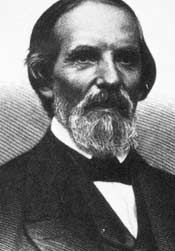
William Miller was hesitant to set a specific day for the return of Christ. At first, he merely predicted that Christ would return between March 21, 1843 and March 21, 1844.1 After that failure, in August of 1844, Millerite leader Samuel Snow proclaimed that Christ would return on the Day of Atonement, on "the tenth day of the seventh month of the year of jubilee: and that is the present year, 1844."2 Miller eventually got onboard with this date. Before long, it became known as the date of the Great Disappointment when Christ did not return. How did Snow arrive at this date?
According to SDA apologist Daniel Golovenko, Snow relied on an "obsolete calendar to generate October 22 as the modern 'tenth day of the seventh month.'"3 However, no evidence of the existence of that "obsolete calendar" has ever been produced by the SDA sect. An alternative explanation is provided by the historian Isaac Wellcome. In 1844, he was a preacher in the Millerite Delusion and was familiar with Snow. He recollects that Snow arrived at his knowledge of the date in a more mystic way. He writes that Snow was deep in "meditation" when he was "suddenly impressed" that Jesus would return on the Day of Atonement.4 This explanation would seem to be more in alignment with Snow's character. According to the SDA Encyclopedia, "in 1845 Snow declared himself to be Elijah the prophet." It seems that Snow had a bad habit of interpreting his "impressions" to be messages from God. Unfortunately, his impressions were not always right. He later proclaimed himself to be Christ’s "Prime Minister" and demanded that all earthly leaders surrender their authority to him.5 It is clear to the most casual observer that Snow was operating under a strong delusion.
While the exact method of how Prophet Snow fabricated the October 22 date remains shrouded in mystery, the actual Day of Atonement (Yom Kippur) in 1844—based on the Karaite and Orthodox Jewish calendars—was September 23, 1844.6 All evidence indicates that the Jews celebrated it upon that date.7 There is no evidence that any community of Jews celebrated it on October 22. In 1939, the leading Karaite rabbi Youseff Ibrahim Marzork confirmed the date of Yom Kippur: "In the year 1844 it is on Monday 23rd September for the Karaite and Rabbinical."8 Finally, according to Susan Prohofsky of Purdue University, the "Day of Atonement has never occurred so late in the year as October 22."9 Rabbi Loschak explains:
It is impossible for Yom Kippur to occur that late in the month of October no matter what alleged change (to the Jewish calendar) there may have been. Simply put the Torah tells us that the first month of the Jewish year is the month of Passover which must occur in the Spring, and the latest secular date it can start is about April 19. Yom Kippur is always 173 days after this date, and that would be October 9. There is no way it could work out to be October 22.10
In 1844, the Jews celebrated Yom Kippur on September 23, 1844. The date of October 22, 1844, was a fake date invented by Samuel Snow.
Ellen White's Endorsement of Snow's Fake Date
During the Millerite Delusion of 1844, Ellen Harmon and other Adventists looked forward to October 22 with great anticipation. After Christ did not return on that date, O.R.L. Crosier devised a theory that instead of returning to the earth, Christ moved from the Holy Place of the heavenly sanctuary to the Most Holy Place on October 22, 1844, and began a work of investigative judgement. In 1846, Ellen Harmon had a vision endorsing Crosier's understanding.11 Subsequently, the shut-door Adventists, led by Joseph Bates and James and Ellen White, adopted Crosier's theory as a fundamental teaching of their sect. Today, Seventh-day Adventists [SDAs] continue to hold that theory as one of the pillars of their faith.
In addition to providing a visionary endorsement of Crosier's view, Mrs. White confirmed in her book Great Controversy that the "tenth day of the seventh month, the great day of atonement, the time of the cleansing of the sanctuary...in the year 1844 fell upon the 22d of October."12 To this day, SDAs revere October 22 as the starting point of the Investigative Judgment.
Conclusion
Today, many SDAs believe heavenly events of great relevance to them occurred on October 22, 1844. They have not been informed that the date is fraudulent. They have not been informed that the Jews celebrated the actual Day of Atonement in 1844 on September 23rd. On a personal note, I was educated in SDA schools for 16 years. I attended many SDA church services, Sabbath School meetings, and evangelistic crusades. In all the decades I spent in the SDA Church, I never heard a single person mention that October 22, 1844, was a fake date. What a tragedy that this so-called church is so embarrassed about its origin that they would allow their people to believe a White lie!
See also