
William Miller:
The One Time He Was Right
By , Jan.
Ellen White, Early Writings, 258
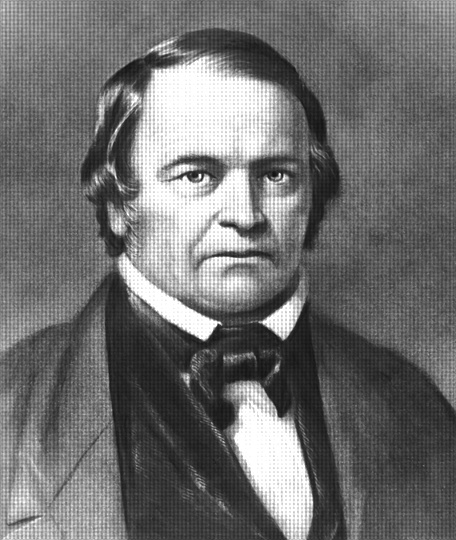
Here is the true history you will not find in Ellen White's Great Controversy. You will soon understand why.
According to the official Seventh-day Adventist [SDA] narrative presented in prophet Ellen White's Great Controversy, their denomination represents the natural continuation of William Miller's prophetic ministry. Over the course of several glowing chapters, Mrs. White portrays Miller as a modern-day Elisha, called by God just as the ancient prophet had been. She compares him to John the Baptist, a faithful herald preparing the way for Christ's imminent return.1 Miller's story receives reverent treatment right up until October 22, 1844. Then, abruptly, he fades from the narrative.
This disappearance is odd, considering Miller, the father of Adventism, played a significant role in the birth and formation of the Advent Movement for several years after the Disappointment. Despite his age and deteriorating health, he remained an active leader, speaker, traveler, and writer during the crucial years (1845–1848) that shaped Adventism.2
Are SDAs the Continuation of William Miller's Movement?
Ellen White's story shifts to a faithful remnant of Adventists who, guided by the prophetic visions of herself, carried forward the torch of reformation that Miller had lit.
It's a compelling tale of prophetic succession. Ellen White picks up the mantle being laid down by the aging Miller
There's just one glaring problem with this story: It is a fabrication.
The smooth transition from Miller to the Whites never happened. In fact, the historical evidence reveals something far more damning. During the final years of his life, William Miller opposed virtually every distinctive doctrine that Ellen White championed. He did not endorse the Whites. He did not fellowship with them. He never acknowledged Ellen White as a prophet of God. Instead, the documented record shows that Miller stood in firm, unambiguous opposition to the teachings the Whites were promoting—teachings Mrs. White claimed came directly from heaven through her visions.
The SDA sect has built its identity on the foundation of being William Miller's spiritual heir. But the evidence paints a far different narrative. Miller repeatedly and explicitly rejects the very doctrines that would become the cornerstone of Seventh-day Adventism. This article will examine six major areas where William Miller's documented positions directly contradicted Ellen White's teachings.
Let William Miller tell you what he really thought about the doctrines of Ellen G. White.
1. The Shut Door of Salvation
In the immediate aftermath of Christ's failure to appear on October 22, 1844, William Miller—along with many other Adventists—experienced a brief period of confusion about the meaning of their disappointment. For a few months, Miller entertained the idea that a door of some kind had been shut. In December 1844, writing in the depths of disappointment, he penned these words:
We have done our work in warning sinners and in trying to awake a formal church. God in his providence has shut the door; we can only stir up one another to be patient.3
This was an emotional response to crushing disappointment, written by a man whose entire ministry had been built around a specific date that had come and gone. It's understandable, if theologically confused. But here's what sets William Miller apart from Ellen White: Miller was capable of admitting he was wrong and adjusting his theology.
One can appreciate Ellen White's predicament. If she were to admit she was wrong, it would be an admission that her "visions" were wrong, which would be an admission that she was a false prophet.
By the spring of 1845, Miller had completely abandoned the shut-door position.4 The evidence for this reversal is overwhelming and public. In April 1845, Miller traveled to Albany, New York, where he joined with Joshua V. Himes, Josiah Litch, Sylvester Bliss, and nearly every other major leader of the Advent movement for what would become known as the Albany Conference. Miller chaired this conference. Together, these leaders drafted and signed a formal declaration that explicitly rejected the shut-door doctrine. The language they chose was unambiguous:
That it is the duty of the ministers of the Word to continue in the work of preaching the gospel to every creature... That we can look with no approbation upon those who, under the cloak of the Advent doctrine, seek to...alienate their minds from the great principles and duties of the Gospel...5
Read that carefully. Miller and the other signatories declared it was their duty—not an option, but an obligation—to preach the gospel to every creature. They stated clearly that they could have "no approbation" (no approval, no tolerance) for anyone who would use Advent teachings to "alienate" believers from the fundamental duties of the gospel. One of those duties? Preaching salvation to all people (Matt. 28:19; Mark 16:15).
The Albany Conference represented the mainstream response to the Great Disappointment. The leaders recognized that the door of salvation remained open, and they committed themselves to continuing gospel ministry.
Meanwhile, in the shadows of New England, a different response was taking shape. A small, radical splinter group of "shut-door Adventists" refused to admit their error. These fanatics, led by a teenage girl named Ellen Harmon (soon to be Ellen White) who claimed to receive visions from God, doubled down on the very doctrine Miller had abandoned. They insisted the door was shut. No more sinners could be saved. The work for the world was finished. Those who had rejected the 1844 message were sealed in their damnation.
William Miller was not a man to mince words. In August 1845, just months after the Albany Conference, he published his Apology and Defence—a comprehensive statement of his beliefs and a pointed rejection of the fanaticism plaguing the Advent movement. The language he used to describe the shut-door teaching is absolutely scathing:
I have no confidence in any of the new theories that have grown out of that movement, viz., that Christ then came as the Bridegroom, that the door of mercy was closed, that there is no salvation for sinners, that the seventh trumpet then sounded, or that it was a fulfillment of prophecy in any sense. The spirit of fanaticism which has resulted from it, in some places, leading to extravagance and excess, I regard as of the same nature as those which retarded the reformation in Germany; and the same as have been connected with every religious movement since the first advent. The truth is not responsible for such devices of Satan to destroy it. ...men have crept in unawares, who have given heed to seducing spirits and doctrines of devils, teaching lies in hypocrisy, denying any personal existence of Christ, forbidding to marry, and commanding to abstain from certain kinds of food, denying the right to pray for sinners, and commanding to violate our social duties, etc. With such things, I have no sympathy.6
Let those words sink in. Miller didn't just disagree with the shut-door doctrine. He called it a "device of Satan." He said those promoting it had "given heed to seducing spirits and doctrines of devils." How devastatingly accurate his words turned out to be!
He was so repulsed by this demonic doctrine that he compared the fanaticism surrounding it to the excesses that had damaged the Protestant Reformation. He declared, in the strongest possible terms: "With such things, I have no sympathy."
Could Miller have been any clearer in his condemnation? The shut-door doctrine that Ellen White was promoting through her visions was, according to William Miller, satanic in origin, fanatical in practice, and destructive to genuine Christianity. These weren't the words of a man who approved of what the Whites were teaching. These were the words of a man who saw demonic deception at work and felt compelled to expose it.
No Prayers for Sinners?
The shut-door doctrine wasn't merely an abstract theological error. It produced concrete, measurable wickedness in the lives of those who embraced it. And nowhere was this more evident than in the teaching that it was wrong to pray for the salvation of sinners.
The followers of Ellen White's visions believed that praying for lost souls was not just pointless but actually sinful. They taught that God had rejected the world, that His Spirit had been withdrawn from sinners, and that Christians should likewise withdraw their sympathy and cease their intercession. James White, Ellen's husband and the editor who tirelessly promoted her visions, openly admitted that this demonic doctrine had infected their group:
When we came up to that point of time, all our sympathy, burden and prayers for sinners ceased, and the unanimous feeling and testimony was, that our work for the world was finished for ever.7
"Prayers for sinners ceased." "Our work for the world was finished for ever." This wasn't hyperbole. James was describing the actual practice of the shut-door Adventists. They literally stopped praying for the lost. They abandoned evangelism. They turned their backs on the unsaved world and declared that nothing more could be done for them.
H.E. Carver, an early Adventist who personally witnessed Ellen White's ministry during this period, confirmed that this teaching came directly from her:
She told them it was wrong to pray for sinners, and did not pray for them.8
Ellen White herself left no doubt about her position. In her notorious Camden vision—one of the most chilling examples of her early "revelations"—she explained the theological justification for this monstrous doctrine:
Then I saw that Jesus prayed for his enemies; but that should not cause us or lead us to pray for the wicked world, whom God had rejected—when he prayed for his enemies, there was hope for them, and they could be benefitted and saved by his prayers, and also after he was a mediator in the outer apartment for the whole world; but now his spirit and sympathy were withdrawn from the world; and our sympathy must be with Jesus, and must be withdrawn from the ungodly. ... I saw that the wicked could not be benefitted by our prayers now.9
Imagine the spiritual darkness necessary to look at lost, dying sinners—people made in the image of God, people for whom Christ died—and conclude: "God has rejected them. Don't waste your prayers. They cannot be helped." This wasn't Christianity. This was something far more sinister masquerading as divine revelation.
William Miller found this stance particularly repugnant, saying he had "no sympathy" for those promoting this fanatical doctrine.
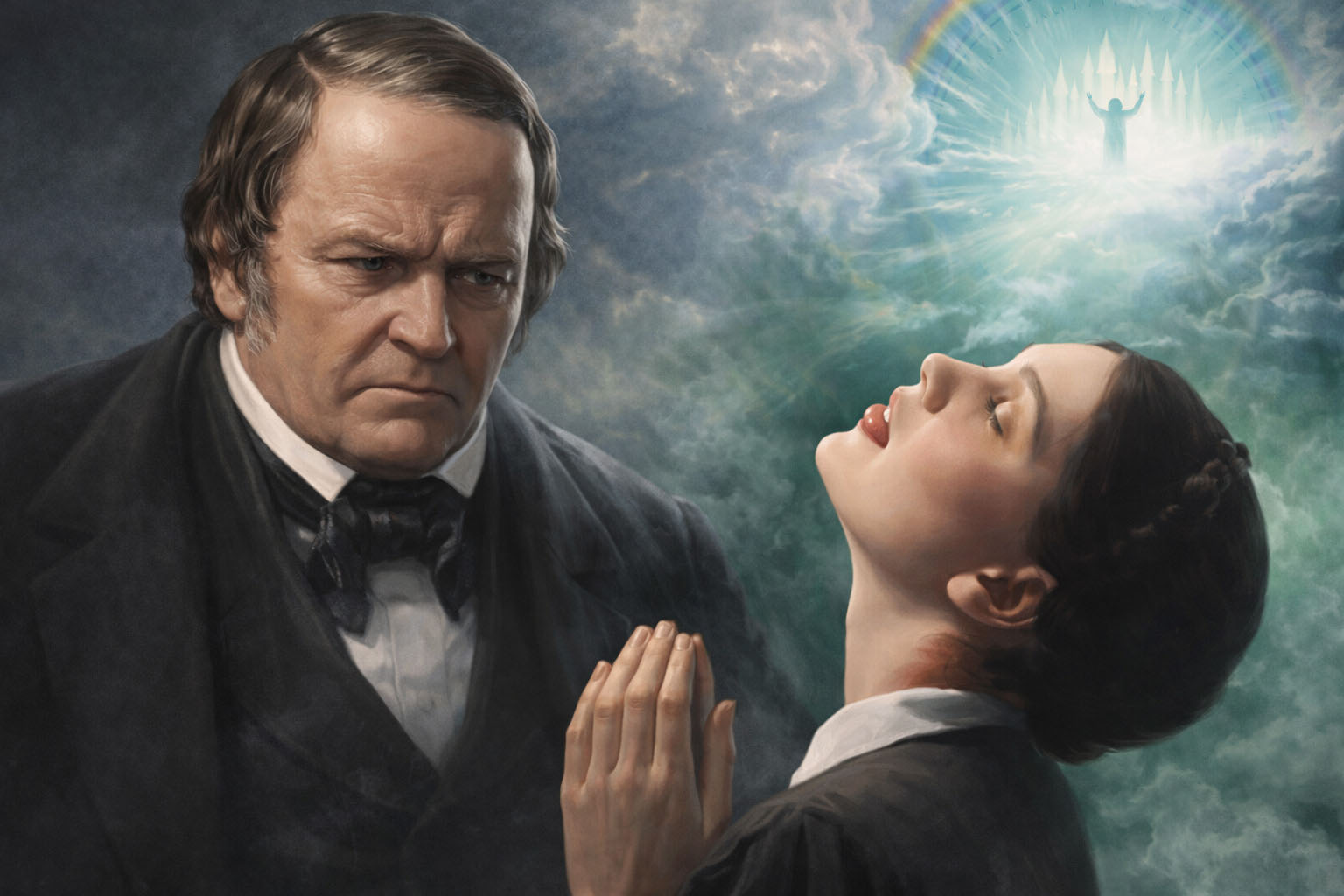
Miller Aware of Mrs. White
Miller was fully aware that Ellen White was one of the primary promoters of the shut door delusion. This is known because in April 1846, Otis Nichols—a devoted follower of Mrs. White—wrote to Miller attempting to convince him to accept her as a true prophet. In that letter, Nichols described Ellen White's message in these terms:
Her message was...that our work was done for the nominal church and the world, and what remains to be done was for the household of faith.10
Ellen White was teaching that the work for "the world" was done. Finished. Complete. No more gospel preaching to the unconverted. No more prayers for sinners. The only remaining work was to minister to the "household of faith"—those who had already accepted Miller's 1844 movement.
William Miller refused to accept her as a prophet. And who can blame him? What genuine prophet of God would teach believers to stop praying for the lost? What message from heaven would contradict the Great Commission and declare the work of evangelism complete before Christ's return? Miller rightly recognized that Ellen White's visions were not from God but represented a dangerous delusion leading people away from biblical Christianity. This demonstrates that Seventh-day Adventism did not arise as a continuation of Miller's work but in opposition to it.
2. Visionary Influence
If there was one principle William Miller held sacred throughout his entire ministry, it was Sola Scriptura—the Bible and the Bible alone as the source of divine truth. Miller had spent years painstakingly studying Scripture to develop his prophetic timeline. He based his teachings entirely on what he believed the Bible clearly taught. While he made errors in interpretation, his methodology was sound: compare Scripture with Scripture, let the Bible interpret itself, and never elevate human wisdom or experience above the written Word.
After the Great Disappointment, a disturbing phenomenon swept through certain sectors of the disappointed Adventists. Visions. Dreams. Trances. Supernatural experiences. Suddenly, people who had never claimed prophetic gifts before were seeing visions and declaring special revelations from God. Some claimed to see into heaven. Others received messages about secret sins or future events. Still others fell into trances during which they supposedly received divine communications.
It was chaos. Every self-proclaimed visionary had a different message. Every new revelation seemed to contradict someone else's revelation. Families were divided. Churches split. The Advent movement, already reeling from the disappointment, was now fragmenting under the weight of competing claims to divine authority.
Joshua V. Himes, Miller's closest associate and the man most responsible for publicizing Miller's message, recognized the danger immediately. As editor of the Advent Herald, Himes refused to publish these visions. He kept the Herald focused on biblical exposition and sound doctrine. He steered clear of the fanaticism that was consuming other Advent publications.
Miller noticed. And he praised Himes for it. In October 1847, Miller wrote to Himes with explicit approval:
Your course of conduct in your doctrine and editorial department of the [Advent] Herald, as well as the publishing of works from your office, I heartily approve of and fellowship. And I would rejoice in my soul if I could honestly say as much of our other Advent offices and editors. But alas, I see them leading off into their old, and, I think, visionary dogmas, which have had, and now have, a deleterious effect upon the minds of many of those who otherwise would have been your warmest supporters in proclaiming the Advent doctrine,--the kingdom of God at hand.11
Notice Miller's carefully chosen language. He didn't call these visions "helpful" or beneficial in any way. He said they were having a "deleterious effect."
That word "deleterious" is significant. It means harmful, damaging, destructive. It refers to something that causes gradual deterioration, like a slow-acting poison. Miller wasn't just saying these visions were wrong. He was saying they were actively destroying people's faith. They were corrupting the Advent movement from within. They were leading believers away from sound biblical doctrine and into theological quicksand.
Who was Miller referring to? The context makes it abundantly clear. He was contrasting Himes's editorial approach with that of "our other Advent offices and editors." And in 1847, the most prominent Advent editor publishing visions was James White, who had begun printing his wife Ellen's visions in his paper Present Truth. Issue after issue contained Ellen's supposed revelations—visions about the shut door, visions about the Sabbath test and visions about them being in the midst of the sealing time.
The Albany Conference of 1845 had already addressed this issue formally. Understanding the chaos that visionaries were creating, the conference adopted a resolution that stated:
That we can look with no approbation upon...any new messages, visions, dreams...revelations...not in accordance with the unadulterated word of God.12
The message could not have been clearer: No visions. No dreams. No new revelations. Scripture alone.
Ellen White and her followers ignored that counsel entirely. She continued receiving visions. James continued publishing them. And they continued claiming these visions carried divine authority equal to that of Biblical prophets. When Ellen White's visions contradicted Scripture, her followers found ways to reinterpret Scripture to fit the visions. When her visions contradicted each other (which they frequently did), her followers found ways to explain away the contradictions. The visions became the lens through which everything else was viewed.
This was precisely what Miller feared. This was the "deleterious effect" he warned about. Once a person accepts extra-biblical revelation as authoritative, they have abandoned the Protestant principle of Sola Scriptura. They have opened the door to every kind of theological innovation and excess.
William Miller spent the final years of his life warning against this very danger. He saw what was happening. He understood where it would lead. And he wanted nothing to do with it.
That's why he praised Himes for avoiding "visionary dogmas." That's why he mourned over other editors who were promoting them. And that's why he never, ever endorsed Ellen White as a prophet.
3. The Sabbath as a Test of Salvation
By 1847, James and Ellen White had fully embraced the teachings of Joseph Bates, a retired sea captain who had become convinced that seventh-day Sabbath observance was the final test for God's people. Bates taught that Adventists were in a special seven-year testing period that would culminate with Christ's return in 1851. The test? Whether they would accept the Saturday Sabbath as the true day of worship.
Ellen White's visions conveniently confirmed Bates's teaching in every detail. She saw in vision that the Sabbath commandment had a special glory, a halo of light surrounding it. She saw that those who kept Sunday were receiving the Mark of the Beast. She saw that Sabbath-keeping was necessary to receive the Seal of God. In vision after vision, she elevated the fourth commandment above all others and made Sabbath observance the central issue of the last days.
This wasn't merely teaching that the seventh day was the biblical Sabbath. Many Christians before and since have held that position while maintaining that salvation is by grace through faith alone. What made the Whites' teaching pernicious was that they made Sabbath-keeping a test of salvation. They taught—and Seventh-day Adventists still teach today—that in the final crisis, those who keep Sunday will be lost and those who keep Saturday will be saved. Sunday worship becomes the Mark of the Beast. Saturday worship becomes the Seal of God.
The Sabbath, in other words, becomes a condition of salvation. A test.
This teaching is thoroughly documented in the book National Sunday Law: Fact or Fiction. The evidence from Ellen White's own pen is overwhelming. She taught that accepting the Sabbath truth is essential for salvation in the last days. She taught that rejecting it means eternal death. She made the fourth commandment the dividing line between the saved and the lost.
William Miller would have none of it. At the same Albany Conference where Miller and other leaders rejected the shut door and refused to endorse visions, they also addressed the issue of salvation. The declaration they signed could not have been more explicit:
That we have no fellowship with any of the new tests as conditions of salvation, in addition to repentance toward God and faith in our Lord Jesus Christ, and a looking for and loving his appearing.... That the condition of salvation is repentance toward God and faith in our Lord Jesus Christ.13
Read that again slowly. Miller and the Albany Conference explicitly rejected "new tests as conditions of salvation." They declared that salvation has one condition: "repentance toward God and faith in our Lord Jesus Christ." That's it. Nothing added. No Sabbath test. Just repentance and faith.
While Miller was rejecting "new tests," Ellen White was establishing the Sabbath as the ultimate test. While Miller was calling people back to the simplicity of the gospel, Ellen White was adding requirements and conditions.
But the Albany Conference didn't stop there. Recognizing the danger of false teachers introducing new requirements for salvation, they added this warning:
And, whereas, our congregations have suffered greatly from persons who have called themselves to the ministry and taught errors, and by smooth words and fair speeches have deceived the hearts of the simple, and led them astray.14
Who were these self-appointed teachers leading people astray? Who was adding "new tests" to the simple gospel of repentance and faith? Who was using leading believers astray?
The Whites fit the description with stunning precision. They had called themselves to prophetic ministry without any external confirmation.15 They were teaching doctrines that contradicted the mainstream Adventist position. They were claiming special visions that supposedly gave them authority beyond what other believers possessed. And they were definitely adding new tests—the Sabbath being the most prominent—as conditions of salvation.
On this issue, as on so many others, William Miller stood diametrically opposed to Ellen White's teachings.
4. Sectarianism
One of the most divisive and destructive teachings promoted by Ellen White was the doctrine that all Christian churches except the SDA sect constitute "Babylon"—the fallen, apostate religious system described in Revelation. This teaching has poisoned SDA attitudes toward other Christians for more than years.
According to Mrs. White, this "fall" of the churches happened because they rejected the Millerite message in 1844:
When the churches spurned the counsel of God by rejecting the Advent message, the Lord rejected them. The first angel was followed by a second, proclaiming, "Babylon is fallen, is fallen, that great city, because she made all nations drink of the wine of the wrath of her fornication." [Revelation 14:8] This message was understood by Adventists to be an announcement of the moral fall of the churches in consequence of their rejection of the first message. The proclamation, "Babylon is fallen," was given in the summer of 1844, and as the result, about fifty thousand withdrew from these churches.16
This sectarian teaching became foundational to Seventh-day Adventism. Ellen White elaborated on it throughout her ministry, particularly in The Great Controversy, where an entire chapter is devoted to explaining how the Protestant churches became Babylon.17 According to her visions, God rejected these churches because they rejected Miller's delusional teaching that Christ was returning in 1844. True Christians, therefore, must "come out of Babylon"—leave these churches and join with the faithful remnant (those following Ellen White's visions).
This doctrine has produced exactly what you would expect: a sectarian, divisive, spiritually arrogant mindset. SDAs are taught that their church is special, that they have truth others don't have, that Sunday-keeping churches are deceived and will eventually persecute them. The "Babylon" label creates an us-versus-them mentality that makes genuine Christian fellowship nearly impossible.
William Miller witnessed the early development of this teaching, and he was grieved by it. As early as 1843—even before the Great Disappointment—some Millerites had begun calling the Christian churches "Babylon" and urging believers to separate from them. Miller opposed this teaching from the start:
In the fall of 1843, some of my brethren began to call the churches Babylon, and to urge that it was the duty of Adventists to come out of them. With this I was much grieved, as not only the effect was very bad, but I regarded it as a perversion of the word of God, a wresting of Scripture.18
Notice Miller's language. This was worse than "bad." He called it "a perversion of the word of God, a wresting of Scripture." This is strong language from a man who typically measured his words carefully.
Miller—who studied Revelation more than Ellen White, James White, and Joseph Bates combined—had already identified Babylon as Roman Catholicism.19 He never deviated from this view. To apply the "Babylon" label to fellow Protestants simply because they didn't accept the 1844 date was, in Miller's view, a serious distortion of biblical prophecy.
More importantly, Miller recognized the devastating practical effects of this teaching. It fostered pride, division, and sectarianism. It caused believers to view their Christian brothers and sisters as enemies. It led to the very kind of spiritual arrogance that Jesus condemned in the Pharisees.
When the same sectarian spirit resurfaced after the Disappointment—this time promoted by visionaries like Ellen White who claimed divine authority for their sectarian views—Miller was even more direct in his opposition. He wrote: "I have been pained to see a spirit of sectarianism and bigotry."20 He advised Adventists to "shun such as cause divisions."21
Perhaps that's why Miller and most other thinking Adventists shunned the Whites. They were the very definition of those who "cause divisions."
The Albany Conference addressed this issue directly. Among their resolutions was this statement:
Resolved, That we can look with no approbation upon those who, under the cloak of the Advent doctrine, seek to distract the brethren by questions that gender strife.22
"Questions that gender strife." That's exactly what the Babylon doctrine did. It generated strife between Adventists and other Christians. It generated strife within families when some members accepted the Advent message and others didn't. It generated strife within the Advent movement itself as different groups competed to be the "true" remnant that had come out of Babylon.
Ellen White was a primary source of this strife. Her visions constantly reinforced sectarian attitudes. Her writings portrayed Seventh-day Adventists as God's special, chosen people and everyone else as deceived, rebellious, or under satanic influence.
This was the opposite of William Miller's spirit. He maintained fellowship with believers who disagreed with his prophetic timeline and did not consider them "lost," "doomed," or "damned" just because they rejected his delusional teaching about 1844.
William Miller believed in Christian unity. Ellen White destroyed it. And that's just one more reason why Miller would never have endorsed her as a prophet.
5. The Denunciatory Spirit
In The Great Controversy, Ellen White presents herself as an admirer and defender of Miller. She devotes ample space to his ministry, quotes from his writings, and portrays him as a faithful servant of God who prepared the way for the Advent movement. But a careful examination of how she quotes Miller reveals something disturbing: she omitted key words to hide his opposition to visionaries like herself.
Consider this quotation that appears on page 396 of The Great Controversy. Mrs. White is quoting from Sylvester Bliss's biography of Miller. Notice the ellipsis below. We have restored [in brackets] the text from the original letter that was omitted by Ellen White:
"The devil," said Miller, "has great power over the minds of some at the present day. And how shall we know what manner of spirit they are of? The Bible answers: 'By their fruits ye shall know them.'... [I think those who claim this power will soon manifest, by their fruits, that they have another rule than the Bible. I have observed that those persons, who think that they have been baptized by the Holy Ghost, as they term it, become more sensitive of themselves, and very jealous for their own glory; less patient, and full of the denunciatory spirit against others, who are not so fortunate as themselves.] There are many spirits gone out into the world; and we are commanded to try the spirits. The spirit that does not cause us to live soberly, righteously, and godly, in this present world, is not the Spirit of Christ. I am more and more convinced that Satan has much to do in these wild movements.... Many among us who pretend to be wholly sanctified, are following the traditions of men, and apparently are as ignorant of truth as others who make no such pretensions."23
Did you catch what Ellen White removed? Miller was describing false prophets who claim to have special spiritual power. And he gave two specific identifying marks of these false prophets:
First, they "have another rule than the Bible." In other words, they claim authority from visions, dreams, or direct revelations that go beyond Scripture. They don't limit themselves to what the Bible teaches. They have an additional source of truth—their own prophetic experiences.
Second, they are "very jealous for their own glory; less patient, and full of the denunciatory spirit against others." They defend their prophetic claims vigorously. They can't tolerate criticism. And they harshly condemn anyone who questions their authority or rejects their visions.
These two characteristics describe Ellen White with devastating accuracy. She absolutely claimed authority beyond the Bible—her visions were treated as equal to Scripture by her followers. And she was notorious for her denunciatory spirit toward anyone who questioned her prophetic calling.
By carefully editing out this portion of Miller's quote, Ellen White made it appear that Miller was only condemning those who follow "traditions of men"—which she interpreted to mean Sunday-keeping Christians. But Miller was actually describing something entirely different: visionaries who claim special spiritual authority and viciously attack their critics.
This is deliberate fraud. Ellen White knew that Miller's words described her perfectly, so she cut out the incriminating portion and redirected his criticism toward her theological opponents.
The evidence for Ellen White's denunciatory spirit is overwhelming and well-documented. Her harsh treatment of others fills the pages of her Testimonies. She was particularly vicious toward anyone who dared question her prophetic authority. Once you questioned her visions, you became her enemy, and she would see you in vision as "doomed," "spotted," or bound for perdition.
Lucinda Burdick, who personally witnessed Ellen White's behavior in the years immediately following the Great Disappointment, described the pattern clearly:
People in all the churches soon began to get their eyes open, and came out decidedly against her visions; and, just as soon as they did so, she used to see them 'with spots on their garments'... several ministers, whom she saw landed in the kingdom with 'Oh! such brilliant crowns, FULL of stars.' As soon as they took a stand against the visions, she saw them 'doomed, damned, and lost for ever, without hope.'24
This is the very spirit Miller warned against. Those who are "very jealous for their own glory" and "full of the denunciatory spirit against others." You praised Ellen's visions? She saw you crowned in heaven. You questioned her visions? She saw you damned forever.
William Miller addressed this problem directly in his Apology and Defence:
Some have an inclination to indulge in harsh and denunciatory remarks against all who do not agree with them.25
If that statement applies to anyone, it applies to Ellen White. Her entire ministry was characterized by livid denunciations of those who disagreed with her.
Almost as if to prove Miller's point, in 1858 Mrs. White claimed Miller didn't accept SDA teachings because others led him "astray" and he fell "under the power of Satan."26 Although this statement never made it into Great Controversy, it was like stabbing a knife in the back of Miller. Mrs. White denounced Miller for his "error" in rejecting the Whites' teachings accusing him of being under Satanic power. How utterly predictable.
Miller saw this spirit for what it was: the opposite of Christ's spirit. The opposite of love, patience, and humility. The mark of a false prophet, not a true one.
6. Not Mistaken about 1844
In the aftermath of October 22, 1844, the vast majority of Millerites—including William Miller himself—quickly recognized the obvious truth: they had made a mistake. Christ had not returned. The 2300-day prophecy had not been fulfilled as they expected. Their calculations, while done sincerely, had been in error. It was time to admit the mistake, learn from it, and move forward with humility.
Miller demonstrated remarkable honesty and courage in acknowledging his error. Despite the personal embarrassment, despite the ridicule from critics, despite the disappointment of thousands of followers, he openly confessed that he had been wrong about the date. This takes character. This takes integrity. This is what you expect from someone who values truth above ego.
But a small, stubborn faction of Adventists refused to admit any error. Led by visionaries like Ellen White, they insisted that October 22, 1844, was a prophetically significant date. They claimed that something important had indeed happened on that day—just not what Miller had predicted. According to their new interpretation, Christ didn't come to earth on October 22, but He entered the Most Holy Place of the heavenly sanctuary to begin a work of "investigative judgment."
This reinterpretation allowed them to maintain that their prophetic calculations had been correct while explaining away the obvious failure of Christ to appear. In their minds, they hadn't been wrong about the date—they had simply misunderstood what event would occur on that date.
Ellen White's visions confirmed this new teaching. She wrote:
Their mistake consisted in not understanding what the sanctuary was and the nature of its cleansing. As I looked again at the waiting, disappointed company, they appeared sad. They carefully examined the evidences of their faith and followed down through the reckoning of the prophetic periods, but could discover no mistake. The time had been fulfilled, but where was their Saviour?27
Notice the claim: "could discover no mistake." "The time had been fulfilled." According to Ellen White's vision, the Advent believers had been correct in their calculation of the 2300 days. The problem wasn't the date. The problem was only their misunderstanding of which event would occur.
William Miller found this position intellectually dishonest and spiritually dangerous. In his Apology and Defence, he addressed it directly:
Some are disposed to lay a stress on the seventh month movement which is not warranted by the Word. ... We expected the personal coming of Christ at that time; and now to contend that we were not mistaken, is dishonest. We should never be ashamed to frankly confess all our errors.28
Let those words sink in. Miller didn't say "those who contend we were not mistaken have a different interpretation." He didn't say "they might have a point worth considering." He said: "to contend that we were not mistaken, is dishonest."
That's Miller's verdict on Ellen White's position. Dishonest. Not just wrong, but deliberately deceptive. A refusal to face obvious facts. An attempt to save face by inventing new doctrines to explain away a failed prophecy.
Miller expected "the personal coming of Christ at that time." Christ didn't come. Therefore, Miller was mistaken. It's that simple. It requires no complex theological gymnastics. It demands no inventive reinterpretation. It's just basic intellectual honesty.
But Ellen White and her followers couldn't accept that simple truth. Why? Because admitting they were completely wrong about October 22, 1844, would undermine the entire foundation of their movement. If nothing prophetically significant happened on that date, then Ellen's visions confirming that something did happen were false. If her visions about 1844 were false, then all her visions were suspect. If her visions were suspect, then her prophetic authority evaporated.
So instead of admitting error, they invented a new doctrine. They claimed Christ entered a new phase of ministry on October 22, 1844. They taught that the sanctuary to be cleansed was a heavenly sanctuary, not the earth. They developed an entire extra-biblical—and unbelievable—theology to explain what supposedly happened on that date.
And through it all, they maintained that they hadn't been mistaken about the date. Only about the event.
William Miller called this dishonest. He was right.
Honest people admit their mistakes. They confess their errors. They say, "I was wrong, I'm sorry, I'll do better." This is basic human decency. This is fundamental Christian character.
False prophets do the opposite. When their prophecies fail, they reinterpret them. When their predictions don't come to pass, they blame the failure on their own followers. When the evidence contradicts their claims, they feign a lapse of memory.
Ellen White followed the false prophet playbook perfectly.
William Miller had the integrity to say: "I was wrong." Ellen White never did. And that tells you everything you need to know about the difference between an honest man who made mistakes and a false prophet who refused to admit them.
Conclusion: The Verdict of History
William Miller made some colossal blunders in life. Even he admitted it. But he finally got one thing right.
William Miller—the man Seventh-day Adventists claim as their spiritual forefather, the man Ellen White praised in The Great Controversy, the man whose prophetic ministry supposedly laid the foundation for the SDA sect—rejected everything Ellen White stood for:
- Rejected her shut-door doctrine, calling it a "device of Satan" promoted by those who had given heed to "seducing spirits and doctrines of devils."
- Rejected her visions, calling them "visionary dogmas" having a "deleterious effect" on believers who should have been focused on biblical truth.
- Rejected the Sabbath test as a condition of salvation, explicitly stating that he had "no fellowship with any of the new tests as conditions of salvation."
- Rejected sectarianism, calling it "a perversion of the word of God, a wresting of Scripture," and condemning the spirit it produced.
- Rejected the denunciatory spirit that characterized Ellen White's ministry, warning against those who are "very jealous for their own glory" and "full of the denunciatory spirit against others."
- Rejected the dishonest refusal to admit error about 1844, stating plainly that "to contend that we were not mistaken, is dishonest."
Seventh-day Adventism wasn't a progression of the Millerite Movement. It was an aberration.
Miller never endorsed her. He never accepted her as a prophet. His silence speaks volumes.
That's why the smooth hand-off from Miller to the Whites, as portrayed in The Great Controversy, is a fabrication. That's why Ellen White had to edit Miller's words to hide his condemnation of visionaries.
The historical record tells a different story. It reveals a man who stood firmly against the very teachings that would become the pillars of Seventh-day Adventism.
Yes, William Miller was wrong about many things. And at the end of his days... perhaps a little wiser for his mistakes... Miller—finally— got it right!
See also
- The Shut Door Doctrine - Complete documentation of how Ellen White taught that salvation ended in 1844
- The Camden Vision - Ellen White's vision forbidding prayer for sinners
- National Sunday Law: Fact or Fiction - Examining the Sabbath as a test of salvation
- Ellen White's Harsh Treatment of Others - Documentation of her denunciatory spirit toward critics
- William Miller - Was he really a great reformer?