Was Ellen White More Accurate than Other Health Reformers?
By , Sep.
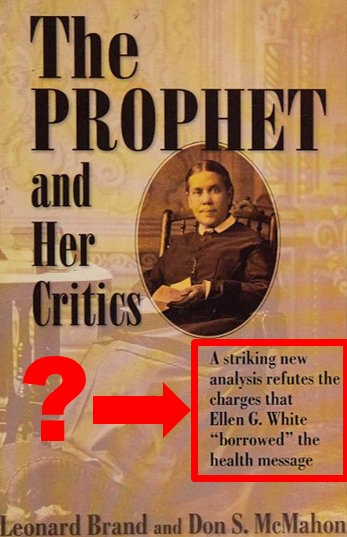
In 2005, Seventh-day Adventists Leonard Brand and Don McMahon published a book entitled The Prophet and Her Critics. The book's cover boldly proclaims:
A striking new analysis refutes the charges that Ellen G. White "borrowed" the health message.
What? Does this book really refute the charges that Ellen copied her health message from others? Did Ronald Numbers and Walter Rea get it all wrong?
Ironically, while carefully avoiding the words "plagiarized" or "copied," the authors candidly admit the following:
Many of her health principles are found in the works of others who wrote before her and concurrent with her.1
Despite this candid admission, they go on to claim that just because her writings mirror other health reformers, and despite the fact that those reformers' books were in her personal library, that is not sufficient proof for these SDA authors to believe she plagiarized her health message. How much more proof does one need? They argue that Mrs. White could have received her message supernaturally and written it out independently before she read those books. If that is even believable, then how can a person know if she really plagiarized or not?
The authors crafted a clever test to save the reputation of their beleaguered plagiarizing prophetess. They claimed that if the accuracy of her health writings exceeded that of other health reformers of her era, then that proves to them that her writings were received supernaturally.
After proposing this test, McMahon spends a chapter explaining how he carried out this test to prove Ellen White was receiving her health messages from God.
Putting Ellen White's Writings to the Test
In chapter five of the book, McMahon explains the methodology he used in his study of Ellen White's health writings:
- He selected five reformers to compare to Ellen (Sylvester Graham, William Alcott, L.B. Coles, Caleb Jackson, and J.H. Kellogg).
- He selected health categories (e.g. drugs, smoking, meat) and then subjectively sub-divided them into either "significant" or "minor." For example, he classified "pig meat" as minor and "butter" as significant.
- Using his own undisclosed comparison methods, he determined that Ellen White's reforms correlated much higher to being accurate (according to today's medical standards) than any of the other reformers.
McMahon's Striking New Analysis
After applying his "striking new analysis," McMahon boasted that Ellen White's health teachings in Spiritual Gifts were amazingly accurate:
Of the 46 'whats' in Spiritual Gifts, 96 percent have been verified by modern medicine, with 70 percent being significant to health, and 26 having a minor effect. In contrast, the health principles ('whats') of the five other health reformers studied ranged from 35-45 percent verified. ... The accuracy of her health principles cannot be derived from any human source available anytime during her lifetime.2
These pseudo-scientific results portray Ellen as having a near-perfect score. This would seem to prove the authors' hypothesis. Mrs. White passed the test! Since she was so much more accurate than other health reformers, she must have had supernatural assistance. There is just no other explanation.
Just one question: Can these findings stand up under the pressure of a real investigation?
McMahon's Findings Investigated
No one should be surprised that McMahon — an ardent believer in Ellen White — found Ellen White to be an inspired prophet using his striking new analysis. That is because McMahon created this analysis with the intent of proving Ellen was inspired. This is not an objective inquiry; it is a forensic rescue mission aimed at saving a 19th-century "visionary" from the inescapable reality of her massive plagiarism.
What McMahon is trying to sell is that Ellen never opened those other books until she was done with her own writings. This is proven by the accuracy of her writings compared to others. Is this a believable argument?
The spectacle of SDA doctors attempting to "verify" Ellen White by comparing her accuracy to others is a masterclass in fraud that rivals even that of the White Estate.
The facts presented below will refute McMahon's striking new analysis using his own stated criteria:
If we can demonstrate that the prophet had access to ordinary human resources that can adequately account for the information delivered in his or her message, then we have refuted or at least seriously weakened the hypothesis that "supernatural communication is needed.3
Evidence will be presented below that...
- Ellen White "had access to ordinary human resources that can adequately account for the information delivered in his or her message" thus seriously weakening Brand and McMahon's hypothesis.
- Ellen White was not more accurate than other reformers, thus refuting their hypothesis.
Questions about the Criteria
One concern with McMahon's research is that he established his own criteria for his test. It was not established independently. Furthermore, it appears slanted to give Ellen White the edge.
He is not just listing health principles. He is curating a scoring system that already favors Ellen’s profile. The categories are not neutral—they are selectively framed to highlight what she emphasized, while quietly sidelining areas where she was weak, mistaken, or simply echoing the common thought of her time. Whole categories of her debunked health teachings are not even listed for comparison (condiments, fruits and vegetables at the same meal, vital force, cheese, hot and cold food and drinks, baking soda, milk in bread, hot bread, salad dressing, and more).
In McMahon's methodology, questionable or demonstrably incorrect ideas are downgraded to “minor” or “unverified,” or left off the list entirely, effectively neutralizing their impact. The result is a system where correct ideas count heavily, while incorrect ones carry little to no penalty.5
By defining significance in terms that align with Ellen’s strengths while minimizing her errors, the system virtually guarantees the outcome before the evaluation even begins. It is a system geared to produce a favorable result for Ellen.
The question remains: Even when using McMahon's questionable criteria, does Ellen beat the rest of the health reformers "significantly"?
Significantly Better?
McMahon asserted:
Significantly more of the health principles Ellen White chose are correct than those of any of the others.4
According to McMahon, Ellen wasn't slightly more accurate. She was "significantly" more accurate. That hypothesis will be tested below. Ellen White will be tested against his pre-selected group of health reformers usings his questionable criteria to determine if she demonstrated any significant advantages over the other reformers.
The following analysis was produced by neutral computer-based software:
Accuracy Check: Comparing Ellen White to Five Health Reformers
Verified & “Significant” Teachings
| Principle | White | Alcott | Coles | Kellogg | Jackson |
|---|---|---|---|---|---|
| Avoid drugs / patent medicines | ✔ | ✔ | ✔ | ~ | ✔ |
| Avoid tobacco | ✔ | ✔ | ✔ | ✔ | ✔ |
| Avoid alcohol | ✔ | ✔ | ✔ | ✔ | ✔ |
| Avoid meat / animal fat | ✔ | ✔ | ✔ | ✔ | ✔ |
| Avoid overeating | ✔ | ✔ | ✔ | ✔ | ✔ |
| Avoid idleness | ✔ | ✔ | ✔ | ✔ | ✔ |
| Restrict salt/butter | ✔ | ✔ | ✔ | ~ | ✔ |
| Moderate milk | ✔ | ✔ | ✔ | ✔ | ✔ |
| Fresh air / ventilation | ✔ | ✔ | ✔ | ✔ | ✔ |
| Exercise & sunlight | ✔ | ✔ | ✔ | ✔ | ✔ |
| Cleanliness / sanitation | ✔ | ✔ | ✔ | ✔ | ✔ |
| Plant-based diet | ✔ | ✔ | ✔ | ✔ | ✔ |
| Whole grains | ✔ | ✔ | ✔ | ✔ | ✔ |
| Water / hydration | ✔ | ✔ | ✔ | ✔ | ✔ |
Verified & “Minor” Teachings
| Principle | White | Alcott | Coles | Kellogg | Jackson |
|---|---|---|---|---|---|
| Avoid tea & coffee | ✔ | ✔ | ✔ | ✔ | ✔ |
| Avoid spices | ✔ | ✔ | ✔ | ✔ | ✔ |
| Avoid pork | ✔ | ✔ | ✔ | ✔ | ✔ |
| Hydrotherapy | ✔ | ~ | ~ | ✔ | ✔ |
| Fasting (when needed) | ✔ | ✔ | ✔ | ✔ | ✔ |
| Simple diet | ✔ | ✔ | ✔ | ✔ | ✔ |
Unverified Teachings
| Principle | White | Alcott | Coles | Kellogg | Jackson |
|---|---|---|---|---|---|
| Avoid leaven in bread | ✔ | ~ | ✖ | ✔ | ✔ |
| Two meals per day | ✔ | ~ | ✖ | ✔ | ✔ |
Conclusion:
McMahon’s framework fails to demonstrate that Ellen White had supernatural accuracy. This analysis refutes McMahon's thesis. He confirms this with his very own words:
If her message is no more correct that theirs is, then it would appear that the hypothesis of divine communication has been refuted.7
Well said, McMahon!
An Unbiased Investigation
To better ascertain if Ellen White was significantly more accurate than other health reformers, each will be evaluated using a striking new analysis: Unbiased computer software with access to all of the health reformers' teachings. No subjective categories or divisions into "significant" or "minor." Simply a straight-forward analysis.
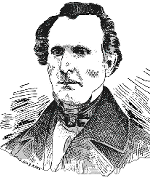
Sylvester Graham
It is not difficult to see why this Graham was selected by McMahon for comparison. He was not a physician but a temperance lecturer whose views—especially on sexuality—were extreme even by the standards of his own day. The medical establishment of the period largely dismissed his theories as speculative and excessive.
By the time Ellen G. White began promoting similar health concepts in the 1860s, the original Grahamite movement had already lost much of its momentum. Its lack of demonstrable results had eroded its credibility.
When a comparison is drawn between Ellen and Graham, the outcome will favor Ellen—not because she is divinely inspired, but because Graham is a weak reformer. Demonstrating Ellen's superiority over a fringe reformer from a prior generation does not establish unique insight or divine origin; it simply reflects the weakness of the benchmark.
Accuracy Scorecard: Sylvester Graham vs. Ellen G. White
Diet & Nutrition
| Teaching | Sylvester Graham | Ellen G. White | Notes |
|---|---|---|---|
| Plant-based diet preferred | +2 | +2 | Strong modern support |
| Whole grains emphasized | +2 | +2 | Graham flour legacy |
| Meat discouraged | +1 | +1 | Moderation supported |
| Avoid rich/fatty foods | +1 | +1 | Depends on fat type |
| Avoid spices/condiments | -1 | -1 | Overstated restriction |
| Bland/simple diet ideal | 0 | 0 | Not medically necessary |
| Overeating harmful | +2 | +2 | Strong evidence |
| Subtotal | 7 | 7 |
Substances
| Teaching | Sylvester Graham | Ellen G. White | Notes |
|---|---|---|---|
| Alcohol harmful | +2 | +1 | Strong evidence; White more absolutist |
| Tobacco harmful | +2 | +2 | Fully validated |
| Caffeine harmful | -1 | -1 | Moderate use generally safe |
| Tea/coffee avoidance | -1 | -1 | Overstated |
| Subtotal | 2 | 1 |
Hygiene & Lifestyle
| Teaching | Sylvester Graham | Ellen G. White | Notes |
|---|---|---|---|
| Fresh air essential | +2 | +2 | Supported |
| Exercise required | +2 | +2 | Strong evidence |
| Sunlight beneficial | +1 | +2 | White more explicit |
| Adequate sleep | +1 | +2 | White clearer emphasis |
| Cleanliness/hygiene | +2 | +2 | Confirmed |
| Water intake | +1 | +1 | Reasonable guidance |
| Hydrotherapy cures disease | -1 | -1 | Limited evidence |
| Subtotal | 8 | 10 |
Medical Science & Treatment
| Teaching | Sylvester Graham | Ellen G. White | Notes |
|---|---|---|---|
| Drugs do not cure disease | -2 | -2 | Rejected by modern medicine |
| Skepticism of physicians | -1 | -1 | Reform-era distrust |
| Natural remedies preferred | +1 | +1 | Valid in prevention |
| Evidence-based methodology | -2 | -2 | Both lack scientific framework |
| Subtotal | -4 | -4 |
Sexual Health
| Teaching | Sylvester Graham | Ellen G. White | Notes |
|---|---|---|---|
| Masturbation causes disease | -2 | -2 | Strongly disproven |
| Sexual restraint improves health | 0 | 0 | Context-dependent |
| Libido as pathological | -1 | -1 | Overpathologized |
| Subtotal | -3 | -3 |
Disease Theory
| Teaching | Sylvester Graham | Ellen G. White | Notes |
|---|---|---|---|
| Disease from lifestyle imbalance | +2 | +2 | Supported |
| Impure blood theory | -1 | -1 | Pre-scientific |
| Mind-body connection | +1 | +1 | Supported |
| Moral causes of disease | -1 | -1 | Not scientific |
| Subtotal | 1 | 1 |
Public Health Impact
| Teaching | Sylvester Graham | Ellen G. White | Notes |
|---|---|---|---|
| Health reform advocacy | +2 | +2 | Both influential |
| Preventive emphasis | +2 | +2 | Modern strength |
| Institutional systems | 0 | +2 | White developed system |
| Health education | +2 | +2 | Strong impact |
| Subtotal | 6 | 8 |
Final Totals
| Category | Sylvester Graham | Ellen G. White |
|---|---|---|
| Diet & Nutrition | 7 | 7 |
| Substances | 2 | 1 |
| Lifestyle | 8 | 10 |
| Medical Science | -4 | -4 |
| Sexual Health | -3 | -3 |
| Disease Theory | 1 | 1 |
| Public Health | 6 | 8 |
| Overall Total | 17 | 20 |
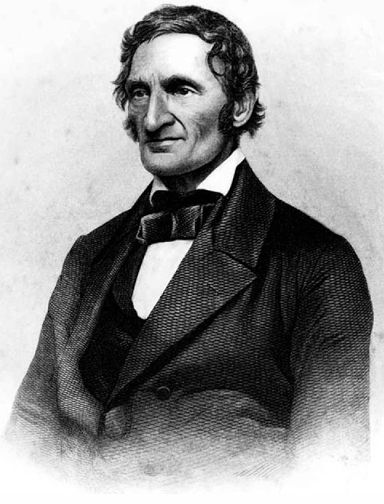
William Alcott
Like Graham, Alcott was also a generation before Ellen White. Alcott was a true health reformer and Ellen White had two of his books in her private library. Nearly every "unique" health reform later claimed as "revealed light" by Ellen White—including the rejection of "flesh meats," the emphasis on fresh air, the condemnation of spices, and the link between physical health and "secret vice"—was already fully developed and meticulously documented in Alcott’s published works long before her 1863 Otsego vision.
Was Ellen White really more accurate than Alcott? Computer analysis follows:
Accuracy Scorecard: William Alcott vs. Ellen G. White
Diet & Nutrition
Teaching
William Alcott
Ellen G. White
Notes
Plant-based diet preferred +2 +2 Strong evidence (cardio, longevity) Meat discouraged +1 +1 Moderation supported Whole grains emphasized +2 +2 Strongly supported Nuts as protein source +1 +2 White more explicit Avoid rich/fatty foods +1 +1 Depends on fat type Avoid spices/condiments -1 -1 Spices often beneficial Simple/bland diet ideal 0 0 Not medically required Overeating harmful +2 +2 Strong evidence Subtotal 8 9 Substances
Teaching
William Alcott
Ellen G. White
Notes
Tobacco harmful +2 +2 Fully validated Alcohol harmful +1 +1 Debate on safe levels Caffeine harmful -1 -1 Moderate use generally safe Tea/coffee avoidance -1 -1 Overstated Subtotal 1 1 Hygiene & Lifestyle
Teaching
William Alcott
Ellen G. White
Notes
Fresh air essential +2 +2 Supported Sunlight beneficial +2 +2 Vitamin D, circadian rhythm Exercise required +2 +2 Strong evidence Adequate sleep +2 +2 Strong evidence Cleanliness/hygiene +2 +2 Confirmed by germ theory Water intake high +1 +1 Reasonable guidance Hydrotherapy cures disease -1 -1 Limited evidence Subtotal 10 10 Medical Science & Treatment
Teaching
William Alcott
Ellen G. White
Notes
Drugs do not cure disease -1 -2 Both overstated; White stronger claim Skepticism of physicians -1 -1 Common reform-era stance Natural remedies preferred +1 +1 Valid in prevention context Surgery appropriate 0 0 Not a central emphasis for either Evidence-based practice -1 -2 Alcott slightly closer to empirical reasoning Subtotal -2 -5 Sexual Health
Teaching
William Alcott
Ellen G. White
Notes
Masturbation causes disease -2 -2 Strongly disproven Sexual restraint improves health 0 0 Context-dependent Libido as pathological -1 -1 Overpathologized Subtotal -3 -3 Disease Theory
Teaching
William Alcott
Ellen G. White
Notes
Disease from lifestyle imbalance +2 +2 Supported Impure blood theory -1 -1 Pre-scientific concept Mind-body connection +1 +1 Supported Moral causes of disease -1 -1 Not medically grounded Subtotal 1 1 Public Health Impact
Teaching
William Alcott
Ellen G. White
Notes
Health reform advocacy +2 +2 Both influential Preventive medicine emphasis +2 +2 Modern cornerstone Institutional systems 0 +2 White led organized systems Health education programs +2 +2 Strong impact Subtotal 6 8 Final Totals
Category
William Alcott
Ellen G. White
Diet & Nutrition 8 9 Substances 1 1 Lifestyle 10 10 Medical Science -2 -5 Sexual Health -3 -3 Disease Theory 1 1 Public Health 6 8
Overall Total
21
21
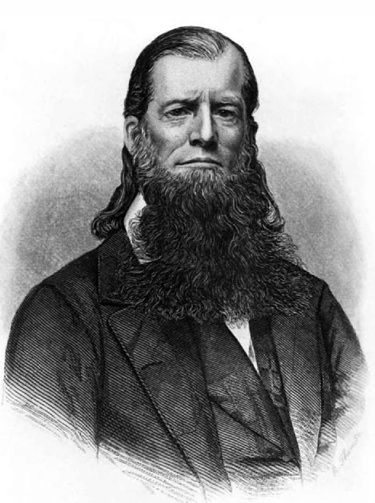
James Caleb Jackson
Although older than Ellen White, Dr. Jackson was more of a contemporary of her than any of the other health reformers that McMahon selected. Jackson was a solid choice because Ellen White not only had his book in her personal library but she modeled her entire health message after his. She soaked up as much as she could of Jackson, spending weeks at his sanitarium and reading his books and articles. When SDAs first heard Ellen speak about her health reforms, they thought that she was repeating Jackson's teachings. Below is the unbiased analysis:
Accuracy Scorecard: James Caleb Jackson vs. Ellen G. White
Diet & Nutrition
| Teaching | James Caleb Jackson | Ellen G. White | Notes |
|---|---|---|---|
| Plant-based diet preferred | +2 | +2 | Strong evidence (cardio, longevity) |
| Meat discouraged | +1 | +1 | Moderation supported |
| Whole grains emphasized | +2 | +2 | Strongly supported |
| Nuts as protein source | +1 | +2 | White more explicit |
| Avoid rich/fatty foods | +1 | +1 | Depends on fat type |
| Avoid spices/condiments | -1 | -1 | Spices often beneficial |
| Simple/bland diet ideal | 0 | 0 | Not medically required |
| Overeating harmful | +2 | +2 | Strong evidence |
| Subtotal | 8 | 9 |
Substances
| Teaching | James Caleb Jackson | Ellen G. White | Notes |
|---|---|---|---|
| Tobacco harmful | +2 | +2 | Fully validated |
| Alcohol harmful | +1 | +1 | Debate on safe levels |
| Caffeine harmful | -1 | -1 | Moderate use generally safe |
| Tea/coffee avoidance | -1 | -1 | Overstated |
| Subtotal | 1 | 1 |
Hygiene & Lifestyle
| Teaching | James Caleb Jackson | Ellen G. White | Notes |
|---|---|---|---|
| Fresh air essential | +2 | +2 | Supported |
| Sunlight beneficial | +2 | +2 | Vitamin D, circadian rhythm |
| Exercise required | +2 | +2 | Strong evidence |
| Adequate sleep | +2 | +2 | Strong evidence |
| Cleanliness/hygiene | +2 | +2 | Confirmed by germ theory |
| Water intake high | +1 | +1 | Reasonable guidance |
| Hydrotherapy cures disease | -1 | -1 | Limited evidence |
| Subtotal | 10 | 10 |
Medical Science & Treatment
| Teaching | James Caleb Jackson | Ellen G. White | Notes |
|---|---|---|---|
| Drugs do not cure disease | -2 | -2 | Both strongly reject drug therapy |
| Skepticism of physicians | -1 | -1 | Common reform-era stance |
| Natural remedies preferred | +1 | +1 | Valid in prevention context |
| Surgery appropriate | 0 | 0 | Not central emphasis |
| Evidence-based practice | -1 | -2 | Jackson slightly more observational |
| Subtotal | -3 | -5 |
Sexual Health
| Teaching | James Caleb Jackson | Ellen G. White | Notes |
|---|---|---|---|
| Masturbation causes disease | -2 | -2 | Strongly disproven |
| Sexual restraint improves health | 0 | 0 | Context-dependent |
| Libido as pathological | -1 | -1 | Overpathologized |
| Subtotal | -3 | -3 |
Disease Theory
| Teaching | James Caleb Jackson | Ellen G. White | Notes |
|---|---|---|---|
| Disease from lifestyle imbalance | +2 | +2 | Supported |
| Impure blood theory | -1 | -1 | Pre-scientific concept |
| Mind-body connection | +1 | +1 | Supported |
| Moral causes of disease | -1 | -1 | Not medically grounded |
| Subtotal | 1 | 1 |
Public Health Impact
| Teaching | James Caleb Jackson | Ellen G. White | Notes |
|---|---|---|---|
| Health reform advocacy | +2 | +2 | Both influential |
| Preventive medicine emphasis | +2 | +2 | Modern cornerstone |
| Institutional systems | +1 | +2 | Jackson ran sanitarium; White broader system |
| Health education programs | +2 | +2 | Strong impact |
| Subtotal | 7 | 8 |
Final Totals
| Category | James Caleb Jackson | Ellen G. White |
|---|---|---|
| Diet & Nutrition | 8 | 9 |
| Substances | 1 | 1 |
| Lifestyle | 10 | 10 |
| Medical Science | -3 | -5 |
| Sexual Health | -3 | -3 |
| Disease Theory | 1 | 1 |
| Public Health | 7 | 8 |
| Overall Total | 21 | 21 |
Once again there is virtually no difference, which is not surprising at all, since Ellen modelled her health message after his.
John Harvey Kellogg
Dr. Kellogg initially received his health reforms from Ellen White, so there should be no surprise that his reforms are similar to hers. He was contemporaneous with Ellen White, albeit a little younger. According to McMahon's thesis, if Ellen White was receiving supernatural guidance, her reforms should be well ahead of Kellogg's. Let's test that thesis below with an unbiased analysis:
Accuracy Scorecard: Ellen G. White vs. John Harvey Kellogg
Diet & Nutrition
| Teaching | Ellen G. White | John Harvey Kellogg | Notes |
|---|---|---|---|
| Plant-based diet preferred | +2 | +2 | Strong evidence (cardio, longevity) |
| Meat discouraged | +1 | +1 | Moderation supported |
| Whole grains emphasized | +2 | +2 | Strongly supported |
| Nuts as protein source | +2 | +2 | Supported |
| Avoid rich/fatty foods | +1 | +1 | Depends on fat type |
| Avoid spices | -1 | -1 | Spices often beneficial |
| Regular meal timing | +1 | +2 | Kellogg more systematic |
| Overeating harmful | +2 | +2 | Strong evidence |
| Subtotal | 10 | 11 |
Substances
| Teaching | Ellen G. White | John Harvey Kellogg | Notes |
|---|---|---|---|
| Tobacco harmful | +2 | +2 | Fully validated |
| Alcohol harmful | +1 | +1 | Debate on safe levels |
| Caffeine harmful | -1 | -1 | Moderate use generally safe |
| Tea/coffee avoidance | -1 | -1 | Overstated |
| Subtotal | 1 | 1 |
Hygiene & Lifestyle
| Teaching | Ellen G. White | John Harvey Kellogg | Notes |
|---|---|---|---|
| Fresh air essential | +2 | +2 | Supported |
| Sunlight beneficial | +2 | +2 | Vitamin D, circadian rhythm |
| Exercise required | +2 | +2 | Strong evidence |
| Adequate sleep | +2 | +2 | Strong evidence |
| Cleanliness/hygiene | +2 | +2 | Confirmed by germ theory |
| Water intake high | +1 | +1 | Reasonable guidance |
| Hydrotherapy cures disease | -1 | -1 | Limited evidence |
| Subtotal | 10 | 10 |
Medical Science & Treatment
| Teaching | Ellen G. White | John Harvey Kellogg | Notes |
|---|---|---|---|
| Drugs do not cure disease | -2 | +1 | White clearly contradicted by modern medicine |
| Skepticism of physicians | -1 | +1 | Kellogg was a trained physician |
| Natural remedies preferred | +1 | +1 | Valid in prevention context |
| Surgery appropriate | 0 | +2 | Kellogg performed thousands |
| Evidence-based practice | -2 | +2 | Major divergence |
| Subtotal | -4 | 7 |
Sexual Health
| Teaching | Ellen G. White | John Harvey Kellogg | Notes |
|---|---|---|---|
| Masturbation causes disease | -2 | -2 | Strongly disproven |
| Sexual restraint improves health | 0 | 0 | Context-dependent |
| Libido as pathological | -1 | -1 | Overpathologized |
| Subtotal | -3 | -3 |
Disease Theory
| Teaching | Ellen G. White | John Harvey Kellogg | Notes |
|---|---|---|---|
| Disease from lifestyle imbalance | +2 | +2 | Supported |
| Impure blood theory | -1 | -1 | Pre-scientific concept |
| Mind-body connection | +1 | +1 | Supported |
| Sin as cause of disease | -1 | 0 | Theological, not medical |
| Subtotal | 1 | 2 |
Public Health Impact
| Teaching | Ellen G. White | John Harvey Kellogg | Notes |
|---|---|---|---|
| Institutional health systems | +2 | +2 | Hospitals/sanitariums |
| Preventive medicine emphasis | +2 | +2 | Modern cornerstone |
| Standardized treatment protocols | 0 | +2 | Kellogg more systematic |
| Health education programs | +2 | +2 | Strong impact |
| Subtotal | 6 | 8 |
Final Totals
| Category | Ellen G. White | John Harvey Kellogg |
|---|---|---|
| Diet & Nutrition | 10 | 11 |
| Substances | 1 | 1 |
| Lifestyle | 10 | 10 |
| Medical Science | -4 | 7 |
| Sexual Health | -3 | -3 |
| Disease Theory | 1 | 2 |
| Public Health | 6 | 8 |
| Overall Total | 21 | 36 |
Not surprisingly, McMahon's thesis fails. Kellogg was substantially more accurate than Ellen White.
Overall Summary
The results are devastating to the claim that White possessed supernatural medical insight. When her teachings are stripped of denominational mythology and compared objectively against her contemporaries, the pattern becomes unmistakable: Ellen White was not ahead of her age — she was a product of it. Nearly every major “health reform” she promoted had already been circulating for years among nineteenth-century reformers whose books she owned, whose institutions she visited, and whose ideas she absorbed. Worse still, she inherited not only their correct observations, but also their spectacular blunders: anti-medical paranoia, pseudoscientific disease theories, hysteria over sexuality, and hostility toward evidence-based medicine.
The comparison completely collapses McMahon’s thesis. If Ellen White was receiving direct revelation from God, her accuracy should tower above the reformers around her. Instead, she merely mirrors them — and in some cases performs worse. Graham matches her. Alcott matches her. Jackson matches her. Kellogg surpasses her dramatically in every category requiring actual medical science. The unavoidable conclusion is that Ellen White’s “inspired health message” was not divine revelation descending from heaven. It was recycled nineteenth-century health reform wrapped in prophetic language and retroactively mythologized by the SDA Corporation.
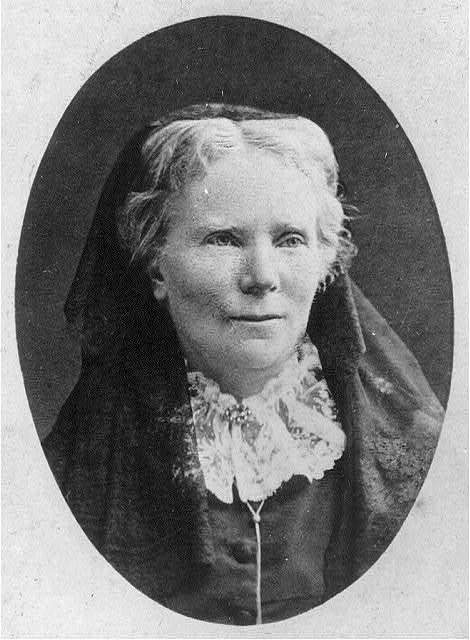
Elizabeth Blackwell — A True Reformer
While Ellen White was "visioning" about the spiritual dangers of meat and the insanity-inducing properties of masturbation, Dr. Blackwell was driving real and meaningful health reforms in rigorous, evidence-based science.
Blackwell was the first woman to receive a medical degree in the United States (Geneva Medical College, 1849). Unlike Ellen’s massive plagiarism, Blackwell offered the world original insights based upon scientific facts. While Ellen’s "Health Reform" was largely a list of "don'ts" aimed at curbing animal passions, Blackwell’s reform was a massive effort to bring hygiene, nutrition, and sanitation to the urban poor.
Blackwell founded a Women's Medical College (1868) to train the next generation of scientifically literate female doctors while Ellen founded schools to train "medical missionaries" who were taught to prioritize the "Testimonies" and proselytization of other Christians.
The absurdity of the SDA claim that Ellen White was a 'medical pioneer' is laid bare the moment she is compared to a true giant like Dr. Elizabeth Blackwell. While Ellen was recycling the stale, pseudo-scientific rants of health fanatics, Blackwell was in the trenches of the New York slums, applying actual science to public health. Blackwell didn't need a vision to know that sanitation saved lives; she used observation and intellect. To call Ellen a 'pioneer' in the presence of Blackwell is like calling a fortune teller an astrophysicist—one guesses at the future using the folklore of the past, while the other builds the telescope that actually sees it.
Blackwell was never included by McMahon for obvious reasons. Her science-based approach far outshines Ellen White's "divine" approach in an unbiased comparison:
Accuracy Scorecard: Dr. Elizabeth Blackwell vs. Ellen G. White
Diet & Nutrition
| Teaching | Dr. Elizabeth Blackwell | Ellen G. White | Notes |
|---|---|---|---|
| Balanced diet emphasized | +2 | +1 | Blackwell more moderate; White more restrictive |
| Plant-based diet preferred | +1 | +2 | Both supportive, White more explicit |
| Whole foods emphasis | +2 | +2 | Strongly supported |
| Meat discouraged | +1 | +1 | Moderation supported |
| Avoid excessive fats | +1 | +1 | Depends on fat type |
| Avoid spices/condiments | 0 | -1 | Blackwell not extreme here |
| Overeating harmful | +2 | +2 | Strong evidence |
| Subtotal | 9 | 8 |
Substances
| Teaching | Dr. Elizabeth Blackwell | Ellen G. White | Notes |
|---|---|---|---|
| Tobacco harmful | +2 | +2 | Fully validated |
| Alcohol harmful | +1 | +1 | Moderation vs abstinence debate |
| Caffeine harmful | 0 | -1 | Blackwell more moderate |
| Tea/coffee avoidance | 0 | -1 | White more restrictive |
| Subtotal | 3 | 1 |
Hygiene & Lifestyle
| Teaching | Dr. Elizabeth Blackwell | Ellen G. White | Notes |
|---|---|---|---|
| Fresh air essential | +2 | +2 | Supported |
| Sunlight beneficial | +2 | +2 | Vitamin D, circadian rhythm |
| Exercise required | +2 | +2 | Strong evidence |
| Adequate sleep | +2 | +2 | Strong evidence |
| Cleanliness/hygiene | +2 | +2 | Confirmed by germ theory |
| Water intake reasonable | +1 | +1 | General guidance |
| Hydrotherapy cures disease | -1 | -1 | Limited evidence |
| Subtotal | 10 | 10 |
Medical Science & Treatment
| Teaching | Dr. Elizabeth Blackwell | Ellen G. White | Notes |
|---|---|---|---|
| Drugs can treat disease | +2 | -2 | Major divergence |
| Confidence in trained physicians | +2 | -1 | Blackwell foundational in medicine |
| Natural remedies useful | +1 | +1 | Complementary role |
| Surgery appropriate | +2 | 0 | Standard medical practice |
| Evidence-based practice | +2 | -2 | Clear methodological gap |
| Subtotal | 9 | -4 |
Sexual Health
| Teaching | Dr. Elizabeth Blackwell | Ellen G. White | Notes |
|---|---|---|---|
| Masturbation causes disease | -1 | -2 | Blackwell less extreme |
| Sexual restraint improves health | 0 | 0 | Context-dependent |
| Libido as pathological | -1 | -1 | Common 19th-century view |
| Subtotal | -2 | -3 |
Disease Theory
| Teaching | Dr. Elizabeth Blackwell | Ellen G. White | Notes |
|---|---|---|---|
| Disease from lifestyle factors | +2 | +2 | Supported |
| Acceptance of germ theory | +2 | 0 | Major scientific advancement |
| Mind-body connection | +1 | +1 | Supported |
| Moral causes of disease | 0 | -1 | Blackwell less theological |
| Subtotal | 5 | 2 |
Public Health Impact
| Teaching | Dr. Elizabeth Blackwell | Ellen G. White | Notes |
|---|---|---|---|
| Medical institutions | +2 | +2 | Both influential |
| Preventive medicine emphasis | +2 | +2 | Modern cornerstone |
| Professional medical training | +2 | 0 | Blackwell central figure |
| Health education programs | +2 | +2 | Strong impact |
| Subtotal | 8 | 6 |
Final Totals
| Category | Dr. Elizabeth Blackwell | Ellen G. White |
|---|---|---|
| Diet & Nutrition | 9 | 8 |
| Substances | 3 | 1 |
| Lifestyle | 10 | 10 |
| Medical Science | 9 | -4 |
| Sexual Health | -2 | -3 |
| Disease Theory | 5 | 2 |
| Public Health | 8 | 6 |
| Overall Total | 42 | 20 |
Conclusion
Upon further examination, Ellen White does not demonstrate superiority to McMahon's cherry-picked list of individuals (Alcott, Jackson, Kellogg). His research has been proven to be a White lie designed to sell people the myth that Ellen White did not engage in massive and systemic plagiarism of other health authors.
Questions Demanding Answers
In his book, Brand asks several leading questions, designed, no doubt, to encourage faith in Ellen White's gift:8
- "Since Ellen White had very little formal education, and certainly no medical education at all, how did she know how to avoid those principles that may have seemed valid 150 years ago but are now known to be very wrong?"
- "And where did she get the numerous health principles that the other reformers did not espouse?"
- "Does anyone have another explanation?"
These questions will be answered below.
1. How Did Ellen White Avoid Health Reform Pitfalls?
How did Ellen White steer clear of all the medical nonsense of her day? This is a misleading question, because it presumes that she actually steered clear of medical nonsense. She did not. For example, she promulgated false ideas such as that solitary vice, marital excess, and animal passions brought on disease through the depletion of "vital force." She also taught the superiority of a vegan diet, that tea and coffee were poisonous, and that cinnamon, pepper, and mustard were bad for the blood, when in fact modern medical science has disproven all of these unfounded myths. She went to extremes on restricting drug medicines, one of which — quinine — may have saved the lives of her own missionaries. Many more examples could be cited. Therefore, it is ludicrous to suppose that she somehow evaded the medical nonsense of her day. She was a purveyor of that nonsense.
2. Where Did She Get the Numerous Health Principles Other Reformers Did Not Espouse?
This second question presumes that Ellen White had "numerous" health principles not espoused by other health reformers. It presumes the reader is unfamiliar with the history and writings of American health reformers in the nineteenth century. The truth is that Ellen White added nothing of value to the subject of health reform. Her only originality was in taking the reforms of others to extremes. All her health reforms were taught before her by other health reformers.
To claim she had "numerous principles" they didn't is a historical fabrication. As will be shown in the evidence presented below, nearly every single health reform she ever espoused during her entire life was also espoused by a single individual: Larkin B. Coles. Only a handful of her "reforms" were not also taught by Coles, and those few can be shown to come from other reformers whose books were in her personal library — Alcott, Coles, O.S. Fowler, Graham, and Jackson.
In addition to her library books, the Whites subscribed to and heavily clipped from journals like "The Water-Cure Journal" and "The Laws of Life." Her "principles" weren't revealed to her; they were clipped from magazines. She acted as a 19th-century "scavenger," taking the radical ideas of other reformers and stamping them with a "Thus Saith the Lord."
The claim that Ellen White possessed health principles unknown to her contemporary reformers is a historical hallucination. She didn't have 'more light.' She had more plagiarism than all of them combined.
"Does Anyone Have Another Explanation?"
As a matter of fact, yes! The "explanation" is really quite simple: Ellen White copied nearly every health idea she ever taught from L.B. Coles. The evidence presented below will substantiate that fact. Whatever did not come from Coles, came straight off the pages of other health reformers. That is the explanation. Massive plagiarism. Zero new light.
More Accurate than L.B. Coles?
McMahon claimed that Ellen White was more accurate than the primary individual she copied her health message from: L.B. Coles. In her personal library, Ellen White had a copy of this Adventist physician's 1860 book Philosophy of Health. Nearly every health reform Ellen White proposed in 1864 in Spiritual Gifts was derived from Coles' book. What a coincidence!
96% Accuracy in Spiritual Gifts?
One of McMahon's most audacious claims is that when compared to modern medical knowledge, Ellen White was 96% accurate in Spiritual Gifts. The evidence presented below refutes that assertion. The study below looked at 28 health teachings proposed by Ellen White in her 1864 book Spiritual Gifts. This analysis shows the following:
- The source of Ellen's health message is Coles' book Philosophy of Health.
- Ellen White was less accurate than L.B. Coles, not more accurate.
- Ellen White was far less accurate than 96%.
In the analysis below, each health teaching will be compared to modern medical science. At the end, Ellen White's and L.B. Coles' scores will be compared to determine if she was more inspired than Coles. The quotes below will be color-coded with GREEN for accurate, and RED for inaccurate.
| Ellen G. White, Spiritual Gifts, Vol. 4a, Chapter "Health", 1864 | Larkin B. Coles, Philosophy of Health, 1851 | Medical Science | EGW Score | Coles Score |
|---|---|---|---|---|
Health Principle 1: Vegan Diet is Preferable - Eating meat shortens the life-span | ||||
|
And he [God] permitted that long-lived race to eat animal food to shorten their sinful lives. Soon after the flood the race began to rapidly decrease in size, and in length of years. (p. 121.2) Persons who have indulged their appetite to eat freely of meat, highly-seasoned gravies, and various kinds of rich cakes and preserves, cannot immediately relish a plain, wholesome, and nutritious diet. Their taste is so perverted they have no appetite for a wholesome diet of fruits, plain bread and vegetables. (p. 130.3) | ...it is not my object, however, to insist on entire abstinence from meats... Living on the bread-stuffs, and other productions of the vegetable kingdom, is undoubtedly the most natural and healthy method of subsistence for man. (p. 52) |
No evidence has ever been produced showing a non-vegan diet substantially reduces life-span. Several high-quality scientific studies have investigated the relationship between vegan diets and lifespan, with findings suggesting that veganism does not significantly extend longevity. Examples:
The 45 and Up Study (Australia): Analyzed over 243,000 individuals aged 45+. Researchers found no significant difference in all-cause mortality between vegetarians (including vegans) and non-vegetarians. United Kingdom Cohort Analysis: Involving over 60,000 participants, this research compared mortality rates among regular meat eaters, low meat eaters, fish eaters, and vegetarians (including vegans). The study concluded that there was no significant difference in overall mortality between vegetarians and comparable non-vegetarians. These findings indicate that vegan diets do not necessarily translate into increased overall lifespan. Nina Teicholz writes: "No human population in the history of civilization has ever been recorded surviving on a vegan diet. The vegan diet is nutritionally insufficient, lacking not only vitamin B12 but deficient in heme iron and folate." Vegans cannot live a healthy life without supplementation (B12, Iron, Creatine, etc.) Therefore, it is implausible that veganism is associated with exceptionally long life-spans.9 Half-credit to Coles for not insisting on abstinence from meat. |
|
|
Health Principle 2: Pork is unfit for food | ||||
| God prohibited the Hebrews the use of swine’s flesh because it was hurtful. ... But God never designed the swine to be eaten under any circumstances. (p. 124.1) | Swine's flesh—that worst of all flesh for eating—was even then prohibited. ...it is not my object, however, to insist on entire abstinence from meats. (p. 52) | Ellen White’s assertion that pork should not be eaten under any circumstances is extreme. Coles takes a more moderate view. Partial credit is given because of all the major meat groups, pork is considered by modern medicine to be the least healthy, due to fat content and other factors. |
|
|
Health Principle 3: Alcohol is bad for the brain | ||||
| Stimulating [alcoholic] drinks have been used freely, which have confused the brain and brought down man to the level of the brute creation. (p. 124.3) | The man who uses alcoholic liquor, is steeping his brain and nerves in that poison. (p. 150) | Alcohol is generally considered by medical science to be a toxin to the brain, particularly when ingested in large quantities. |
|
|
Health Principle 4: Alcohol is a "stimulant" | ||||
| …ale, which stimulates for the time, but as soon as the influence of the ale is gone they sink as much lower, and a continual use of the ale keeps them stimulated and over-excited. (p. 125.2) | Alcoholic liquors of all kinds…are all stimulants. … They give to the stomach an unnatural and forced action…(p. 75) | Alcohol is a "depressant", which is the opposite of a "stimulant." |
|
|
Health Principle 5: Tobacco is a slow poison affecting the moral/spiritual nature | ||||
| Tobacco, in whatever form it is used, tells upon the constitution. It is a slow poison. It affects the brain and benumbs the sensibilities, so that the mind cannot clearly discern spiritual things… (p. 126.1) | That man who chews and smokes his tobacco…is doing that to himself which should be called gradual suicide…His brain and nerves are tinctured…so deadened their moral sensibilities… (p. 151-152) | Tobacco is generally considered detrimental, however there is no evidence it "deadens moral sensibilities" or prevents the mind from "discerning spiritual things". Half-credit to both White and Coles. |
|
|
Health Principle 6: Tea and Coffee harm the health | ||||
| Tea and coffee are stimulating. Their effects are similar to those of tobacco… Those who use these slow poisons… The whole system under the influence of these stimulants often becomes intoxicated. And to just that degree that the nervous system is excited by false stimulants, will be the prostration which will follow after the influence of the exciting cause has abated. Those who indulge a perverted appetite, do it to the injury of health and intellect. They cannot appreciate the value of spiritual things. Their sensibilities are blunted, and sin does not appear very sinful… (p. 128.2) |
The coffees and the teas…as well as that most deadly of all poisons in popular use, tobacco, should be rejected. (p. 229) And not only are these physical functions injured, but the mental forces also; for the nervous system is the connecting medium…hence the wretched economy of all stimulants and narcotics on the nerves. The injury done to the electrical [nerve] forces by the use of such agents as the habitual use of tea, coffee, alcohol, opium, and tobacco…is far greater than is generally supposed. (p. 13) | Coffee is one of the most-studied elements in the scientific world, and the over-whelming majority of studies show more health benefits than harm. Likewise, studies of tea show overwhelming health benefits. |
|
|
Health Principle 7: Seasoned meat, or meat served with gravy, damages the stomach | ||||
| They crave highly-seasoned meats, with rich gravies, and their appetite has become so perverted that they cannot be satisfied with even meat, unless prepared in a manner most injurious. The stomach is fevered, the digestive organs are taxed, and yet the stomach labors hard to dispose of the load forced upon it. (p. 129.1) | The taking of condiments with meats is a crime against the stomach. … All these are as truly destructive to its tone and healthy action, as is alcohol. (p. 180) | The statement is partially accurate. Modern science confirms that highly-seasoned, rich foods can alter appetite and the digestive system can be overburdened by such diets. However, the stomach does not literally "fever," and the label "perverted" is judgmental. While high quantities of salt in meat-seasonings can be detrimental, many of the other seasonings used in the nineteenth century (black pepper, mustard, garlic, onion, sage, thyme, bay leaves, and parsley) all have health benefits. A low-sodium, well-seasoned, moderately portioned, thoughtfully prepared meat dish with a light homemade gravy can be part of a healthy balanced diet. |
|
|
Health Principle 8: Eat Simple Foods two or three times a day | ||||
| The remedy such require is to eat less frequently and less liberally, and be satisfied with plain, simple food, eating twice, or at most, three times a day. (p. 129.1) |
The more simple the diet, on the whole the better. Complicated food, especially that which is compounded with various kinds of condiments, is bad… (p. 59) No individual…should take solid food more than three times in one day. (p. 36) | Medical science generally agrees that simple foods are easier to digest than complex ones. However there is no scientific proof that eating more than two or three meals a day is harmful, provided the meals are small. Some physicians recommend eating smaller meals more frequently. Half credit for both White and Coles. |
|
|
Health Principle 9: Eat at regular intervals | ||||
| The stomach must have its regular periods for labor and rest, hence eating irregularly between meals is a most pernicious violation of the laws of health. (p. 129.1) | If persons intend to have health, their meals should be regularly timed and distanced. (p. 33) | The general consensus of medical science is its better to eat at regular intervals than at irregular intervals. |
|
|
Health Principle 10: Eating highly sweetened food is unhealthy | ||||
| …rich cake, pies, and puddings, and every hurtful thing, are crowded into the stomach. (p. 130.1) | Complicated food…is bad; such as rich puddings, cake, and pastry of various sorts. (p. 59) | The general consensus of medical science is frequent eating of highly-sweetened foods is unhealthy |
|
|
Health Principle 11: Meals should be spaced apart by two or three hours | ||||
| Many eat three times a day, and again just before going to bed. In a short time the digestive organs are worn out, for they have had no time to rest. … A second meal should never be eaten until the stomach has had time to rest from the labor of digesting the preceding meal. (p. 130.1) | …no food should be previously taken, in all ordinary cases, within the space of two or three hours… (p. 35) | There seems to be general agreement that the stomach should be given opportunity to digest its contents before new food is added. |
|
|
Health Principle 12: Eat a light supper and not right before going to bed | ||||
| Many eat three times a day, and again just before going to bed. ... If a third meal be eaten at all, it should be light, and several hours before going to bed. (p. 130.1) |
A late supper generally occasions deranged and disturbed sleep. (p. 35) Supper should be the lightest meal of the day, and should be taken at least two hours before bed-time. (p. 117) | The advantages of eating a light supper are less obvious, but eating several hours before bedtime may contribute to better sleep, less weight gain, and less acid reflux problems. |
|
|
Health Principle 13: Intemperance leads to other evil habits, destroys the intellect | ||||
| Those who permit themselves to become slaves to a gluttonous appetite, often go still further, and debase themselves by indulging their corrupt passions, which have become excited by intemperance in eating and in drinking. They give loose rein to their debasing passions, until health and intellect greatly suffer. The reasoning faculties are, in a great measure, destroyed by evil habits. (p. 131.2) |
When we violate any law of the organic life…we create a lust which wars against the soul. …a civil war is instituted between the lower faculties and the higher… (p. 240) …the bodily energies are so deranged and weakened as to hold the intellectual faculties in a state of comparative imbecility. (p. 51) | These statement rely heavily on moral judgments reflecting the 19th-century tendency to view health issues through a moral lens, rather than purely a medical one. They present a simplistic causal relationship between gluttony and moral/intellectual decay. The reality is far more complex, with numerous contributing factors to both physical and spiritual health. The statements rely on the discredited theory of vital force, that certain patterns of eating or indulgence in sex ("debasing passions") diminishes vital force which leads to a corresponding loss of physical and spiritual health. While a gluttonous diet and heavy consumption of alcohol can affect mental and physical health over the long term, no direct causality has been established between lust/passions and loss of reasoning/imbecility. |
|
|
Health Principle 14: Improper diet for children leads to health and moral problems | ||||
| Children who eat improperly are often feeble, pale and dwarfed, and are nervous, excitable and irritable. Everything noble is sacrificed to the appetite, and the animal passions predominate. The lives of many children from five to ten and fifteen years of age seem marked with depravity. They possess knowledge of almost every vice. The parents are, in a great degree, at fault in this matter…(p. 132.2) | One great cause of the feebleness of constitution with which the great body of community is at this day afflicted, may be found in the total ignorance or recklessness of parents and guardians of the laws of health, as applied to those under their care. (p. 90) | While all are agreed an improper diet can lead to health problems, it is questionable whether diet affects the morals. White goes beyond Coles on this point, claiming diet can lead children into vice. Other evidence from White's writings shows that her primary concern is regarding children eating substances which caused vice (e.g. eating meat, butter, and eggs). Coles' primary concerns were rich foods and eating between meals leading to health (not moral) problems. There is no evidence that eating meat, butter, and eggs leads to vice. Hence, half credit for White, full credit for Coles. |
|
|
Health Principle 15: Drugs are dangerous | ||||
| I was shown that more deaths have been caused by drug-taking than from all other causes combined. If there was in the land one physician in the place of thousands, a vast amount of premature mortality would be prevented. Multitudes of physicians, and multitudes of drugs, have cursed the inhabitants of the earth, and have carried thousands and tens of thousands to untimely graves. (p. 133.1) |
…drugs…push you into the grave. (p. 177) [Note: The whole theme of Cole's book is summed up in the title, which reads in part: "HEALTH CURE WITHOUT DRUGS"] | These statements are wildly inaccurate. However, partial credit can be given because they reflect a genuine concern about the overuse of certain potent drugs, particularly opiates like morphine and laudanum, which were widely available and often abused. Also, some drugs of that era contained toxic heavy metals like mercury. The lack of regulation and standardization in drug manufacturing and prescription practices contributed to this problem. However, Ellen White's statement contains gross exaggerations. The claim that drug-taking caused more deaths than all other causes combined is simply not supported by any historical data. The statement reflects a limited understanding of disease causation and the benefits of modern medicine. It completely ignores the life-saving potential of many drugs and medical interventions. The statement presents a simplistic view of the medical profession, ignoring the dedication and skill of many physicians. The statement does not differentiate between beneficial drugs, and harmful drugs. For example, Mrs. White omits the fact that millions were saved by drugs she warned against, such as quinine (anti-malarial). Another nineteenth century drug that extended the lives of heart-disease victims was digitalis. Today, SDA hospitals ignore Ellen White's statement and prescribe drugs routinely, demonstrating the invalidity of her statement. |
|
|
Health Principle 16: Nature can heal better than drugs | ||||
| Nature was doing her best to rid the system of an accumulation of impurities, and could she have been left to herself, aided by the common blessings of Heaven, such as pure air and pure water, a speedy and safe cure would have been effected. (p. 133.2) | …in more than nine cases out of ten Nature will remove the difficulty without the aid of any kind of medicine. It is the most consummate quackery to prescribe medicine to cure a disease… (p. 170) | Partial credit will be given to White and Coles because the human body's immune system has remarkable capabilities. Further, many drugs used during the 1800s were ineffective or downright dangerous. However, both omit the fact that certain drugs, such as quinine and digitalis, saved lives that would likely have ended in death had the patient simply been given pure air and water. Today, SDA hospitals ignore Ellen White's counsel and have strong success using drug medicines rather than simply giving patients pure air and water. |
|
|
Health Principle 17: Water can be an effective natural remedy | ||||
| But many have never experienced the beneficial effects of water, and are afraid to use one of Heaven's greatest blessings. Water has been refused persons suffering with burning fevers, through fear that it would injure them. If, in their fevered state, water had been given them to drink freely, and applications had also been made externally…(p. 136.2) |
A fresh-water bath is unquestionably the best where a fever…exists. (p. 120) Water may be used in all feverish actions of the general system, or of parts of it. (p. 197) | Staying hydrated during a fever is important. Water-treatment can be effective in reducing fever. |
|
|
Health Principle 18: Strychnine is dangerous | ||||
| A branch was presented before me bearing large flat seeds. Upon it was written, Nux vomica, strychnine. Beneath was written, No antidote. I was shown persons under the influence of this poison. … If taken immoderately, convulsions, paralysis, insanity, and death, are often the results. Many use this deadly evil in small quantities. But if they realized its influence, not one grain of it would be introduced into the system. (p. 138.1) | [No specific comment by Coles regarding strychnine, although he condemned drugs in general] | Although White was correct about strychnine, her vision was wrong about "no antidote" because there are several antidotes. While Coles never mentions this specific drug, the theme of his entire book is anti-drug, so we must give him at least partial credit for denouncing drugs in general, if not this particular drug. |
|
|
Health Principle 19: Opium is dangerous | ||||
| I was shown that the innocent, modest-looking, white poppy yields a dangerous drug. Opium is a slow poison, when taken in small quantities. In large doses it produces lethargy and death. Its effects upon the nervous system are ruinous. (p. 138.3) | The most violent poisons…opium..are not harmless; they expose their consumers to premature sickness, old age, and death. (p. 80) | Opium is highly addictive and may lead to chemical imbalances in the brain. |
|
|
Health Principle 20: Mercury, Calomel, and Quinine are dangerous | ||||
| Mercury, calomel, and quinine have brought their amount of wretchedness, which the day of God alone will fully reveal. (p. 139.2) | [No specific comment by Coles regarding any of these drugs, although he condemned drugs in general] | Mercury and Calomel are essentially the same substance, since Calomel is Mercurous Chloride. There is no doubt mercury is poisonous. Quinine, on the other hand, was a beneficial drug that saved countless lives from malaria. Because of White's condemnation of the drug, some SDA missionaries refused to take it, and paid for that choice with their lives. Therefore, we can only give White partial credit. Once again, Coles never mentions mercury or quinine in particular, but the theme of his entire book is anti-drug, so we must give him partial credit for denouncing drugs in general. |
|
|
Health Principle 21: Pores of the skin should be kept clean | ||||
| Strict habits of cleanliness should be observed. … Impurities are constantly and imperceptibly passing from the body, through the pores of the skin, and if the surface of the skin is not kept in a healthy condition, the system is burdened with impure matter. (p. 140.2) | Every person ought to be accustomed to periodical, or, at least, occasional bathing. The pores of the skin are likely to become chocked and impervious without it. …when the skin is thus coated, the whole system is affected by it. (p. 119) | Medical science generally agrees upon the importance of keeping the skin clean. |
|
|
Health Principle 22: Sleeping rooms should be well ventilated | ||||
| Sleeping rooms especially should be well ventilated, and the atmosphere made healthy by light and air. Blinds should be left open several hours each day, the curtains put aside, and the room thoroughly aired. (p. 142.3) | Another important matter, is living and sleeping in apartments well ventilated. … a window, or door, or both, should be opened in winter, as wells as in summer. (p. 191) | This was probably more relevant to the 1800s when heating devices could lead to a build-up of impure air in the home. Even today, however, most medical professionals would agree that fresh air is important. |
|
|
Health Principle 23: Bathing is healthful | ||||
| Upon rising in the morning, most persons would be benefited by taking a sponge-bath, or, if more agreeable, a hand-bath, with merely a wash-bowl of water. (p. 143.3) | Every person ought to be accustomed to periodical, or, at least, occasional bathing. (p. 119) | Regular bathing is recommended by the medical community. |
|
|
Health Principle 24: Shrubs and trees are bad around the home | ||||
| Shade trees and shrubbery too close and dense around a house are unhealthy; for they prevent a free circulation of air, and prevent the rays of the sun from shining sufficiently through. (p. 144.1) | [Not mentioned by Coles] | If one were to believe Ellen White, then the Garden of Eden must have been an unhealthy place! Shrubbery and trees not only beautify the home, but provide a rich source of fresh oxygen and positively charged ions. Many healthcare professionals recommend plants not only around the house, but also inside the home. Trees provide wonderful shade against the sun's blistering rays. There is no known density of shrubbery which has been proven to be unhealthy. |
|
|
Health Principle 25: Exercise outdoors | ||||
| …exercise as much as possible in the open air, It is slow murder for persons to confine themselves days, weeks and months in doors, with but little out-door exercise. (p. 145.3) | They do not go out enough and exercise in the open air, expand their lungs, and exercise their limbs. (p. 195) | Outdoor exercise is generally considered healthy (so long as outdoor pollution levels are not too high). |
|
|
Health Principle 26: Eating pork causes leprosy and cancer | ||||
|
It [swine's flesh] would fill the system with humors, and in that warm climate often produced leprosy. (p. 124.1)
The eating of pork has produced scrofula, leprosy and cancerous humors. (p. 146.2) |
Scrofula is a disease which is inborn… This is chiefly the product of extensive meat-eating in their progenitors. (p. 164) If we use good adapted to create cancerous, scrofulous, or any other humors, we run the risk of having such humors develop… (p. 15) | Scientists now know that pigs do not carry leprosy. Therefore, it is impossible for them to transmit leprosy to humans. White and Coles were closer to being accurate when it comes to pork causing cancer. Heavy red meat eating does raise the chances of a person developing colorectal cancers. However, the cause is not the one suggested by Mrs. White. It is a myth to suppose that eating cancerous meat causes cancer in humans. Even when injected with live cancerous organisms, laboratory animals do not develop cancers. |
|
|
Health Principle 27: Confinement of animals is less healthy | ||||
| …they are often confined in close stables, and are not permitted to exercise, and to have free circulation of air. Many poor animals are left to breathe the poison of filth …which is left in barns and stables. … Disease is conveyed to the liver, and the entire system of the animal is diseased… (p. 146.3) | The process of stall-feeding is a forced and unnatural one, by which the fluids become diseased; and then we eat those diseased fluids. (p. 68) | The concept of free-ranging animals is generally considered to be more healthy for the animals and results in better quality meat. |
|
|
Health Principle 28: Taking animals to market makes their meat unhealthy | ||||
| Many die of disease caused wholly by meat-eating, yet the world does not seem to be the wiser. Animals are frequently killed that have been driven quite a distance for the slaughter. Their blood has become heated. They are full of flesh, and have been deprived of healthy exercise, and when they have to travel far, they become surfeited, and exhausted, and in that condition are killed for market. Their blood is highly inflamed, and those who eat of their meat, eat poison. Some are not immediately affected, while others are attacked with severe pain, and die from fever, cholera, or some unknown disease. (p. 147.1) | But the meat that is given us in the markets is very far from being pure. The very process taken to fit the animals for market, tends to produce a diseased state of their fluids. … Thousands upon thousands of those who have been afflicted with, or have died of fevers, small-pox, cholera, etc., might probably have escaped their deadly influence, if their fluids had not been vitiated by animal food. (p. 68) | Stress in animals being driven to market could possibly lead to hormonal changes and increased lactic acid production, which can affect the taste of meat but does not make it toxic. The concept of "highly inflamed blood" being "poison" is a gross oversimplification and reflects a prescientific notion. Modern science understands that foodborne illnesses are caused by bacteria, viruses, and toxins, not by "inflamed blood." Cholera, for example, is caused by a bacterial infection. Foodborne illnesses are not caused by the animal's emotional state before death. |
|
|
|
Total Score out of 28 possible points: |
63% |
68% | ||
It should now be apparent that the source of White's health reforms in Spiritual Gifts was L.B. Coles. Nearly every health principle promoted by her was also promoted by Coles, and in the few places she differed from Coles, she was wrong more often than right.
As for 96% accuracy, that is untenable. If this were a test, Ellen and Coles would both get a grade of a "D". In actuality, Mrs. White should get an "F" for cheating from Coles. This disproves the theory that Mrs. White had supernatural assistance in the plagiarism of her health writings, because her writings are not even as accurate as the writings she copied from!
Failed to Copy Accurate Statements from Coles
Mrs. White was blind about copying accurate statements from Coles. For example, Coles viewed cocoa as a healthy alternative to coffee or tea. In Philosophy of Health, he wrote: "Cocoa is a healthy drink" (p. 86).
Mrs. White never wrote anything positive about cocoa. She missed a great opportunity because Coles was right. Cocoa is high in flavonoids (like epicatechin), which are powerful antioxidants. These compounds can:
- Improve blood vessel function
- Lower blood pressure
- Reduce inflammation
- Protect against oxidative stress
Flavonol-rich cocoa has been shown in clinical studies to:
- Improve endothelial function (lining of blood vessels)
- Lower LDL ("bad") cholesterol
- Increase HDL ("good") cholesterol
- Reduce risk of heart disease
If God was showing Ellen what to copy from Coles, why did she skip this truly beneficial drink?
Continues to Copy from Coles After Spiritual Gifts
Just to prove that Mrs. White continued to use Coles as her primary source of health information throughout the remainder of her career, take a look below at the book Counsels on Diet, a carefully compiled and edited book published by the SDA Church some 23 years after Mrs. White died. In this book, Mrs. White repeatedly promulgates the same concepts as Coles did in 1851.
| Ellen G. White, Counsels on Diets and Foods, 1938 | Larkin B. Coles, Philosophy of Health, 1851 |
|---|---|
| A close sympathy exists between the physical and the moral nature. (p. 43.1) | Great sympathy exists between the physical and moral nature. (p. 226) |
| The transgression of physical law is the transgression of God's law. (p. 43.3) | To needlessly transgress a law of life, is therefore a violation of the law of God. (p. 211) |
| Grains, fruits, nuts, and vegetables constitute the diet chosen for us by our Creator. (p. 81.2) |
Living on…the vegetable kingdom, is undoubtedly the most natural and healthy… (p. 52)
Fruits of various kinds are proper articles of diet… (p. 61) |
| You should avoid the use of drugs…(p. 82.5) | …drugs…push you into the grave. (p. 177) |
| Exercise is important to digestion, and to a healthy condition of body and mind. You need physical exercise. … Neither study nor violent exercise should be engaged in immediately after a full meal… (p. 103.2) | Time for exercise has an important connection with digestion, and is indispensable to health. … Just after a meal, they should be at leisure…for at least one hour. (p. 43) |
| The lungs should be allowed the greatest freedom possible. … A similar effect is produced by tight lacing. . . . (p. 104) | Tight lacing…dresses are made too tight…chest should have free room to expand itself, and allow the lungs to fill with air. (p. 192) |
| Hot drinks are not required, except as a medicine. The stomach is greatly injured by a large quantity of hot food and hot drink. Thus the throat and digestive organs, and through them the other organs of the body, are enfeebled. … the free use of hot drinks is debilitating. (p. 106.2,3) | Hot drinks of any kind are objectionable. … They excite by the force of the heat, and then debilitate the stomach. (p. 87) |
| Food should not be eaten very hot or very cold. If food is cold, the vital force of the stomach is drawn upon in order to warm it before digestion can take place. Cold drinks are injurious for the same reason; (p. 106.3) | |
| Food should be eaten slowly, and should be thoroughly masticated. This is necessary, in order that the saliva may be properly mixed with the food, and the digestive fluids be called into action. (p. 107.3) | When food is taken, it should be thoroughly masticated…chewing causes the food to be mixed with the saliva, which is an important item in the preparation of it for the action of the stomach and its juice. (p. 25) |
| It would be much better to eat only two or three different kinds of food at a meal than to load the stomach with many varieties. (p. 110.2) | The more simple the diet, on the whole the better. Complicated food, especially that which is compounded with various kinds of condiments, is bad… (p. 59) |
| It is not well to eat fruit and vegetables at the same meal… It is better to have the fruit at one meal, and the vegetables at another. (p. 112.3) | As a general rule, fruit should be taken as a part of the regular dinner. Good, ripe fruit, taken in this way, is beneficial to health. (p. 61) [Note: Coles contradicts Ellen White on this point] |
| But the sugar and the milk combined are liable to cause fermentation in the stomach, and are thus harmful. (p. 113.2) | |
| Wrong habits of eating and drinking destroy the health and prepare the way for drunkenness. (p. 123.3) | …a deranged tone and action of that organ [stomach]…prepares the way for other unnatural habits of eating and drinking. (p. 91) |
| Intemperance in eating, even of healthful food, will have an injurious effect upon the system, and will blunt the mental and moral faculties. (p. 131.5) | Intemperance of any kind will deaden the native acuteness of the perceptive organs. Over-eating will not only blunt the vigor of bodily health, but stupefy the intellect. (p. 223) |
| Indulgence of appetite is the greatest cause of physical and mental debility, and lies at the foundation of a large share of the feebleness which is apparent everywhere. (p. 135.1) | Intemperance of any kind will deaden the native acuteness of the perceptive organs. Over-eating will not only blunt the vigor of bodily health, but stupefy the intellect. (p. 223) |
| Make your breakfast correspond more nearly to the heartiest meal of the day. (p. 173.2) | |
| Many indulge in the pernicious habit of eating just before sleeping hours... If a third meal be eaten at all, it should be light, and several hours before going to bed. (p. 174.1) | …no food should be previously taken, in all ordinary cases, within the space of two or three hours… A late supper generally occasions deranged and disturbed sleep. (p. 35) |
| In most cases, two meals a day are preferable to three. (p. 176.1) | For persons having weak stomachs, and many person of sedentary habits, two meals a day, rightly distanced, might be preferable. (p. 36) [NOTE: Coles says two meals is only preferable for the sedentary, but Mrs. White expands that to include "most cases"] |
| After the regular meal is eaten, the stomach should be allowed to rest for five hours. Not a particle of food should be introduced into the stomach till the next meal. (p. 179.1) | No two meals or luncheons should be allowed to come nearer to each other than a distance of at least FIVE HOURS. (p. 89) |
| Regularity in eating is of vital importance. There should be a specified time for each meal. (p. 179.5) | If persons intend to have health, their meals should be regularly timed and distanced. (p. 33) |
| The well-being of the child will be affected by the habits of the mother. Her appetites and passions are to be controlled by principle. There is something for her to shun, something for her to work against, if she fulfills God's purpose for her in giving her a child. If before the birth of her child she is self-indulgent, if she is selfish, impatient, and exacting, these traits will be reflected in the disposition of the child. Thus many children have received as a birthright almost unconquerable tendencies to evil. (p. 217) | A child, after birth…will give a living illustration of the feelings and immediate character of his mother during the period of her pregnancy. If the mother, during that period…indulge a gloomy, evil-foreboding state of mind, her child will give proof of it in after life. If she indulge a peevish, or fretful, or crying disposition, her child will give her ample testimony to the fact after birth. (p. 88-89) |
| Diseased children are born because of the gratification of appetite by the parents. (p. 220.3) | By the unlawful course of parents in regard to themselves, the children suffer disease and premature death. (p. 144) |
| The mother who permits her child to be nourished by another should consider well what the result may be. To a greater or less degree the nurse imparts her own temper and temperament to the nursing child. (p. 226.3) | …if it [the child] can draw its first nourishment from the fountain which the Author of its being has provided, it is better. (p. 92) |
| The character also of the child is more or less affected by the nature of the nourishment received from the mother. How important then that the mother, while nursing her infant, should preserve a happy state of mind, having the perfect control of her own spirit. By thus doing, the food of the child is not injured... (p. 228.2) | The physical appetites, mental inclinations, and moral feelings, in a very large degree, are enstamped on the character of children so deeply in this way, that they may remain visible in all after life. (p. 90) |
| By the use of tea and coffee, an appetite is formed for tobacco, and this encourages the appetite for liquors. (p. 233.3) | Thus, alcohol prepares the way for tobacco, and tobacco for alcohol. (p. 232) |
| Bread is the real staff of life, and therefore every cook should excel in making it. (p. 315.3) | Bread may, with scientific exactness, be called "the staff of life." (p. 54) |
| The use of soda or baking powder in breadmaking is harmful and unnecessary. Soda causes inflammation of the stomach and often poisons the entire system. (p. 316.2) | |
| When hot, or new, raised bread of any kind is difficult of digestion. It should never appear on the table. (p. 316.4) | Hot bread, just from the oven, should never be ate till it has cooled and parted with its heated gases, which are hurtful to the stomach. (p. 60) |
| The stomach has not power to convert poor, heavy, sour bread into good food; but this poor bread will convert a healthy stomach into a diseased one. (p. 317.5) | |
| Fine-flour bread cannot impart to the system the nourishment that you will find in the unbolted-wheat bread. (p. 320.2) | Bread made of flour has a tendency to constipate them. But…bread mad of wheat meal, have a tendency to open them… (p. 31) |
| All wheat flour is not best for a continuous diet. A mixture of wheat, oatmeal, and rye would be more nutritious than the wheat with the nutrifying properties separated from it. (p. 321.1) | |
| Sugar is not good for the stomach. It causes fermentation, and this clouds the brain and brings peevishness into the disposition. (p. 327.1) | …sugar is too nutritious, i.e., too much nutrition in a given quantity, to be used alone as a meal; the digestive organs would soon break down with such an encumbrance. But sugar is a good article of diet… (p. 60) [NOTE: Unlike White, Coles regarded sugar as a "good" food] |
| Sweet cakes, sweet puddings, and custards will disorder the digestive organs; and why should we tempt those who surround the table by placing such articles before them? (p. 332.4) | Complicated food…is bad; such as rich puddings, cake, and pastry of various sorts. (p. 59) |
| Cakes, sweet puddings, pastries, jellies, jams, are active causes of indigestion. Especially harmful are the custards and puddings in which milk, eggs, and sugar are the chief ingredients. (p. 333.3) | Mince-pies, wedding-cake, and plum-puddings…should never be introduced into the human stomach. (p. 59) [Note: Coles did not forbid jellies and jam] |
|
Plain, simple pie may serve as dessert… (p. 333.5)
[Note: This contradicts her 1864 statement forbidding "pie"] | |
| Condiments are injurious in their nature. Mustard, pepper, spices, pickles, and other things of a like character, irritate the stomach and make the blood feverish and impure. (p. 339.3) | The taking of condiments…is a crime against the stomach. …pepper and ginger and spice and mustard. All these are as truly destructive to its tone and healthy action…(p. 180) |
| The mince pies and the pickles, which should never find a place in any human stomach, will give a miserable quality of blood. (p. 345.3) | Cucumbers [pickles]...should never be eaten. Mince-pies…should never be introduced into the human stomach. (p. 59) |
| The salads are prepared with oil and vinegar, fermentation takes place in the stomach, and the food does not digest, but decays or putrefies; as a consequence, the blood is not nourished, but becomes filled with impurities, and liver and kidney difficulties appear. (p. 345.6) | |
| Butter is less harmful when eaten on cold bread than when used in cooking; but, as a rule, it is better to dispense with it altogether. (p. 349.3) | |
| You place upon your tables butter, eggs, and meat, and your children partake of them. They are fed with the very things that will excite their animal passions, and then you come to meeting and ask God to bless and save your children. How high do your prayers go? (p. 366.2) | …flesh…excites the animal propensities to increased activity…it excites the animal passions. (p. 65-66) [Note: Coles only condemns meat, but White adds butter and eggs] |
| Cheese should never be introduced into the stomach. (p. 368.4) | |
| Vegetables, fruits, and grains should compose our diet. Not an ounce of flesh meat should enter our stomachs. The eating of flesh is unnatural. We are to return to God's original purpose in the creation of man. (p. 380.2) | Flesh-eating is certainly not NECESSARY to health or strength… (p. 64) Those who choose to eat flesh should take it only at dinner, and be satisfied with only one kind…The objections against eating flesh are, however, less forcible in the case of laborers than of those of intellectual and sedentary habits. (p. 71) [Note: Coles opposed meat-eating, but for non-sedentary laborers who chose to eat it, he recommended it once a day at dinner.] |
| A diet of flesh meat tends to develop animalism. A development of animalism lessens spirituality, rendering the mind incapable of understanding truth. (p. 382.3) | One objection to eating…animal food lies in the fact that it increases the proportion of our animalism. (p. 65) |
| The common use of the flesh of dead animals has had a deteriorating influence upon the morals, as well as the physical institution. (p. 383.3) | The objections, then, against meat-eating are three-fold: intellectual, moral, and physical. (p. 71) |
| The liability to take disease is increased tenfold by meat eating. (p. 386.4) | Eating largely of meats tends, undoubtedly, not only to engender disease…. (p. 70) |
|
Cancers, tumors, and all inflammatory diseases are largely caused by meat eating. (p. 388.1) From the light God has given me, the prevalence of cancer and tumors is largely due to gross living on dead flesh. (p. 388.2) | Take the great many cases which require treatment for a humor, and it will generally be found that the individuals thus affected were…large eaters of flesh. Even the cancer can generally be traced back…to such an origin. (p. 67) |
| Those who use flesh meats freely, do not always have an unclouded brain and an active intellect, because the use of the flesh of animals tends to cause a grossness of body, and to benumb the finer sensibilities of the mind. (p. 389.1) | …eating much flesh tends to diminish the intellectual activity… When we increase the proportion of our animal nature, we oppress the intellectual. (p. 66) |
| Swine's flesh above all other flesh meats, produces a bad state of the blood. Those who eat freely of pork can but be diseased. (p. 392.3) | Swine's flesh--that worst of all flesh for eating… (p. 52) |
| Food should not be washed down; no drink is needed with meals. Eat slowly, and allow the saliva to mingle with the food. The more liquid there is taken into the stomach with the meals, the more difficult it is for the food to digest; for the liquid must first be absorbed. (p. 420.1) | One or two common tea-cups of any kind of drink, taken with our meals, is sufficient. If we take more, it injures the digestive process. (p. 87) [Note: Coles is not quite so strict on drinking with meals as Mrs. White] |
| Tea, coffee, and tobacco are all stimulating, and contain poisons. They are not only unnecessary, but harmful, and should be discarded if we would add to knowledge temperance. (p. 420.2) | The coffees and the teas…as well as that most deadly of all poisons in popular use, tobacco, should be rejected. (p. 229) |
| Never take tea, coffee, beer, wine, or any spirituous liquors. (p. 421.3) | The essences of tea, and coffee, and alcohol…can never be converted into blood… (p. 33) |
| Through the use of stimulants, the whole system suffers. The nerves are unbalanced, the liver is morbid in its action, the quality and circulation of the blood are affected, and the skin becomes inactive and sallow. The mind, too, is injured. The immediate influence of these stimulants is to excite the brain to undue activity, only to leave it weaker and less capable of exertion. The aftereffect is prostration, not only mental and physical, but moral. (p. 422.3) |
And not only are these physical functions injured, but the mental forces also; for the nervous system is the connecting medium…hence the wretched economy of all stimulants and narcotics on the nerves. The injury done to the electrical [nerve] forces by the use of such agents as the habitual use of tea, coffee, alcohol, opium, and tobacco…is far greater than is generally supposed. (p. 13) These stimulants produce a diseased action and excitement of the heart and arteries. (p. 16) …it gives the skin a dead, dull, sallow appearance. (p. 79) |
| When these tea and coffee users meet together for social entertainment, the effects of their pernicious habit are manifest. All partake freely of the favorite beverages, and as the stimulating influence is felt, their tongues are loosened. (p. 423.1) | See a party of ladies…soon come the tea…the tongue is let loose… (p. 82) |
| Tea and coffee drinking is a sin, an injurious indulgence, which, like other evils, injures the soul. These darling idols create an excitement, a morbid action of the nervous system…. (p. 425.3) | Depression of spirits and melancholy are greatly increased, if not wholly produced, by unnatural stimulants on the nervous system. … Every drop, therefore, of tea or coffee should be strictly prohibited. (p. 187) |
| I was shown that the whole human structure is affected by this [flesh meat] diet, that by it man strengthens the animal propensities and the appetite for liquor. (p. 487) | Eating largely of meats tends…to make a demand for stimulating drinks. (p. 70) |
So, where are the "numerous" health principles not espoused by other reformers? Looking at a single reformer—Larkin B. Coles—it is obvious that Mrs. White only had a few health principles not mentioned by Coles. Of those few that did not derive from Coles, their source can be traced back to other health reformers. For example, several of the statements above made by Ellen White regarding bread can be derived from Sylvester Graham's 1837 book, Bread Making.10
Summary:
- Ellen copied nearly all of her health reforms from Coles.
- Ellen often took extreme positions that went beyond Coles and were wrong (total abstinence from meat, fruit cannot be eaten with meals, etc.)
- Ellen was not more accurate than Coles
A Convenient Escape Hatch
To cover Mrs. White's failures, McMahon tried to excuse her based upon the idea that even though she was often wrong about "the why" of her health reforms — she gave false and mythological explanations for her health teachings (such as vital force) — but her teachings themselves (the what's) were coherent. He put it this way:
Interestingly, when people are troubled by apparent medical errors that Ellen White made, it's usually the "whys" that trouble them. ... But the correctness, or lack thereof, of the "whys" is not a good test of whether Ellen White's health principles were inspired. ... It is evident that the explanations He didn't communicate--which , in fact, He couldn't realistically communicate at that time—wouldn't affect our health anyway.11
This Is Spectacular Intellectual Dishonesty
McMahon is proposing that Ellen White got the "whats" right but the "whys" wrong, and that this does not matter. This is a catastrophic misunderstanding of how prophetic inspiration works and creates an absurd double standard that would validate every quack doctor in history.
THE FATAL FLAW
Ellen White didn't just give wrong explanations for right advice. She gave dangerous advice BASED ON false explanations. The "whys" and "whats" are inseparably linked. When your "why" is false, your "what" becomes arbitrary, inconsistent, and often harmful.
1. Ellen White CLAIMED Divine Knowledge of the "Whys"
Ellen White didn't say "God showed me you should eat vegetables, but I'm not sure why." She claimed God revealed the medical mechanisms themselves:
- On masturbation: "Why is this weakness? It is because the animal propensities have been indulged, and strengthened by exercise, until they have gained the ascendency over the higher powers."12 — She claimed to know "the why" — mechanism of mental/moral deterioration.
- On meat eating: "Cancers, tumors, and various other inflammatory diseases are largely caused by meat eating. From the light which God has given me, the prevalence of cancers and tumors is largely due to gross living on dead flesh."13 — She claimed to know causation, not just correlation. And this knowledge of causation came from "the light which God has given me."
- On vital force: "Females possess less vital force... The result of self-abuse in them is seen in various diseases... The mind is often utterly ruined, and insanity supervenes."14 — She claimed to know the mechanism — disease and insanity are the "result" of draining vital force through masturbation.
If God gave her the health advice, why would He give her FALSE EXPLANATIONS for it? Did God deliberately mislead her about the "whys" while somehow ensuring the "whats" were correct? That makes no sense.
2. Wrong "Whys" Lead to Wrong "Whats"
Example: The Vital Force Theory Disaster
The "Why" (FALSE): Sexual activity depletes a finite reservoir of "vital force," causing disease, insanity, and early death.
The "What" that followed (HARMFUL):
- Married couples should minimize sexual relations
- Adolescents showing any interest in the opposite sex need immediate intervention
- Children should sleep alone to avoid "temptation"
- Children practicing "solitary vice" should be constantly monitored and disciplined
The Result: Generations of SDAs suffered psychological damage, sexual dysfunction, and marital problems because the advice flowed directly from the false "why."
If the "why" is wrong, the "what" is arbitrary. Why should married couples abstain from sexual activity except for fear of draining vital force? Why worry about "animal passions" if vital force theory is nonsense?
Example: The Meat-Causes-Cancer Debacle
The "Why" (FALSE): "Cancers, tumors, and all inflammatory diseases are largely caused by meat eating."
The "What" that followed: Complete vegetarianism is God's ideal diet.
The Problem:
- If the "why" is false (meat doesn't cause cancer), then the strictness of the "what" is unjustified
- Some SDAs developed nutritional deficiencies following this advice and some died (documented in Ellen White's own writings—see footnote)15
- The claim creates false guilt and anxiety about normal dietary choices
- It diverts attention from actual cancer prevention strategies
You cannot separate the "what" from the "why" when the "what" is predicated on the "why."
3. The "God Couldn't Communicate It" Excuse Is Absurd
McMahon claims God "couldn't realistically communicate" correct medical knowledge in the 1800s. This is theologically bankrupt for multiple reasons:
A. God Is Omnipotent
It is preposterous to argue that the God who created communication was unable to communicate basic medical facts to His prophet. The same God who gave Isaiah an understanding of the universe couldn't explain germ theory?
B. Simpler Explanations Were Available
God didn't need to explain antibiotics or DNA sequencing. He could have simply avoided FALSE explanations:
- Instead of "masturbation depletes vital force" → Just say "sexual purity honors God" (true and timeless)
- Instead of "meat causes cancer" → Just say "a plant-based diet can benefit some people" (defensible and less extreme)
- Instead of "amalgamation of man and beast" → Just... don't say that at all
C. Ellen White Had No Problem with Complex Theology
Apparently God could communicate the intricacies of the investigative judgment, the two-apartment sanctuary, and the 2300-day prophecy, but explaining "wash your hands because tiny organisms cause disease" was beyond Him? Please.
4. This Standard Would Validate Every Quack
If one accepts McMahon's logic, one would have to accept any health teacher who got some things right, regardless of how absurd their explanations:
- Ancient bloodletting doctors: "Sure, they thought they were balancing humors, but sometimes bleeding actually helped with certain conditions! Don't worry about the 'whys'!"
- Homeopathy: "The water memory explanation is wrong, but some people feel better! Don't worry about the 'whys'!"
- Crystal healing: "The vibrational frequency theory is nonsense, but if someone's stress decreases, don't worry about the 'whys'!"
This is the "broken clock is right twice a day" defense. It proves nothing about divine inspiration.
5. The "Whys" DO Affect Health
McMahon claims the wrong explanations "wouldn't affect our health anyway." This is demonstrably false:
Direct Health Consequences of False "Whys":
- Vital Force Theory → Sexual guilt and dysfunction — Generations of psychological damage from teachings that normal sexuality was medically dangerous
- Drug Phobia → Avoiding Necessary Medicine — Teaching that all drugs are poison led people to reject life-saving medications
- False Cancer Causation → Misplaced Prevention Efforts — Focusing on meat-eating diverted attention from other more-effective anti-cancer protocols
- Disease as Punishment → Medical Neglect — If disease is primarily caused by sin or health violations, people may avoid seeking proper medical care
The "whys" absolutely affect health outcomes. False medical theories lead to bad medical decisions.
6. Inspiration Doesn't Work This Way
McMahon's argument creates an impossible theological position:
- God inspired the advice but not the reasoning?
- Ellen White received visions about what to do but God let her make up false explanations?
- The Holy Spirit guided her health reforms but allowed her to attribute them to debunked Victorian medical theories?
This is not how biblical prophets worked. When Isaiah prophesied, when Jeremiah spoke, when John wrote Revelation — their explanations and their messages were unified. You don't get "Thus saith the Lord: eat vegetables, but I'm going to let you give completely wrong reasons why."
Either Ellen White was inspired in her health teachings or she wasn't. You can't cherry-pick.
If Ellen White's health "whys" were merely reflective of 19th-century medical ignorance, then she has nothing to offer beyond what any educated health reformer of her time would have said. She's not a prophet — she's just a well-read Victorian health enthusiast who plagiarized contemporary health literature.
And that's exactly what the evidence shows.
7. What About the Bible Prophets?
Did God give Moses correct dietary laws but let him provide false explanations? Did Daniel get dream interpretations right but the "whys" wrong? Did Jesus heal people but offer incorrect medical theories about how healing worked?
No. Biblical prophets spoke with divine authority on both the "whats" and the "whys" within the scope of their prophetic message. When they didn't know something, they didn't make false claims about it.
Ellen White, by contrast, confidently proclaimed medical theories that were scientifically false and attributed them to divine revelation. This is the opposite of prophetic inspiration.
The Bottom Line
McMahon's argument is a desperate attempt to rescue Ellen White's credibility by lowering the bar for prophetic inspiration to the point of meaninglessness.
Here are the facts:
- Ellen White made specific medical claims with specific explanations
- Both the claims AND the explanations were often wrong
- When correct, they were plagiarized from contemporary health reformers
- Her false "whys" led to harmful "whats" that damaged people's health and psychology
- She attributed all of it to divine revelation
If your defense of a prophet requires saying "God gave her right advice but wrong reasons, and the wrong reasons don't matter," you are under strong delusion.
A true prophet doesn't need excuses this tortured. The evidence is clear: Ellen White's health teachings were not divinely inspired — they were plagiarized Victorian-era medical fads that included both helpful advice and dangerous nonsense.
Don't let anyone gaslight you into thinking this is acceptable.
Conclusion
The factual evidence and unbiased research are undeniable. Ellen White was not superior in any measurable way to other nineteenth century health reformers. McMahon said it best:
If her message is no more correct that theirs is, then it would appear that the hypothesis of divine communication has been refuted.
Yes, the hypothesis of divine communication has been refuted!
Having examined the evidence, what do you think now of this statement by Dr. Brand?
The accuracy of her health principles cannot be derived from any human source available anytime during her lifetime.