
The Spirit of Profits: Ellen White's Pursuit of the Wessels Family Fortune
By ,
Ellen White, Review and Herald, Dec. 1, 1896
The Seventh-day Adventist [SDA] faithful are taught that Ellen White was a selfless, Spirit-guided prophetess—above greed, above partiality, above the corrupting pull of money. The historical record tells a far less noble story. Her own letters expose a sustained, calculated pressure campaign against a wealthy family, where her interest only lasted until the money ran out.
For nearly two decades, White worked the Wessels family of South Africa — one of the wealthiest SDA clans in the world — like a maniacal debt collector. White bombarded the family with an unrelenting barrage of visions, warnings, spiritual guilt, prophetic directives, and heartfelt appeals for cash. The letters came in a torrent: pleading letters, scolding letters, dream-letters, vision-letters, angelic messages, guilt-trip letters, and letters insisting that their enormous fortune was not really theirs at all, but God's. And conveniently, God was directing their money towards all of White's favorite projects.
Then the Boer War ended in 1902. The South African economy cratered. The British policy of destroying farms, livestock, and crops resulted in a shattered agricultural sector, leaving the region severely impoverished. The Wessels family's fortunes declined sharply. As they faced financial devastation, they no doubt longed for their prophet speak words of encouragement and consolation to their battered souls. After all, isn't that what true prophets were supposed to do?
He who prophesies speaks to men for their upbuilding and encouragement and consolation (1 Cor. 14:3 RSV).
However, Ellen White, the prophet who had been writing to them almost continuously since 1890, who had declared that she carried a "tremendous burden" for the family, who had dreamed of them, prayed over them, and invoked heavenly visions on their behalf—stopped writing.
At first, White was their best friend. At the end — when their money was gone — silence.
The Wessels Family: The SDA Sect's Most Important ATM
Pieter [Peter] Wessels became connected with Seventh-day Adventists in 1886. Peter was, in the words of a family descendant, a man who "would be considered a millionaire in today's terms." He was sometimes called "the Earl of Lansdowne" owing to his wealth. The family owned multiple ranches in South Africa.1
Peter contacted the General Conference in 1886, asking them to send a "missionary," even providing funding for their travel expenses. The SDAs were delighted to discover this wealthy family was interested in financing "missionary" work in this Christian nation.
The "missionaries" arrived on July 28, 1887, and began organizing the first churches in South Africa. Some of the Wessels family first met White in 1889 when they visited the SDA Church's headquarters in Battle Creek and had dinner with her.2 She was no doubt pleased to meet these wealthy landowners who travelled such a long distance and seemed so interested developing "the work" in South Africa.
Diamonds!
1891 was an important year for the Wessels. Diamonds were discovered on the farm of the family's patriarch, Johannes Jacobus Wessels Sr. The land was sold to a mining company for £253,460. That is roughly $56 million in today's dollars. The SDA Encyclopedia reports:
The Wessels family not only gave tithe and offerings from this income but donated large sums of money for setting up buildings for institutions and organization.3
This was a windfall for the sect. Tithe alone amounted to $5.6 million. With the passing of Johannes in 1892, the family became even more active in distributing their newly acquired wealth into the open hands of the SDA sect.
Institution-Building
The Wessels, duly impressed with the institutions they saw in Battle Creek, sought to build the same in South Africa. The Wessels family doled out £1420 ($319,000 in 2025 dollars) to help establish an SDA school — Claremont Union College buildings — which opened its doors in February, 1893.4
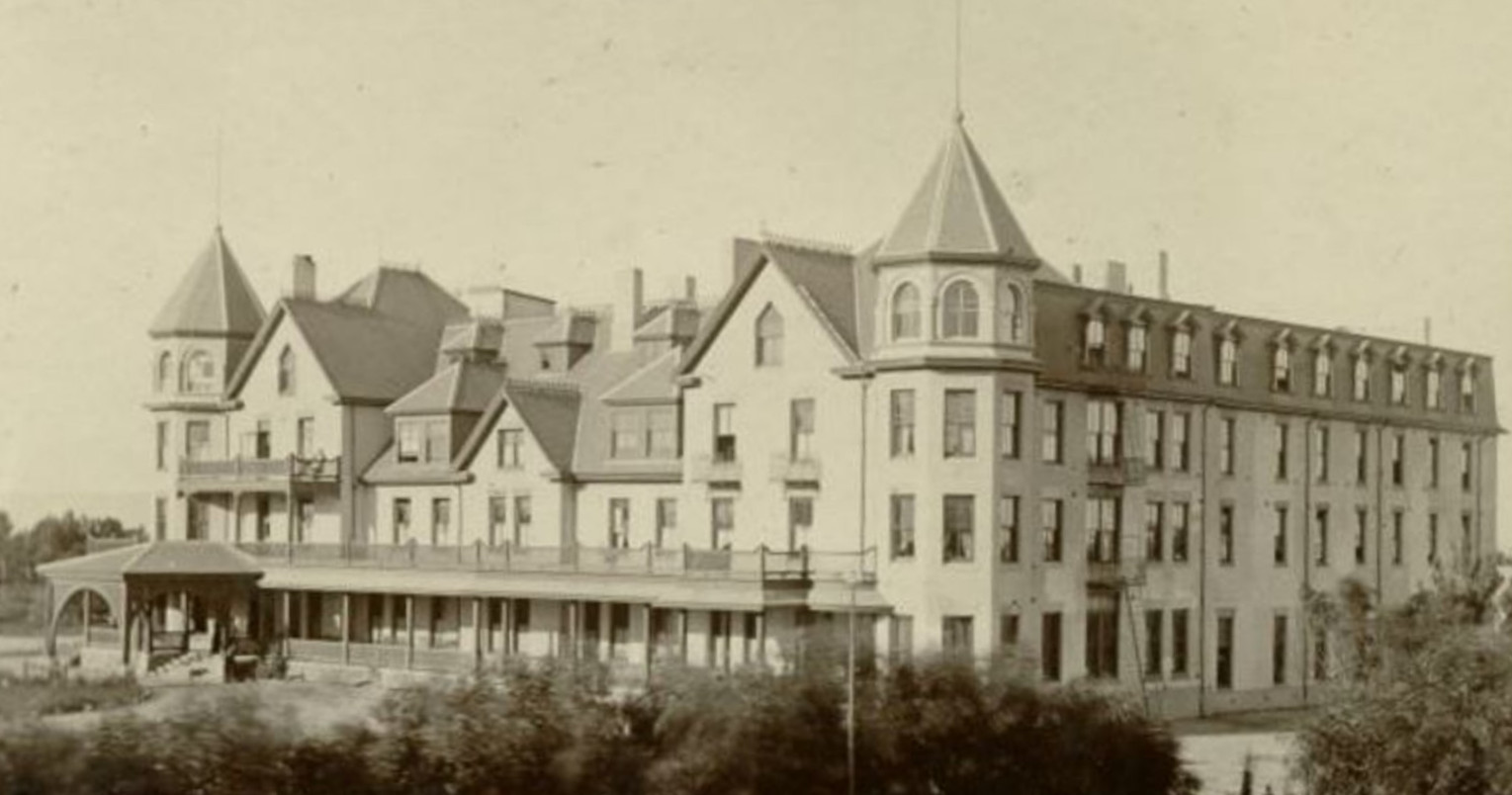
They also sought to replicate J.H. Kellogg's sanitarium with some assistance from Kellogg's architect. They invested £30,000 ($6.7 million in today's dollars) in the Claremont Sanitarium.5 Fitting perfectly with Ellen White's vision of a ministry to the wealthy, the ritzy sanitarium was built more like a hotel than a hospital. It boasted electric lighting, elevators, and "expensive" imported furniture.6 The stunning facility opened on January 12, 1897, and hosted many famous guests, who were indulged with massage treatments, hydrotherapy, and scrumptuous vegetarian meals.
1893 General Conference Session
When Peter Wessels attended the General Conference session of 1893, he didn't just show up. He brought a checkbook. He and his family donated...
- $16,000 ($583,000 in 2025 dollars) to the General Conference.
- $40,000 ($1.46 million in 2025) to establish an SDA health mission in Chicago.7
- £3,000 ($582,000 in 2025) to what would become Solusi Mission—the first SDA mission station established among non-Christian peoples anywhere in the world.8
The family's generosity was, by any reasonable measure, extraordinary. They funded SDA missionaries to come to South Africa to convert other Christians to Seventh-day Adventism. They funded sanitariums, churches, and schools across three continents. And standing at the center of nearly all of it, directing the flow of this fortune like a maestro conducting a very lucrative orchestra, was Ellen G. White.
The Vision-Driven Fundraising Machine

News of the Wessels family's diamond fortune soon reached Ellen and W.C. White in Australia. It was not long before Mrs. White was building a list of institutions the Wessels could fund.
By July 1892, White was writing South African Conference president A.T. Robinson: "I do hope that Brother Wessels will try to help us just now here in Australia, for we need it badly."9 She needed their money "badly" — to construct SDA schools, sanitariums, and churches on a continent the Wessels family had never visited. Not waiting for Robinson's reply, within two weeks she fired off a letter directly to Peter Wessels, reporting a nocturnal epiphany: "While praying in the night season, it came to me to ask our brethren in Africa to give aid to this missionary field."10
White's method of extracting donations from the wealthy followed a reliable pattern: identify the target's assets, invoke a divine vision confirming that God wants those assets, warn the target of spiritual peril if they fail to comply, express "deep interest" and maternal concern for their souls, and close with a specific ask. She had used this playbook on others before the Wessels came along.11 With the Wessels, however, she outdid herself — graduating from nocturnal impressions to direct divine commands, from gentle appeals to accusations of robbery: "Bro. Wessels...you are robbing God of that which is His own, withholding your tithes and offerings."12 Despite his robbery from God, she assured Peter in the same letter: "I feel the tenderest interest in your case." Months later she prodded him: "Means are needed in this field."13
Philip Wessels Reacts
Philip Wessels wrote Willie White from Cape Town in October 1892 — upon returning from a long stay in America. Philip was already chafing at the sect's harrassment of his family, but still exercising restraint. "It seems every other one feels himself called to step forward to act as a paymaster for us," he wrote. "They should leave us a little margin to act for ourselves and to disburse with our means ourselves." He acknowledged he had been hearing damaging rumors about the White family and their financial operations — "bogus-bogus," he called it — and was consciously suppressing the facts to remain loyal to the sect: "If I took notice of all the bogus-bogus I heard about you people yourself and your mother I would not have been a Seventh-day Adventist today."14
Ellen White's Grifting Theology
The thrust behind her appeals was a doctrine that was, in its simplicity, quite brilliant: the wealthy donor does not actually own their wealth. They are merely a "steward" holding "the Lord's money" in trust for God's only true church on earth: The SDA sect.
Since the money isn't really theirs, refusing to give it to the cause of God is not merely ungenerous—it is theft from the Almighty. Every dollar kept is a dollar robbed from heaven. Every investment in personal property is a spiritual catastrophe. Every gift to one's own children is an act of defiance against God. White hammered this doctrine into the Wessels family for nearly two decades with the relentlessness of an ordained debt collector.
"The light was given me," she wrote to Philip Wessels in 1899, "that the Wessels' money is God's money."15 By "God's money," of course, she meant the SDA corporation. Once that framing was established, the corollary was unavoidable: anything less than full surrender of the family fortune to Ellen White's approved causes was disobedience to God himself.
When the family invested in buildings or business ventures rather than donating to the cause, White's response was swift and prophetically devastating. She described visions of their money as "going into a bag full of holes." She warned them they were "in danger of losing your heavenly reward." She informed Mother Wessels that in "bolstering up Philip with money for his business, you and Mother Wessels have not been helping to save his soul, but you have been taking from the treasury of God."16 She wrote that if Sister Wessels was not "very guarded, she will send the means which belongs to God into the enemy's lines."17 She advised that "the Lord will not prosper him [Philip] as he now is"—framing his subsequent business failures as divine punishment for not giving the money to the SDA cause instead.18
The audacity of the operation is worth pausing to appreciate. When Philip Wessels lost his investment, White did not conclude that the business environment was difficult or that risk is inherent to enterprise. She concluded that he lost the money because he had not given it to her projects first. "If at that time your means had been invested in the cause of God," she lectured his mother, "Philip could not have entered into business so confidently as he did, and then lost all. The Lord could not bless him."19 Heads, God wins. Tails, you should have donated. It was a theologically airtight closed loop.
What makes the operation impressive is that White's prophetic rebukes were precision-targeted despite being fired from twelve thousand miles away. She had never set foot in South Africa. However, she already had boots on the ground...
Harmon Lindsay: Boots on the Ground
Harmon Lindsay was a former Treasurer of the General Conference and friend of the Whites. Lindsay had served at the highest levels of the SDA financial administration. He relocated to Claremont, South Africa, in the mid-1890s where he married Annie Wessels — a daughter of family matriarch Anna Wessels — embedding himself directly inside the family White was cultivating for donations. He managed the Claremont Sanitarium, did business with Philip Wessels, lived 150 yards from Mother Wessels' mansion, and wrote to Ellen White regularly about conditions inside the household. He was, in short, White's most valuable intelligence asset in South Africa — a man whose institutional loyalty to the denomination and filial loyalty to the Wessels family placed him at the exact intersection of both.20 With Lindsay in place to provide inside intelligence, White was in the perfect position to "press" the family for even more donations.

White's February 1898 letter invoked direct angelic authority against the family's domestic spending: "To Mother Wessels the Messenger said, You are making a mistake." The Messenger — White's spirit guide — condemned household money spent on "human taste, human pride and ambition," on "needless things," "spent for show." That summer Lindsay reported to White that Mother Wessels had come to regard her "elaborate house" as a mistake — using language that mirrors White's condemnation. The guilt-trip was working to perfection. She likely would not have felt so guilty if she could have seen some of the mansions that White owned.21
White was no doubt expecting Lindsay to use his influence to continue extracting wealth from the Wessels, but that plan started to fall apart. Lindsay started making financial decisions to benefit his new family instead of his prophet. White rebuked Lindsay on August 4:
By becoming a member of the Wessels family, you placed yourself where, if you had maintained a right influence, you would have been a great blessing to that family. ... But God does not want you and the Wessels family to invest your means in buildings. Your money is needed in the cause of God.22
How did Lindsay fail? By helping Philip Wessels financially:
In bolstering up Philip with money for his business, you and Mother Wessels have not been helping to save his soul, but you have been taking from the treasury of God."23
Four days later she wrote directly to Mother Wessels with the identical verdict from a different angle:
It is too late now to build houses which consume the means which the cause of God needs so much. Put your means where it can be used in the Lord's work.24
This was a coordinated pressure campaign, fired through every available channel at once—family member, son-in-law, matriarch—with one objective: divert the Wessels’ money from their own children to White’s projects. When Lindsay chose duty to his wife and family over the prophet’s fundraising machine, White was irate. She rebranded loyalty to one’s own household as theft from God and commanded Lindsay to "repent" of his misdeed.
The Family Pushes Back: Philip Wessels Calls Out White's Royalty Scheme
What the published SDA narrative almost never acknowledges is that at least some of the Wessels family were highly suspicious of Mrs. White's motives.
The most remarkable document in the entire Wessels correspondence is a letter to White from Philip Wessels in 1893.25 Philip had recently donated £500 ($112,000 in 2025 dollars) to White's Australian projects. And yet, in the same letter acknowledging that gift, he unloaded a devastating critique of the very system he was funding.
Philip's central charge concerned White's personal royalties on the sale of her "inspired" books. He had watched the SDA publishing apparatus at close range, and what he saw troubled him deeply. In a stinging "testimony" aimed at his prophet, he noted that "there are about a half a dozen who are drawing a royalty, and thus filling their pockets with proceeds derived from books they claim are inspired, and carry solemn Truths." He then quoted scripture directly at her: "That which ye have received for nought, give for nought." His conclusion was blunt: "I see no scripture that shows that a person could make money from the cause of God."26
He was not finished. He described attending the Kalamazoo camp meeting—his first in America—where White had publicly urged the sale of her books by the denomination while simultaneously "mention[ing] the royalty reserve." It struck him, he wrote, as "unscriptural." He had spoken to others about it: "There is not a person who did not think that the denomination ought to control, and pay no royalty on the books used by them and sold by their agents." He contrasted White's lucrative arrangement with that of J. N. Loughborough, who had placed his book in the hands of the committee rather than retaining royalties for himself—calling it "a Christian's doings, and as it should be."27
Then Philip wrote something that should have shaken White to her core. He described his family's enormous generosity — his mother and siblings donating "never to see again" — and then observed that if his relatives discovered that the leaders of the sect were "drawing through a systematic effort" personal profits from allegedly inspired publications, "they would think every thing not so well of Seventh Day Adventist. And so did I. But oh, if I knew this before, I would never have thought to let myself in with this denomination."28
He concluded by threatening to redirect his tithes away from the General Conference entirely — to the Dutch work in Africa or to the heathen directly — "under these circumstances." And then: "In fact, if it still so continues, I don't care to belong to the denomination."29
This is the man whose £500 White had just pocketed. He observed her money-making operation and reached the conclusion that it was financially corrupt. White's response to this searing critique? She was not fazed. She still collected royalties. She still kept pressing the Wessels for more money.
The Receipts: A Partial Accounting of Wealth Extracted
A full accounting of every dollar the Wessels family transferred at Ellen White's direction may be impossible to reconstruct. But the partial record preserved in her own letters and in family correspondence is staggering.
In June 1893, after receiving a £500 donation from Philip Wessels and his mother (worth approximately $103,125 today), White immediately wrote again asking if they could "help us to build a house of worship in Melbourne" and also fund a school building. She candidly noted in the same letter: "It is all that I can do now, for I am carrying quite a burden of debt."30 One gift secured, another requested in the same breath.
That very same month, Peter Wessels wrote White from South Africa to inform her that the family had donated $15,000 to the Foreign Mission work and another $25,000 toward establishing the sanitarium work in South Africa. Having just committed what amounts to roughly $1.46 million in today's dollars, Peter told her plainly: "At present I cannot donate more, for I have no money free that I can use for that purpose, or I have to take it from the bank and pay interest on it. So I thought to write to you plain... I think at present not advisable to press the matter any more."31
He told her to stop her incessant pressing. But the more money she got, the more her appetite was whetted. She would not stop pressing until there was nothing left to press for.
In 1896, White wrote to Mrs. Wessels describing the costs of preparing her Life of Christ manuscript—$3,000 paid to her book-maker, Marian Davis, with another $3,000 needed. The cost of $3,000 in 1896 represents approximately $118,000 today. In the same letter, she asked the Wessels family to loan her £1,000 at the lowest interest rate they could "afford."32
That loan request was repeated in April of the same year, this time for the Avondale school building. White wrote that the work was at a standstill "mainly for lack of funds," and appealed: "Are you able to loan us £1,000, and can you send it direct to us?" She added, with practiced piety: "Would you know how you can best please your Saviour? It is by putting your money to the exchangers, to be used in the Lord's service."33 She also reported that "the word of the Lord" came to her: "Send to Africa for help. I have entrusted my stewards there with means, and I will move upon their hearts to trade upon My entrusted talents."34 The Almighty, it would seem, shared her gift for fundraising.
The Wessels family complied. On October 1, 1896, the cornerstone of the Avondale school building was laid. White recorded: "The Lord had moved upon the hearts of Sister Wessels and her sons to grant my request for a loan of £1,000 at 4½ percent interest."35 The loan of £1,000 in 1896 equates to roughly $184,000 today.
In February 1897, Peter Wessels sent a £50 gift (approximately $9,875 today). White described receiving it: "It came exactly at the right time. We were at the Health Home, trying to get means to furnish some rooms... and when that money came, we rejoiced, and were glad."36 That same year, White recorded that "Mother Wessels loaned me £1,000 at 4 per cent interest" and that "Brother Peter Wessels gave a donation of $300."37
By 1899, she was writing to friends: "I have carried a tremendous burden for Africa. We must save the Wessels family if possible."38 One notes, with interest, that "saving" the Wessels family and securing their assets for the cause of God were presented as identical projects. Also in 1899, she wrote, "I am constantly writing to the Wessels family."39 This was no exaggeration. Tracking her correspondence in that year alone reveals letters to Mother Wessels, to Philip Wessels, to John and Sister Wessels, to the children of Sister Wessels, to Harmon Lindsay, and multiple letters referencing the Wessels family in communications to third parties.
The Prophet in the Glass House
While White was warning the Wessels family that business investments were spiritually ruinous and their money belonged to God, she was simultaneously running her own for-profit ventures — and losing badly. Back in Battle Creek, White had invested in the Central Manufacturing Company, a commercial enterprise run largely by her son Edson. The business was "almost a failure." Edson dropped out. Creditors pressed in. The company took out chattel mortgages with the Review and Herald to stave off disaster. White was personally on the hook for accommodation notes of $500 and $250 that she had signed expecting never to repay — and was seemed stunned when the bank came calling. "You gave me the most positive assurance," she complained to Edson, "that I would not have to pay a cent on them."40 Her own diary later admitted the debt "should never have been incurred."41
This is the same prophet who told the Wessels that Philip's money "goes into the basket and runs out" as divine punishment for worldly investment. Her own money was running out too — she just didn't frame it as divine punishment.
Harmon Lindsay also got involved in the disastrous Central Manufacturing Company to "lessen White's burdens and cares," and wrote to her in 1892: "I never ought to have consented."42 The Central Manufacturing Company left him entangled in a financial mess he didn't create. Later, in South Africa, he bought John Wessels' house specifically to help John leave for Australia at White's urging. Yet through all of it, Lindsay kept serving White's financial interests without complaint — liquidating his own assets, negotiating her loans, managing her correspondence, and sending his own money to her in Australia.43
White Struggles to Repay Loan
The £1,000 that White had borrowed from Mother Wessels — and couldn't repay — was not discretionary family wealth. It was orphan inheritance money, held in trust. As Lindsay explained in a letter to White in June 1898, the Wessels estate held funds belonging to minor orphan heirs, and as three of them were coming of age within fourteen months, Mother Wessels was legally compelled to call in the loan. The orphans' combined entitlement was approximately £19,000. Most of it was not in banks — it was scattered among the Wessels children's various business ventures. Mother Wessels was already more than £2,000 overdrawn at the bank, paying 6% interest. She needed the money back. She couldn't get it. Lindsay wrote to White with the legal notice: six months, from July 1st.44
Despite assuring Mother Wessels she would not disappoint her by failing to repay the loan, White did exactly that. White couldn't pay. So she deployed Elder Haskell — a senior sect official — to write to Lindsay on her behalf, explaining the "great inconvenience" repayment would cause. Lindsay, ever dutiful, then went to Dan Wessels directly. Dan was one of the orphan heirs — a young man studying in London on his inheritance. Lindsay explained White's situation and asked if Dan would accept her promissory note for one more year. Dan agreed: 4½% interest, repayable at the end of one year.45
Lindsay noted, with evident relief, that Dan "could easily get 6% for the money here on good security, as that is the current rate." An orphan, studying abroad on his own inheritance, voluntarily took a below-market rate on money the prophet of the Lord owed him — as an act of charity toward the Australian mission. The sect's fundraising machinery was now running in reverse: it was the orphan who was subsidizing the prophet.
In the very same letter in which White was managing this embarrassing default, she was condemning Philip Wessels for "putting his money in a basket with holes. The money goes into the basket, but it runs out, and that is the last of it."46 It takes a moment to appreciate the gravity of this. The woman lecturing Philip about money running out was personally in default on a loan from orphan inheritance funds, had deployed a senior church official to negotiate her extension, and was counting on a separate $3,000 denominational debt owed to her to make good the difference.47 Philip's leaking basket and White's leaking basket were structurally identical. The difference was that Philip's was divine punishment. White's was the sect's problem to resolve.
Back in South Africa, an elderly widow had liberally given to White for years. Now, her account was more than £2,000 overdrawn. Three orphans were waiting for their inheritance. Would the prophet come to her aid now that she needed money just as she had come to the prophet's aid when the prophet begged for money? Not a chance. The only “golden rule” White seemed to recognize was this: she got the gold, and she made the rules.
The Matthew 19 Gambit: Calling for Total Divestiture
A letter White wrote to Sister A.E. Wessels on August 3, 1899 — addressed to the mother but explicitly intended for the entire family — reveals the full audacity of her fundraising methodology.48
She opened with a guilt offensive over John Wessels' failure to relocate to Australia at White's direction: "For two years the work in Australia has been greatly hindered, because the Wessels family and the elders of the church in Africa interposed themselves between God and John Wessels." The delay of one family member's relocation — to a continent where White's financial needs were most acute — had, she claimed, actively hindered two years of missionary work and imperiled the souls of the lost. The Wessels family bore personal responsibility for those souls. This is guilt weaponized at a scale that should take the reader's breath away.
She then turned to Philip's business failure and added a theological escalation that went beyond anything previously examined. It was not merely that investing in Philip's business was unwise. Those who had loaned him money had, White declared, sinned:
You and Brother Lindsay entrusted him with your money to place in worldly business. Those who helped Philip in this shared the sin of his transgression. God cannot prosper transgression. If Philip had not had that loan, if the Lord had received His own goods to advance His truth, souls would have been saved, and you would have laid up treasure in heaven.
By "souls would have been saved" what White really meant is that some Australian Christians would have been converted to Seventh-day Adventism. The mother is ridiculed for helping her son. She had put family money into a family business. In White's theological framework, this was not maternal love — it was a sin against God, a participation in transgression, the direct cause of souls lost in eternity. Every pound the mother gave to Philip was a pound withheld from heaven. The family's love for each other was recast as spiritual treachery.
And then came the line that stands as perhaps the most theologically brazen in the entire Wessels correspondence. Having established that the family owed God their total financial surrender, White reached for the ultimate biblical precedent — the Rich Young Ruler:
Had Christ said to you, "Go, sell all that thou hast, and come, follow me, and ye shall have treasure in heaven," you would have glorified God in obeying. [See Matthew 19:21.] But by leaguing with others in a wrong way you are taking steps in the same path with them.
The implication is staggering. In Matthew 19:21, Jesus speaks these words to one specific man, in one specific context, as a personal call to radical discipleship — a call so demanding that even most conservative theologians do not read it as a universal command. Ellen White appropriated this call and turned it into a rebuke of a family for failing to donate all their assets to the SDA corporation. The Rich Young Ruler's failure to follow Jesus became the Wessels family's failure to write checks to White's approved projects. It is a breathtaking piece of scriptural misdirection, deploying the most demanding saying of Jesus about wealth as an instrument to twist the arm of the Wessels.
She closed the letter with a demand that had the quality of a summons: "I want Peter and Philip to see this letter."48
She had written to the mother. She had accused the mother of sinning by helping her own son. She had invoked the Rich Young Ruler. And then she instructed the mother to circulate the guilt trip to the brothers so they could all cower under the frown of God together.
The Corban Scheme: Engineering a Family's Disinheritance
In September of 1899, Annie Wessels Lindsay wrote two letters to Ellen White on behalf of the family. Together they constitute the most damning documents in the entire Wessels-White correspondence. They reveal that the family had surrendered their judgment completely to White. They were now designing their own disinheritance and asking White to approve it.49
Annie acknowledged the frightening state of the Wessels' financial plight. Previous donations had already depleted the family's capital to the point of crisis — "several of us have already donated outright so much of our means that it is absolutely essential for us to invest the money still left to us in enterprises which will bring in interest enough to live on, as we have our families to support." Having given so much of their money away, they were naturally concerned about their financial future. They were now writing to ask White's approval to give the rest away too. The letter closes: "We are sending a letter to John by this mail in which we have suggested such a scheme and submit it to you for your consideration and approval."50
White was being asked to serve as the approving authority over the restructuring of the Wessels estate. With almost god-like devotion, the family treated her as a financial advisor with effective veto power over their inheritance planning.
The September 21 letter provided the shocking details:
Mother agrees with you perfectly and longs to invest all her means in God's cause, but she is now bound by circumstances in such a way that the greater part of her available funds must be kept for her sons and other heirs of our father, until they are of age, when she will be required to pay cash many thousands of pounds. Mother is arranging a plan by which all her money can be invested in God's cause either during her life; or if she should happen to be taken away soon, to have the money invested after her decease in enterprises connected with God's work, and paying a small interest to her several heirs who may then be engaged in upholding the third angel's message.
The principal would transfer to the SDA corporation. The heirs would receive "a small interest." White later admitted that the amount agreed upon was 5%.51 And the condition to receive the trickle: the heirs must be "engaged in upholding the third angel's message" — meaning they must remain loyal, practicing SDAs in good standing with the sect that was siphoning away their inheritance. Dissent from the faith meant forfeiture of even the residual income. This trickle would ensure the religious loyalty of every Wessels heir.
White's complete control over the family is shocking. Annie groveled at the feet of White: "Dear Sister White, we beg of you to be free to suggest any alterations in our plans." White was being begged to co-author the legal and financial architecture of the disinheritance.52
The Hand Behind the Plan
The hand of Harmon Lindsay is apparent in this scheme. Lindsay was not merely a neighbor and son-in-law — he was a former Treasurer of the General Conference, a man with sophisticated institutional financial experience who had also spent years restructuring White's debts, managing the Wessels family's affairs, and corresponding regularly with White about family finances. The scheme Annie described has the fingerprints of a man who knew how institutional trusts were structured. That his wife Annie was the one who drafted and submitted the proposal, under his roof, is not a coincidence.53
Corban
This is Corban — the practice Jesus condemned in Mark 7:11-13, by which religious vows were used to redirect assets belonging to family members into the temple treasury. Jesus called it making "the word of God of none effect." White called it the proper use of "entrusted means."
The September 21 letter also contains an admission that lays bare how thoroughly White's guilt campaign had worked. The family reported being "reproved by the 'Spirit of Prophecy' repeatedly for having donated so much at random" — using the formal SDA title for White's prophetic office, in quotation marks, as though citing scripture. This family literally believed that God was personally directing the flow of their wealth into White's projects.
Mother Wessels "acknowledges her past mistakes and realizes that it was not God's will that she should have built such a large house, nor that she should have ventured into a business" — referring to Philip's enterprise. She was asking God's forgiveness for helping her own son. This family has been beaten into submission by White's repeated testimonies commanding them to part with their wealth. They have absorbed that theology — duped into thinking White's messages came from heaven. Hoping to avoid the frown of God, they are now ready to relinquish everything into White's open hands.
White's Wicked Response
Any prophet with genuine spiritual discernment would have seen the conflict of interest immediately and recused herself. A prophet actually guided by God would have known that the Boer War and severe economic turmoil were coming, that the family's assets were about to be devastated, and that stripping the heirs of their inheritance on the eve of a regional depression was not divine wisdom but financial recklessness. A prophet who genuinely cared for these "fatherless children" would have told them to protect the capital their father had structured for them, not surrender it to the corporation that employed her. A true prophet never would have gone along with such a sordid scheme.
White? She gave them the thumbs up. Her response was not merely self-serving. It was downright wicked.
Five weeks after Annie wrote, White replied from John Wessels' home in Sydney — writing her approval letter while a guest at the family's table. Her verdict: "We are sure of one thing — you are on the right track." She then spent several thousand words advising how the scheme should be structured, what kinds of investments were appropriate, and how the family's "talent of means" should be deployed going forward. She endorsed the low-interest loan model explicitly: "The owners might receive a low rate of interest, and they would have the satisfaction of knowing that they were really helping the cause of God."54
She also positioned herself, with breathtaking audacity, as the divinely appointed guardian of the family's welfare:
I am obliged to communicate to the children of Sister Wessels that which I have received. These fatherless children needed divine counsel, and the Lord gave it to them through His own appointed agencies.54
Interestingly, White's "counsel" to the family dried up as soon as their money did.
Patriarch's Wise Plan Is Trashed
Family patriarch Jacobus Andries Wessels — now deceased — had greater foresight than prophet White. He had wisely structured his estate to provide for his sons, daughters, and grandchildren through a carefully arranged inheritance plan designed to give the next generation a firm financial foundation. He had done precisely what the Bible commands:
A good man leaves an inheritance to his children's children (Prov. 13:22)
Just as White's will provided for her sons, father Wessels had provided for his family. Who had the right to override his will? The Spirit of Profits, speaking with the voice of God.
What Ellen White and Harmon Lindsay were now engineering, from inside the family's own household, was the dismantling of father Wessels' plan. The patriarch's inheritance structure — built to provide for his children and grandchildren — was being replaced with a denominational trust that would funnel the principal to the SDA corporation and leave the heirs dependent on a trickle of interest, conditional on their continued compliance to SDA teachings. The grandchildren Jacobus had provided for would now be, in financial terms, dependents of the SDA corporation. Their inheritance had been redirected by a prophet's letters and a church treasurer's financial scheme into the coffers of the SDA corporation. The audacity of White's spiritual manipulation of this family is almost beyond language.
Near the end of her response letter, White made an admission that deserves to be read slowly. She acknowledged that "the enemy has tempted the family to think that it was their money that was wanted." She did not deny it. Their money was wanted — badly. However, she reframed it as a satanic temptation — a spiritual failure on the family's part for even entertaining the thought that the prophet coveted their fortune. To suspect White's motives was, in her framework, to listen to the devil. And then, having condemned their suspicion as demonic, she blamed the request on God: "But it was to benefit them that God asks for their money." Her answer to their righful suspicions was to pretend that God asked for it. He's the One who wanted their money. They were groomed into believing that giving everything away to the SDA corporation was somehow a blessing to them.
The Battle over the Wessels' Money
The battle over where the Wessels money should flow generated considerable friction within the sect. White made her position clear to the Wessels: "Dr. Kellogg wrote to me of the large donation made to him by two of the Wessels brothers. This was presented to me as a mistake."54 It was a "mistake" that the Wessels brothers donated large sums to Kellogg for actual missions to the poor instead of building sanitariums for the wealthy in Australia.
White expressed indignantion that the Wessels would dare to send large donations without her approval: "The Wessels family have made large donations of money to Dr. Kellogg, as though he were the one who was to be steward of their means."55 She condemned the donations as reckless: "It is recklessness to send out money as has been done."56 White was more intent on building sanitariums for the wealthy than on feeding the poor.57 The problem was that it had gone to the wrong man's projects — and away from hers. Annie acknowledges receiving multiple admonitions from White regarding how they spent their own money: "We have been reproved by the 'Spirit of Prophecy' repeatedly for having donated so much at random."58
White actively worked to redirect the family to Australia where she could more easily control them and their money. She wrote:
I have written to Sister Wessels to have Andrew come to Australia, and have asked her to accompany him.... I will do my best to have them settle in Australia.59
She hypocritically complained that the money "should have been" kept in Africa — despite having spent years directing it toward her own Australian projects.60 Her principle was consistent: Wessels money should go where she directed it, not where anyone else requested it.
White's campaign to control the Wessels money extended beyond direct letters to the family. She recruited Harmon Lindsay as an internal agent to enforce her financial agenda. In August 1899, she wrote to Lindsay with explicit instructions about how to manage the family's financial decisions: "John is here, and I am glad of this. He wants his money and should have it. You can, and if you truly realize the situation, you will find means to release his money." She was intervening in internal family financial arrangements to free up capital — acting not as a prophet but as a collections agent.61
In the same letter, she made clear that Lindsay himself was personally culpable for the failure of the entire family to comply with her financial directives: "Had you, his brother, had moral stamina to stand in God as a co-worker with Christ, you would have gone forward and upward from grace to grace, from victory to victory, taking others of the Wessels family along with you." Then she turned to Lindsay's mother-in-law: "Your mother is not always judicious, Harmon, and when she becomes confused she needs you to advise her and see things in a correct light."62 She was recruiting Lindsay to manipulate his own mother-in-law into following White's agenda to drain her resources dry.
Even when she sensed that her reputation was at stake, White's instinct was not to stop asking, but to deny asking while asking. In a letter to John and Sister Wessels, she wrote:
I was brought into a position where I could hear words that passed among some of the members of the Wessels family, casting on me the imputation that all I wanted was the money you would bring with you to Australia. I cannot say that I wanted this money, for personally I did not want one penny. ... the Lord directed me to call upon the Wessels family to impart of the Lord’s goods.63
She assured the family that it wasn't Sister White asking for the money. It was the Lord. White was simply the innocent messenger.
Despite this denial, in the very same letter she pressed for a specific donation: "When I asked Dan to make a donation of the one thousand pounds, I was in earnest." She added:
Dan shall not be disappointed in getting back the one thousand pounds, unless he feels, himself, that he would consider it a privilege to return to the Lord His entrusted gift. Can he not at least return this much to the Master?
The framing is a masterpiece of theological manipulation: the thousand-pound donation has been recast as a privilege for Dan, a return of something that was never really his to begin with, and a test of whether he "feels" the right spiritual sentiments. The denial of wanting money and the earnest request for one thousand pounds occupy the same letter.64
The Dream That Commanded a Donation
Perhaps the most brazen episode in Ellen White's Wessels correspondence is preserved in her own autobiography. She described it as follows:
One night I fell asleep, and dreamed that I was weeping and praying before the Lord. A hand touched me on the shoulder, and a voice said: "I have means in many families in Africa that is being bound up in worldly enterprises. Send to the Wessels brothers. Tell them the Lord has need of money. It will do them good to help to advance My work here with their entrusted means."65
Let the reader absorb this. Ellen White had a dream in which a divine Super Salesman appeared — not to warn of a coming judgment, not to reveal a theological truth, not to comfort the afflicted — but to send a fundraising memo. The Almighty Creator of the universe, she claimed, personally appeared to her sleeping mind to inform her that the Wessels brothers were hoarding His money and she should tell them to donate it. This is one of the most audacious and financially convenient divine visitations in the history of Christianity — astonishingly dissimilar to any prophetic message in the New Testament. One might wonder if she had imbibed in a few too many cordials before going to bed that evening.
The Prophet Called Out for Her Greed
Ellen White was, throughout this period, acutely sensitive to the charge that she was in it for the money. She protested her selflessness at every opportunity. "It is not Sister White who wants your money," she told the Wessels family in 1899.66 She assured them: "I do not write because I expect you to send us money, but because I wish to help you with the counsel and the light that God has given me."67
Philip Wessels was not the only family member who looked at White's operation with skeptical eyes. Peter Wessels, for all his later compliance, was in 1893 quite direct with her on one subject: stop asking. In the same letter in which he reported the family's combined $40,000 donation, he told her: "At present I cannot donate more... So I thought to write to you plain. My brethren John and Henry and Andrew have given quite liberally to the cause. I think at present not advisable to press the matter any more."68
She pressed anyway. The family's own 1904 correspondence — when financial ruin was closing in — paints a harrowing picture. J.J. Wessels wrote to White that "I have had a very hard time in business matters... Bro. Peter...is like myself full of business cares. Sister Jacoba, lost all her money. ... [Andrew's] business affairs [are in] great trouble. ... Bro. Phil...has lost all he had. ... [Henry] has lost [his money] in one way or another."69
The Wessels family was coming apart financially. Instead of being blessed by forking over most of their estate to White and the SDA corporation, they were now impoverished. Meanwhile, White was living the good life, collecting hefty royalties on her "inspired" publications.
Even in the grips of financial desperation, the following year J.J. Wessels sacrificed by sending a thousand dollars ($36,437 in 2025) to the SDA corporate headquarters.70 So convinced were they that this was the voice of God that even in ruin, they paid.
The same letters in which White denied wanting their money contain explicit requests for their money. The timing of her "deep spiritual interest" in the family correlates with extraordinary precision to the period during which they possessed a large fortune. The moment that fortune was gone, so was the interest.
Even the White Estate's own published introduction to its Testimonies to Southern Africa collection, written to honor White's connection to the family, cannot entirely conceal what the record shows. It describes the Wessels family as having "come into the possession of considerable means" and notes that this family "evoked the deepest interest in the years that followed on the part of Ellen White who was concerned with their spiritual welfare, their personal problems, and the right use of their means for the cause."71 While the White Estate listed "spiritual welfare" first, White's interest in their spiritual welfare only lasted as long as their fortune lasted.
The Silence That Speaks Volumes
After the Boer War ended in 1902, the South African economy entered a severe depression. The Wessels family's extensive property holdings lost value dramatically. A conflict arose between the family and the SDA Church over the local sanitarium that the Wessels had largely funded; the family wanted greater control to ensure profitability, and when they made legal threats, the church surrendered the sanitarium to them rather than fight.72 The relationship between the family and the SDA corporation was seriously eroded.
So was Ellen White's pretended interest in their souls.
When John returned to South Africa — against Mrs. White's wishes — to try and stave off the complete collapse of the family's financial empire, Mrs. White wrote: "He was under the control of satanic agencies."73 When the family realized their dire financial position and stopped giving to White, she lashed out at them, labeling them as "unconverted" and foolish.74
Notice the astonishing lack of human compassion.
By this point the family had already suffered devastating financial consequences connected to Adventist entanglements. Yet White's response was not sympathy, caution, or self-examination. Instead, she framed their resistance as spiritual rebellion and portrayed them as unconverted people under satanic influence.
This is one of the recurring patterns in high-control religious systems: when wealthy supporters comply, they are praised as consecrated instruments of God. When they begin resisting financial manipulation, they suddenly become spiritually defective.
The letters to the Wessels family, which had flowed for eighteen years in a relentless torrent, went dry. The White Estate's own collection notes correspondence spanning from 1890 to 1908 — tapering off dramatically in the 1900s, then ceasing.75 No more warnings about their spiritual danger. No more dreams in which God commanded their donations. No more expressions of "deepest interest" in every member of the family. No more worries about them "losing their heavenly reward." The prophet who had been "constantly writing" to them, who had described carrying a "tremendous burden" for their souls, who had invoked the voice of God to redirect their checkbooks — had nothing more to say once the financial well dried up.
If Ellen White's interest in the Wessels family had been genuinely spiritual — if she had truly cared about their eternal welfare, about their personal struggles, about their walk with God — their financial ruin would have intensified her concern, not terminated it. People who are financially devastated need encouragement and consolation far more than prosperous donors do. White offered none. The correspondence simply stopped.76
Peter Wessels the Predator
No examination of Ellen White's relationship with the Wessels family would be complete without confronting what she knew about Peter Wessels and what she did — and did not do — about it.
In 1890, the SDA Church granted Peter Wessels a ministerial license77 despite his lack of any formal ministerial education. He used it for six years to build his standing in the SDA community, converting other Christians to Seventh-day Adventism, and serving as a religious authority over young women in his pastoral care. In 1896, his ministerial license was abruptly withdrawn.
The reason emerges from Ellen White's own letter to him (Letter 106a, 1896). Peter Wessels had been sexually abusing women and girls under his ministerial care. The abuse, as White describes it, involved fondling their bodies, degrading them physically, and initiating them into practices of "self-abuse" — the Victorian term for masturbation. He had apparently defended himself on the technicality that he had not committed intercourse. White was having none of it:
It is a Sodomitish sin. It is tainting and polluting in all its tendencies, and an abomination in the sight of a holy God. It is practicing iniquity.... What can the impression be upon those youth whose bodies you degrade by your actions? How can you be a Shepherd of the sheep and lambs, while corrupting their minds, and tainting and polluting their moral sense?78
White's diagnosis of the abuse was accurate and appropriately fierce. Peter Wessels had done exactly what predatory religious authorities do: he exploited the trust placed in him by vulnerable young women. He led his victims — in White's vivid phrase — "to the tree of knowledge of evil practices."
What White wrote next in her letter is appalling. When Peter asked whether he should make a public confession, White told him no. In unmistakable terms:
Do not dishonor the Master by making public the fact that one ministering in the Word could be guilty of such sin as you have committed. It would be a disgrace to the ministry. Do not give publicity to this matter by any means.
And then, in a sentence that should make any reader's blood run cold: "Defile not the lips even by communicating this to your wife, to make her ashamed and bow her head in sorrow."79
Ellen White did not instruct him to report his crime to local authorities. She did not instruct him to make restitution to the victims. She did not instruct the church to investigate. She instructed him to keep it secret — for the sake of the ministry's reputation. The victims, whose bodies had been "degraded" and whose moral sense had been "tainted and polluted" by a man they trusted as a shepherd, were owed precisely nothing in Ellen White's framework. Protecting the image of the SDA Corporation was her one and only concern.
White did give a copy of her letter to South African Conference President Asa Robinson — not to prompt an investigation, but, as she explained, to prevent Robinson from requiring a public confession and to "keep the matter as private as possible."80
Robinson, to his partial credit, did not keep it entirely secret. He told Peter's mother. Peter then wrote to White twice — in February and April 1897 — complaining bitterly that his private letter had been shared. He told White: "I think it is not best nor right to do so. I don't like to be made public by any one." He described Robinson subsequently reading the letter to his mother "after the thing has past a year, and after he and I has made things out" — i.e., after Peter believed the matter was settled between them.81
Peter expressed outrage at Robinson's conduct and described his mother's grief — she "cried nearly 2 weeks about" the revelation. He complained about the breach of confidentiality. The abuse itself was apparently not in dispute; what wounded him was that his mother had been told.82
White's response to Peter's complaints was to express sympathy for his wounded feelings: "I am sorry that you feel injured.... If it has added to your affliction, making matters any worse for you, I am sincerely sorry."83 This is the complete moral inversion that institutional cover-up produces. The abuser's distress at being exposed becomes the primary concern. The victims are invisible. White expressed sorrow for Peter's "affliction." She expressed no recorded sorrow for the young women he had abused.
Shortly after White found out that Robinson had revealed the abuse to Peter's mother, Robinson was mysteriously removed from his role as president of the South African Conference. He was reassigned to Australia, where he received no official leadership role for years.84 The SDA corporation, following White's explicit instructions, kept the matter quiet and protected its most prominent donor family from scandal. Peter was never held accountable for abusing young women. Even to this day, the SDA corporation does not acknowledge the reason for Peter's dismissal from the ministry.
Astonishingly, three years after losing his ministerial license for sexually abusing young women, "P. J. D. Wessels" — Peter Wessels — was elected to a Conference Executive position by the SDA Church.85 The man Ellen White had called a practitioner of "Sodomitish sin" was restored to denominational authority within three years, his victims still unacknowledged, his crimes still secret, his family still among the sect's most important financial patrons.
It seems as if White's greed for the Wessels fortune overrode any concern for justice. The checkbook mattered more than the victims.
Conclusion
The 124 letters to the Wessels family tell a disturbing story about Ellen White. A story of a prophet whose "deepest interest" hovered over the family fortune like a bee over pollen.
When the Wessels were wealthy, Ellen White had visions about their money. She dreamed dreams in which God commanded their donations. She wrote to them constantly, scolded them spiritually, warned them of eternal peril, and deployed every theological lever available to ensure the flow of their fortune toward her projects. She solicited personal loans from orphan inheritance funds and then defaulted on them, deploying senior church officials to negotiate her extensions. She ran her own for-profit businesses in Battle Creek while condemning the Wessels for doing the same. She recruited the former General Conference Treasurer as an enforcement agent inside the family's household. She invoked the Rich Young Ruler to demand total divestiture. She engineered the disinheritance of legitimate heirs. And she shielded Peter from public accountability for his sexual abuse of young women — because exposure would have imperiled the checkbook.
When the Wessels were financially ruined, Ellen White had nothing more to say to them. Not a word of comfort. Not a testimony. Not a vision of hope for their afflicted circumstances. Eighteen years of constant correspondence ceased. The prophet who had invoked the voice of God to tell them that "the Lord has need of money" discovered, it seems, that the Lord had no further concern for their welfare after their money evaporated.
Mother Anna Wessels — who had restructured her estate, disinherited her children's full inheritance, and watched the SDA Church absorb her family's fortune brick by brick — had a revelation that she shared with her son in the dark the night before he left for Australia: "They only want your money."86
That is the true story of Ellen White: The Spirit of Profits.
Aftermath: The Dissolution of a Dynasty
SDA legends present the Wessels story as a tale of faith rewarded: a wealthy family that heard the voice of God through His prophet and gave generously to the cause. What the hagiography omits is the ending. By the second decade of the twentieth century, the family that had funded Solusi Mission, Avondale College, the Claremont Sanitarium, Claremont Union College, the Battle Creek free dispensary, and Ellen White's own household expenses had largely dissolved — scattered across continents, estranged from the denomination, financially ruined, and in several cases openly apostate. The dynasty was gone.
The outcome of each family member is worth examining, because together they constitute a verdict on Ellen White's gold-digging enterprise.
Philip Wessels — the most skeptical of the brothers, the one who had written White in 1893 to challenge her royalty scheme and threaten to leave the denomination — made good on his threat. His eventual break was complete. He worked on Sabbath, placing himself in direct violation of the most important SDA doctrine.87 The man who had quoted Matthew 10:8 at Ellen White — "that which ye have received for nought, give for nought" — ended his religious journey breaking the Sabbath. Whether this represents apostasy or liberation depends on one's point of view.
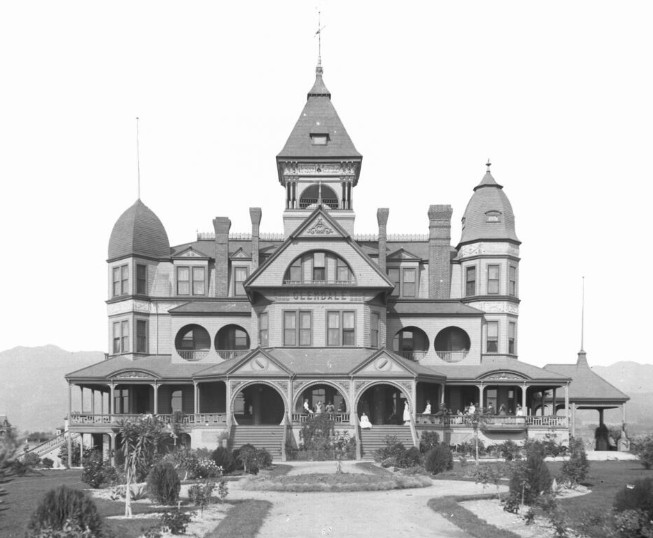
John J. Wessels — returned to South Africa in 1900. Burdened by the enormous debt of the Claremont Sanitarium, John grew increasingly resentful of what he characterized as "kingly power" exercised by American denominational leaders, particularly A.G. Daniells.88 In 1907, he went to California to help manage SDA sanitariums in Pardise Valley, Glendale, and St. Helena. In 1915, he left SDA employment and opened a hotel in Berkeley. Like the rest of the Wessels family, he disappeared into the myst of history.
Mother Anna Wessels — reduced to poverty, she moved to Califorina with her son John. White lamented in 1907: "They do not have any available means. The mother has only enough to live on."89 Not surprisingly, White's last letter to Anna was in 1905.90
Peter Wessels — his founding zeal curdled into a litigious preoccupation with institutional control.91 In August 1906, he wrote to White saying he was "terribly disappointed in the Brethren here" and "sorry" he offered to help the cause. He reported that he had "lost nearly all" and had moved to a small farm in the country.92 White never wrote back. No money? No response.
Henry Wessels — became increasingly frustrated with how family funds were managed and directed by the General Conference and local church leadership. Ultimately, Henry gave up the Sabbath and ceased his affiliation with the SDA movement. He shifted his focus entirely to farming and secular business interests within the Orange River Colony.93
Joanna and Jacobus Wessels formally left the faith.94
Harmon Lindsay — moved to Paradise Valley, California, and worked with the SDA sanitarium for a while. Eventually, he left Adventism altogether and joined the Christian Scientists.95 His faith in White destroyed, he ended his religious journey in a denomination that Ellen White had condemned.
By 1920, the family that had once been described as the financial pillars of Seventh-day Adventism had crumbled into dust. The institutions they fought so hard to build in South Africa came to nought:
- Claremont Union College — After the Boer War and subsequent economic depression, enrollment decreased. Black students were denied enrollment in 1913. The school was closed and dismantled in 1918.96
- Claremont Sanitarium — Unhappy with the way the sanitarium was being managed, the Wessel brothers fought with SDA leaders over control of the institution. After the Wessels threatened a lawsuit, the sect relinquished control to the brothers in 1901. Due to the depression following the war, the number of clients diminished and the operation was no longer financially viable. The brothers sold the building in 1902. In 1905, the building burnt to the ground.97
Robbed of their financial security, the entire Wessels empire went up in smoke.
See also
- The Spirit of Profits: Ellen White's Fundraising Strategy — How apocalyptic urgency was used to extract donations for permanent institutional empire-building
- The Spirit of Profits: The Ministry of Wealth — Ellen White gave lip service to the poor while building wealth machines and destroying Kellogg's Chicago mission
- Spirit of Profits: Corban — How White's wills doctrine mirrors the practice Jesus condemned in Mark 7
- The Peter Wessels Myth — The Adventist Review's own fact-checker debunked this beloved "proof" of White's prophetic gift in 1985
- The Spirit of Profits: Ellen White's Shocking Shakedown of the Burwells
- Ellen White: Prophet or Profit? - A comprehensive look at Ellen White's finances and lifestyle