
Spirit of Profits:
The Ministry of Wealth
By ,
Ellen White, Letter 141, 1901, to S.N. Haskell, Sept. 16, 1901
Mrs. White paid extensive lip service to helping the poor while building a network of revenue-generating institutions that served the wealthy. When the one SDA leader who was actually helping the destitute urban poor — Dr. John Harvey Kellogg — mounted his most ambitious relief program, White moved systematically to undermine, defund, and ultimately destroy it. While the Salvation Army ("Apostate Protestantism") was feeding millions and Catholic nursing sisters ("Whore of Babylon") were running free hospitals for the immigrant poor in every major American city, the SDA Battle Creek Sanitarium was installing a dedicated railway station so that Gilded Age celebrities could arrive in comfort for their Swedish massages.
Ellen White's Position on Poverty
To be fair, Ellen White wrote admirably about the poor. In 1894, she published an article in the Review and Herald entitled "Our Duty to the Poor and Afflicted," in which she quoted Isaiah 1:17 ("Learn to do well; seek judgment, relieve the oppressed, judge the fatherless, plead for the widow") and issued a stark challenge to SDA complacency.1 She wrote of the neglect of the poor as bringing the curse of God. She acknowledged that genuine religion required practical care for those in need.
At the same time, White made it clear that funding "the work" was a much higher priority than assisting "the poor." A prime example of this is the very first SDA sanitarium. Although White asked SDA Sanitariums to keep their fees affordable for the poor, they remained out of reach for many working-class people who wished to attend. In the late 1860s, many sick SDAs desired to visit the new SDA sanitarium in Battle Creek, but they found it beyond their means. Some of these people had even invested in the construction of the building, but were now unable to attend the institution their funds helped to build. Mrs. White responded in a testimony: "But I must say again to the poor, at present but little can be done to help you, on account of capital already raised being invested in material and a partly erected building."2 To White, it was more important to invest resources in the new building than to help the poor to visit and get the help they so desperately needed.
In 1897, when asked to help the poor in New Zealand, White responded:
We must help the poor, or they will suffer. But I cannot help them in New Zealand. I must now put in every dollar here in Cooranbong. I hate to let the money go to establish a Health Home in Sydney. But we need this, for it will give character to the work.3
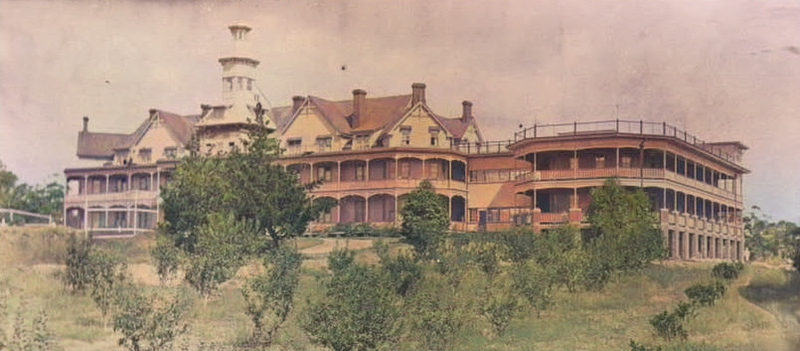
Her words were appropriate: "We must help the poor." But actions speak louder than words. White didn't invest her money in helping the poor in New Zealand. She had a more important use for her wealth. In her financial theology, funding "the work" was more important than helping the poor. Thus, White used some of her vast wealth to help establish the Sydney Sanitarium, an elegant and costly building situated on 80 acres of beautifully landscaped land, that was opened to serve a wealthy clientele in 1903.4
While raising funds for this extravagant sanitarium in Sydney, Mrs. White wrote:
There are the poor that need help, the fatherless children to be cared for. We cannot possibly invest in buildings to accommodate them, but we help them to help themselves.5
This statement is a White lie. White had funds that could have built housing for the poor and an orphanage. She chose not to invest her money that way. She was never a champion of homeless shelters or orphanages. She chose instead to invest in a sanitarium to cater to the wealthy in Sydney.
In 1899, when SDAs in Battle Creek proposed building accommodations for the poor, White quashed the plan:
I understand that a plan has been thought of, for the erection of additional buildings in Battle Creek to accommodate the poor. God has not laid the burden of this work upon his people. The churches should not be sapped of their funds for such an enterprise. The special work to be done at this time, no interest must interpose to hinder.6
By "special work," White meant building schools and sanitariums throughout the world. In her estimation, that was of greater value than helping the poor.
It is not that White didn't want to help the poor. She did. But she had more important priorities. Because of her higher priorities, White thought it best if the poor were taught to help themselves. Indeed, she frowned on handouts to the poor:
We may give to the poor, and harm them, by teaching them to be dependent. Such giving encourages selfishness and helplessness. Often it leads to idleness, extravagance, and intemperance.7
While White wrote beautiful, sympathetic words about the poor, while she gave tokens of assistance to poor SDAs at various times throughout her life, to fully understand her Ministry of Wealth, one must understand her financial priorities.

For the Rich Among Us
The SDA health institutions founded and promoted by Ellen White were not charitable hospitals for the destitute. They were, by design and operation, revenue-generating enterprises serving paying clients — frequently wealthy ones.
The origin of the SDA sanitarium system is often portrayed as a selfless effort to improve public health. Yet Ellen White's own explanation reveals another concern that was driving the enterprise: keeping affluent SDAs from seeking care outside denominational control.
In the vision given me December 25, 1865, I saw that the health reform was a great enterprise, closely connected with the present truth, and that Seventh-day Adventists should have a home for the sick where they could be treated for their diseases and also learn how to take care of themselves so as to prevent sickness. I saw that our people should not remain indifferent upon this subject and leave the rich among us to go to the popular water cure institutions of the country for the recovery of health, where they would find opposition to, rather than sympathy with, their views of religious faith.8
In the vision that launched the SDA health work, White was not describing charitable healthcare. She was specifically focused on an enterprise that would attract "the rich among us." It was to compete against the popular and affluent non-SDA health institutions. This proposed "enterprise" was a winning combination for two reasons. First, White could capture the fees that rich SDAs were currently spending on non-SDA health resorts. Secondly, she could protect wealthy SDAs from going to popular water-cure establishments where they would encounter influences unsympathetic to SDA beliefs.
The emphasis is revealing. White did not express concern that poor SDAs lacking access to medical care. Instead, she singled out "the rich among us" and the danger of their receiving treatment outside SDA supervision.
This concern helps explain why the sanitarium system developed so rapidly and became such a central part of SDA corporate life. The health work was not merely about healing bodies. It also provided a means of retaining the loyalty, influence, and financial resources of the denomination's wealthier members.
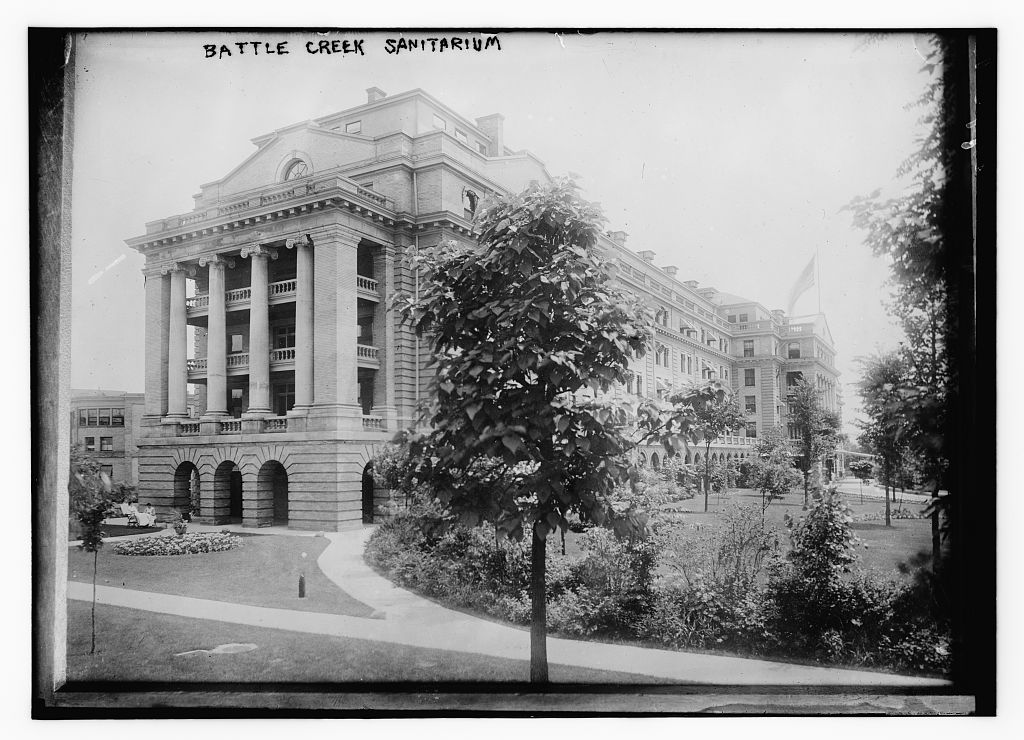
Battle Creek Sanitarium
Operating under John Harvey Kellogg, this business became the most famous health resort in America. Its guest list read like a society register: John D. Rockefeller Jr., Henry Ford, Thomas Edison, Amelia Earhart, Warren G. Harding, J. C. Penney, Johnny Weissmuller.9 The Michigan Central Railway built a dedicated Romanesque train station in Battle Creek specifically to accommodate the volume of wealthy visitors arriving to "take the cure." Liveried horsemen and attendants would meet celebrities at the platform to whisk them to the Sanitarium's luxurious lobby. These were not the hungry and homeless of the Sermon on the Mount. These were the American elite, paying handsomely for electric baths, Swedish massage, vegetarian cuisine, and Dr. Kellogg's celebrated enema protocols.
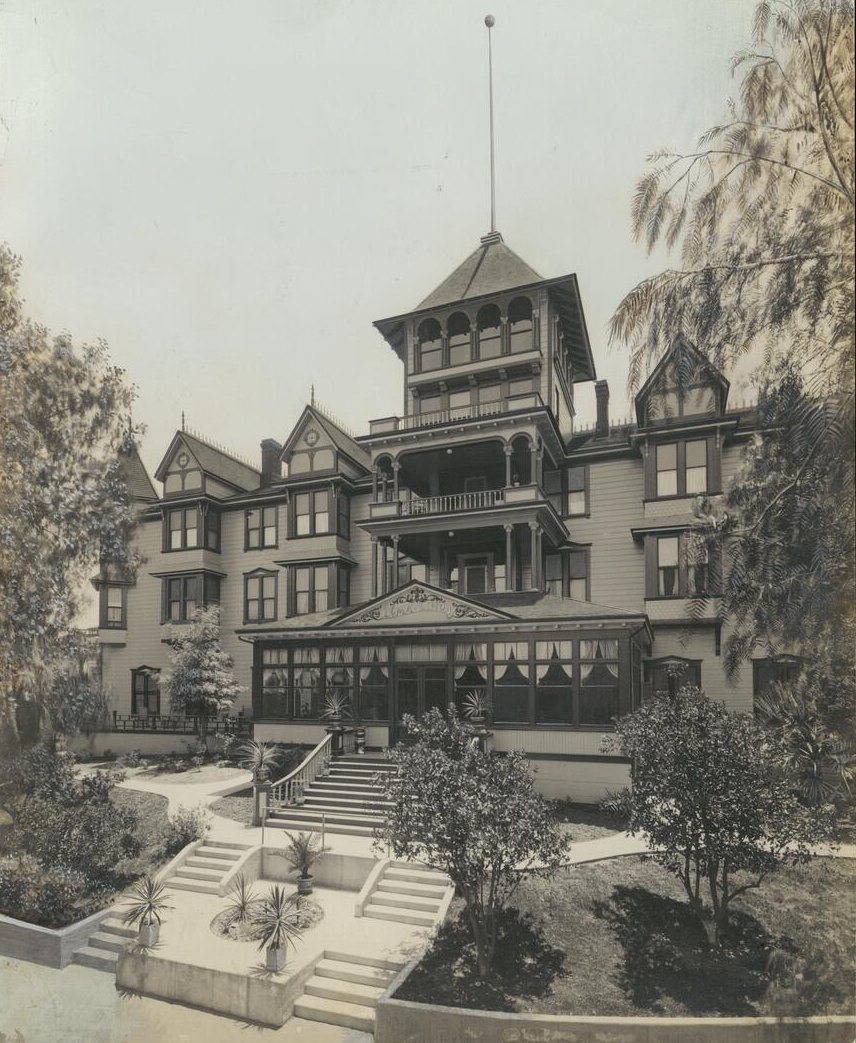
Loma Linda Sanitarium
The Loma Linda Sanitarium, before SDAs purchased it in 1905, was the Loma Linda Hotel, a health resort designed for affluent guests. It had landscaped grounds and resort-style architecture. Published early 1900s sanitarium rates show $10–$25 per week for room and board, with additional fees for hydrotherapy and medical treatments. To compare, many industrial workers earned $8–$12 per week, while farm laborers often earned less. The facility was economically out of reach for most working families. Loma Linda was not structured as a charity hospital for the urban poor — it catered to fee-paying patients, and was later expanded to include a medical school producing credentialed physicians for those who could afford the tuition.10
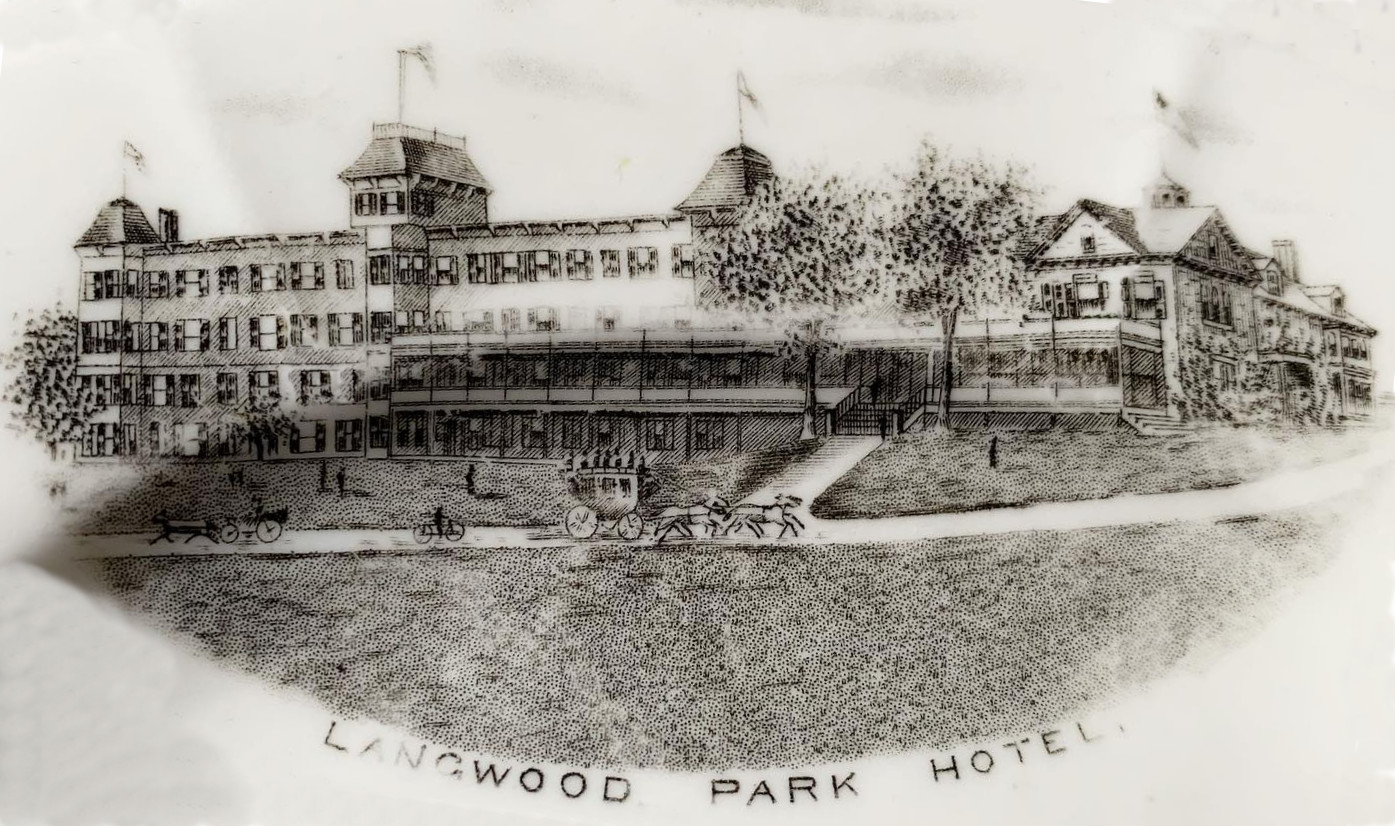
Melrose Sanitarium
The Melrose Sanitarium outside Boston — the New England flagship of the SDA health enterprise — was formerly the Langwood Park Hotel. This luxury hotel was situated on 41 acres adjoining Spot Pond, with tennis courts and golf course. It was six miles from Boston's elite neighborhoods making it perfect for SDA fundraising campaigns. When SDA corporate leaders went looking for a New England sanitarium location, they did not search the tenement districts of South Boston or the immigrant wards of Worcester. They purchased a Gilded Age resort and converted it into a Gilded Age sanitarium.11
After a fire damaged the main building on January 1, 1905, Ellen White issued a testimony on rebuilding — and the candor of what she wrote should permanently retire any claim that her sanitarium vision was about serving the poor. She instructed the administrators:
There should be accommodations for those who desire and are willing to pay for rooms with a private bath-room. People come here who say that they are willing to pay whatever is asked for rooms which are just what they want. But they see nothing that satisfies them, and they go away. Accommodations must be provided for people of this class. We are to labor in the highways as well as in the byways.12
Read that again. Ellen White — the woman who quoted Isaiah 58 about feeding the hungry and housing the homeless — was instructing a sanitarium administrator to stop losing wealthy walk-outs who found the lack of private bathrooms to be unacceptable. Then she invoked the parable of the great banquet — "the highways and byways" — the very passage in Luke 14 where Jesus instructs his host to bring in the poor, the crippled, the blind, and the lame — and used it to justify upgrading the amenities for people who were already rich enough to pay whatever is asked. One of the most sickening distortions of scripture in American religious history.
White's Theology of the "Higher Classes": God's Ordained Fundraising Targets
This was not an isolated slip. The pursuit of wealthy donors was not incidental to White's institutional vision. It was the vision. The wealthy were, in her theology, God's ordained instruments for funding the SDA corporation — and the sanitariums were the bait.
The quotes are not ambiguous. As early as 1890, she declared:
God-given wisdom teaches us to present the truth in such a manner that it will reach the higher classes, who will, when converted to the truth, exert an influence in its favor, and who will help to sustain it with their entrusted talents of influence and means.13
In 1900, soliciting building funds for a new sanitarium in Australia, she wrote to a prospective donor:
Will you make a generous offering to help us in building a sanitarium? The sanitarium is one of the Lord's instrumentalities for reaching the higher classes. Already some wealthy persons have been converted, and have made donations to our sanitarium.14
Note the sequence: convert the wealthy through the sanitarium, then collect their donations. The sanitarium was not a hospital. It was a conversion funnel — with the collection plate waiting at the other end.
Writing specifically about the Melrose property, she was even more explicit:
Another building is greatly needed at Melrose, that suitable accommodations may be provided for the higher classes... Wealthy people come to the sanitarium and ask for a suite of rooms with a private bathroom. They have been accustomed to this convenience, and they are willing to pay for it. We need the money of these wealthy people, and they need the advantages of the sanitarium, and we must provide the accommodations that will make them willing to come. This place will attract the higher classes, and the only way to reach them is for them to come to our sanitariums.15
"We need the money of these wealthy people." Could it be any plainer? The sanitarium existed to attract the rich so the sect could collect their money. This single sentence explains the entire institutional apparatus: the resort properties, the private railroad stations, the electric baths and Swedish massage tables, the private suites with their elusive private bathrooms. It was never about health reform. It was a wealth-extraction mechanism, and Ellen White knew it and directed it in writing.
By 1901, she had elevated this into explicit theological doctrine:
Altogether too little effort has been put forth for men in responsible positions in the world, men who possess means... God gives men power to get wealth, and He desires those to whom He has entrusted this talent to be converted, that they may act as His helping hand, investing in His work the means He has lent them, opening the way for the gospel to be preached to all classes.16
God gives the rich their wealth — so the SDA corporation can take it from them. The poor receive nothing in this equation except the vague promise that if the rich can first be converted and tithed, the gospel will eventually trickle down to "all classes." In White's Ministry of Wealth, the poor were not a primary object of ministry. They were its eventual downstream beneficiaries — after the wealthy had been relieved of their assets.
And in 1906, writing about Melrose specifically:
It was in the plan of God that the Melrose Sanitarium should come into the hands of our people, as a means of reaching the higher classes.17
God's plan, apparently, was a former luxury hotel with golf courses and tennis courts, in the wealthy suburbs of Boston. One cannot but marvel at the contrast between the ministry of Christ and the Ministry of Wealth. Christ, without even a home to lay his head, ministered to all classes, especially the poor (Matt. 11:4-5, 25; Luke 4:18, 14:12-14, 16:19-31). One imagines the Sermon on the Mount having gone rather differently had it been held in a fancy resort near Spot Pond.
The Poor Are Unprofitable: White's Contempt for Poverty Relief
The other side of White's theology of the "higher classes" was her explicit, documented contempt for serious poverty ministry — expressed not in private but in letters to Kellogg that survive in the published record. What makes these letters extraordinary is not merely that she opposed Kellogg's Chicago work on strategic grounds. It is that she reduced the question of caring for the destitute to a financial return calculation — and found poverty relief wanting.
The key phrase, which appears across multiple letters in multiple forms, is the contrast between work that is "consuming" and work that is "producing." In White's accounting, work that brought in wealthy donors, paying patients, and tithe-paying members produced. Work that fed the homeless and bathed the destitute consumed. The poor were not souls to be served but a drain on corporate resources that could be better spent elsewhere.
In 1899, she wrote to Kellogg:
If a portion of the means invested in medical missionary work, in order to get into touch with the lower classes, were spent in lines of work which would bring the workers in touch with the higher classes; if those in the highways were labored for as earnestly and perseveringly as the outcasts, money and talent, the Lord's lent treasures, would have been brought into His service.18
"Money and talent brought into His service" means: the wealthy, if converted, bring financial resources. The poor do not. Therefore the poverty work is a net loss to the cause. She continued in the same year:
It is not after the work of Christ to cast the net for the most objectionable class of fish. Efforts can be made for both classes. Our labors for those who have ability and talents should be more earnest and decided, for these, if converted, will become channels of light. Satan is pleased to have all the means in money and efforts devoted to lines of work in behalf of those who will give no strength or solidity to the cause.19
The homeless of Chicago's skid row were, to Ellen White, "the most objectionable class of fish" — people who "will give no strength or solidity to the cause." In other words: people who have no money to give. Kellogg was wasting God's resources on the financial dead ends of humanity. The people Jesus specifically named in Matthew 25 — the hungry, the stranger, the naked, the sick, the imprisoned — were, in White's accounting, fish not worth catching because they could not pay sufficient tithe.
She made the financial logic explicit in one of her most damning letters, written on January 21, 1900:
The Lord is not pleased with physicians who are working in Chicago, who are spending money lavishly amid the lower classes... This work is consuming and not producing. Very few who have all their lives been educated in sin will be saved to become true laborers to win souls to the truth... the means and talents of our ministers are not to be used to make a Salvation Army record... There is a great, ennobling work to be done to reach the higher classes. ... Your Gospel Wagon enterprise is a mistake... God has not laid this burden upon Seventh-day Adventists to do this certain work, for then the means and time are spent that should be given to the cities to get access to the people, planning and working to reach the higher classes... means are being absorbed in various experiments that are consuming but not producing.20
"Consuming but not producing." This is Ellen White's final verdict on the work of feeding Chicago's homeless, bathing its destitute, delivering the babies of its poor women, and providing obstetric care to those who could not afford a doctor. It was an inefficient use of capital. It did not produce financial returns. It was not the work God had given Seventh-day Adventists to do.
The work God had given Seventh-day Adventists to do, apparently, was building sanitariums for people willing to pay whatever was asked for a private bathroom.
She even invoked the Battle Creek Sanitarium's financial claims as a trump card over Chicago's poor:
It galls my soul to think that though I have presented our necessities to the managers of the Battle Creek Sanitarium, the money that should have been used to provide this field with facilities has been absorbed in various other enterprises... Work like the work that has been done in Chicago binds up the Lord's money and the talents of His workers, so that the memorials He designs shall be erected are not erected.21
"The memorials He designs shall be erected are not erected." Chicago's homeless were eating the brick and mortar of God's institutional monuments. That is what the skid row ministry represented to Ellen White: not the face of Christ in the suffering poor, as Matthew 25 teaches — but a drain on the building fund.
Ellen White used the language of poverty relief — "help the poor," "be Good Samaritans," "pure religion cares for orphans and widows" — as moral cover for an institutional strategy that served the comfortable middle class and wealthy, built permanent revenue-generating assets, and systematically suppressed the one serious effort within Adventism to actually help the destitute urban poor.
Dr. Kellogg and the Chicago Medical Mission: What Genuine Poor Relief Looked Like
While Ellen White was directing donations into luxury sanitariums serving the American elite, Dr. John Harvey Kellogg was doing something that would have been recognized immediately by any reader of the Sermon on the Mount.
In 1892, through the generosity of a dying Chicago banker's daughter who had been impressed by her stay at the Battle Creek Sanitarium, Kellogg arranged to send a trained nurse to work among Chicago's poor. The nurse's reports stirred so much interest that more followed. Then in early 1893, the Wessels brothers of South Africa — the same Wessels family whose money Ellen White was so energetically pursuing for her own projects in Australia — told Kellogg they were impressed by his work and had $40,000 to give. Kellogg's reply was immediate: "I would use it to begin work among Chicago's heathen."22
Much to the chagrin of White, the Wessels money went to Kellogg. Kellogg used it to found the Chicago Medical Mission, opening on June 25, 1893, on the skid row district at the south end of the Loop — specifically, as Kellogg later related, in the area identified by Chicago's police chief as "the dirtiest and wickedest place" in the city.23
What followed was one of the most impressive Christian social welfare programs in American history. The Chicago Medical Mission offered: a free medical dispensary staffed all day by sanitarium-trained nurses, with a physician on duty at least two hours daily; free baths and free laundry (because Kellogg understood that men who smelled like skid row could not get jobs or hear the gospel); a penny lunch counter serving soup and zwieback to 500–1,500 people daily; free obstetrical care for the neighborhood's poor women; a kindergarten for working mothers; evening classes; a visiting nurse service making thousands of home calls; and special electrical and hydrotherapy treatments shown to be effective for "sobering-up purposes."24
By the summer of 1896, after just three years, the mission had recorded: 38,000 baths given; 26,000 other treatments dispensed; 9,000 home visits by nurses; approximately 75,000 penny dinners served; and 17,000 "gospel conversations" recorded. Church members across the country had been invited to donate good used clothing; more than 200,000 persons had used the free laundry, and 75,000 of them had received new clothing.25
Kellogg expanded. A Workingmen's Home accommodated up to 400 men a night, requiring a bath and fumigation of clothing upon arrival. An industrial department provided temporary work — rug-weaving, broommaking — for men seeking employment. A settlement building at Wabash Avenue provided clinical training for medical students while running a day nursery, a kindergarten, a free laundry for women, a school of health, and clubs for the newsboys and bootblacks of the city. A mission farm in La Salle County was obtained through the generosity of a patient and used to rehabilitate men rescued from skid row.26
By 1898, similar work had been established — on a smaller scale, but operating — in Milwaukee, St. Louis, Omaha, Kansas City, Lincoln, Denver, Portland, San Francisco, Indianapolis, Rochester, Buffalo, Nashville, Salt Lake City, Butte, and Brooklyn.27
Kellogg himself wrote to White in 1897:
What a pity it seems that of the many thousands of dollars raised by our people there is such a small proportion used in such a way as to really advance the cause of Christ for the relief and saving of sinners.28
He dreamed, as he wrote to his longtime friend S. N. Haskell, that "the whole Seventh-day Adventist denomination would sometime become... medical missionaries, and that we should be the medical missionary people of the world." In another letter he expressed the desire that SDAs should be "the Good Samaritan to all the world."29
At a Chicago conference on November 11, 1896 — sharing a platform with Jane Addams and leading University of Chicago sociologists — Kellogg declared: "I have no scheme of social reform to propose... But I take it to be the duty of every Christian community to see that every homeless, hungry man is fed." And then, in a passage that reads like a direct rebuke of his own denomination: "if Chicago's churches would contribute as much to help the poor at home as they did to the cause of foreign missions, more would be accomplished for the heathen at home than is now being done for the heathen abroad."30
Ellen White Moves to Kill It
Ellen White's initial response to the Chicago work was approval. But as the mission grew, as Kellogg's commitment to the non-denominational character of the work deepened, and as money that might otherwise have flowed toward White's own institutional projects in Australia and California was being directed toward Chicago's homeless and sick — the commendation curdled into opposition.
The letters from 1898 through 1900 document the transformation. Writing to Kellogg on December 14, 1898, White warned:
Constant work is to be done for the outcasts, but this work is not to be made all-absorbing. This class you have always with you. All the means must not be bound up in this work, for the highways have not yet received the message... The means to sustain that work should come... from those not of our faith.31
Astonishingly, Mrs. White said the money for Kellogg's projects "should come from those not of our faith." She was telling Kellogg that SDA money needed to be directed to those who have not yet received "the message." Of course, that message was not the gospel. It was the SDA message that all other Christian denominations are Babylon and their members need to leave and join the SDA corporation and then divest their property, giving the proceeds to the corporation. That was the more important work in White's mind. Let non-SDAs burn up their money funding actual poverty relief. SDA money was to be spent establishing SDA sanitariums and schools throughout the world.
She continued in a letter of December 12, 1899: "I think, Dr. Kellogg, that there should be no mistakes made now to devote our powers too largely to the lowest class. There is work to be done for the higher classes, that they shall exert an influence in that line."32 The "higher classes." The wealthy. The paying clients. The sanitarium guests. The people who could give back and fill the corporate coffers.
On February 27, 1900, she wrote with finality:
You cannot carry the work in Chicago as you have been doing, and perform acceptably the work the Lord has appointed you. No one who believes that we are giving the last message of mercy to the world is required by God to go over the ground you are going over.33
And on March 10, 1900:
The third angel's message is virtually ignored by you. You have belittled the work of the gospel ministry, while you have made the medical missionary work disproportionately important... this work God has never given you to do.34
It is curious that White told Kellogg that God had never given Kellogg the work of feeding Chicago's hungry, bathing Chicago's homeless, and providing obstetric care to Chicago's poor women. These are the very types of activities Jesus commanded all Christians to perform in Matthew 25. However, all White saw were dollars going into a work that would produce no financial return. That apparently was not the work of God. The work of God was building health resorts for the "higher classes."
The Chicago Buildings Vision: A False Testimony That Sealed the Coffin
In 1899, while she was in Australia soliciting the Wessels family's money for her own projects, White issued a "testimony" accusing Kellogg of having "taken money from the Sanitarium to erect buildings in Chicago to harbor the unworthy poor." She stated that she had been shown a large, expensive building in Chicago which had been erected with misappropriated sanitarium funds. She condemned him in searing terms.35
There was one problem: her fake vision was not true.
No such buildings had been constructed. Kellogg had rented facilities. The money had come not from the Battle Creek Sanitarium treasury — which, under its 1897 charter, could not legally be disbursed outside Michigan — but from private donors, including Kellogg's own income from book sales and health food royalties. When Kellogg received the testimony, he confronted White directly, telling her: "Someone has misinformed Sister White regarding our work." He asked her to show him the buildings. She could not, because they did not exist.36
White's eventual explanation — offered years later — was that the vision had been a prophetic warning against a building that might have been erected, not one that actually was. It was, in the delicate phrasing her defenders later employed, an "object lesson."37
The damage, however, was real. The false testimony damaged Kellogg's reputation with SDA corporate leaders at a critical moment. It deepened the sect's suspicion of his Chicago work. It gave divine authority to the argument that Kellogg's humanitarian mission was misusing funds. Combined with the relentless pressure from White and the loss of SDA funding support, Kellogg was forced to bear the financial burden of the Chicago work increasingly alone — funding it through his books, inventions, and health food royalties. When Kellogg was finally disfellowshipped in 1907, the Chicago Medical Mission lost its champion. Sadly, it was discontinued in 1910.38
Kellogg had served 500 to 1,500 soup-and-zwieback lunches daily. Ellen White had built health resorts for the "higher classes." In case there was any ambiguity about whose vision better represented the gospel of Jesus Christ, in the year Kellogg opened the Chicago Medical Mission, the Salvation Army was already operating its first U.S. food depots, night shelters, and refuges for women across major American cities — providing what its founders described simply as "salvation to the poor, destitute, and hungry" by meeting both their "physical and spiritual needs."39 By 1896, the Salvation Army had distributed 3.2 million meals, provided lodgings for 1.3 million people, and found employment for 12,000 men — in Great Britain alone.40
The Salvation Army did not tell the destitute that God's money should come from "those not of our faith." It did not lecture its workers about giving "too largely to the lowest class." It did not direct donors to fund luxury sanitariums for celebrities while dismissing actual poverty relief as not "the work God has given you to do." White's testimonies ensured that SDAs would resist investing their own money in something as lowly as poverty relief.
Contrast White to the New Testament
The contrast between White's financial priorities and the financial priorities of the New Testament is stark. Of the roughly 2,000 verses in the New Testament that address money, wealth, and the obligations of the Christian community, the overwhelming majority (~80%) direct the cash flow toward the poor, the widow, the orphan, the stranger, the destitute. Not toward institutions. Not toward sanitariums for the wealthy. Not toward publishing empires. Toward the poor.
When Jesus addressed the rich young ruler — the passage White appropriated to demand money from the Wessels family — He said: "Sell all that thou hast, and distribute unto the poor" (Luke 18:22). Not to the cause. To the poor.
When the Jerusalem council concluded their historic meeting with the apostle Paul, they sent him away with one financial instruction. Not "build sanitariums." Not "target the wealthy classes." Not "put the church in your will." One instruction, in its entirety: "Only they would that we should remember the poor" (Galatians 2:10).
James, the brother of Jesus, gave the definitive one-sentence summary of authentic religion:
Religion that God our Father accepts as pure and faultless is this: to look after orphans and widows in their distress... (James 1:27 NIV).
Not to build up schools. Not to fund a publishing house. Not to build a luxury sanitarium on a former golf course. To care for orphans and widows.
The New Testament does not forbid buildings. What it consistently, repeatedly, and without ambiguity does is point the financial arrow in one direction: toward the vulnerable, the destitute, and the forgotten. White pointed it in the other direction — toward institutions that served the wealthy, toward publications that generated royalties, toward a denominational infrastructure that absorbed donations and returned them as bricks and mortar. When Kellogg pointed the arrow toward the poor — penny lunches, free baths, medical care for Chicago's destitute — White moved to redirect it.
The contrast between the New Testament and White on the subject of financial priorities is like day and night.
Conclusion
Fans of Ellen White will say that White also wrote passages commending care for the poor. Yes, she wrote about caring for the poor. So did the Pharisees. Jesus said of them: "This people honors me with their lips, but their heart is far from me." The test of genuine concern for the poor is not rhetoric — it is the allocation of resources. When we follow the money, the bulk went to luxury sanitariums, to 1,500-acre school campuses, and to permanent institutional edifices designed to last for centuries. Very little of it went to the kind of work Kellogg was doing on skid row in Chicago, and what little did go there, White worked systematically to undermine.
Fans of Ellen White will also say Kellogg eventually fell into error and had to be separated from the sect. Kellogg was charged with pantheism although that has since been largely refuted. His main "failure" was in exposing the falsehoods of Ellen White. But the question is what he was doing on the streets of Chicago in 1893 and 1896 and 1898. On those streets, he was feeding the hungry, housing the homeless, bathing the filthy, sobering the drunk, delivering the babies of poor women, and training medical students to serve the destitute — while Ellen White was writing letters urging him to spend less time on "the lowest class" and more time on "the higher classes." Whatever Kellogg's later failings, on this specific question, at this specific moment in history, he was right and she was wrong.
Now set that alongside White's financial summary. Her Counsels on Stewardship, Section XIV — dedicated entirely to "Wills and Legacies" — is a sustained argument for why believers should write the SDA corporation into their estates. Section II instructs readers to sell homes and property and give to "the cause." Her letters to the Wessels family, to the Burwells, to donors across two continents, deploy the language of divine obligation to redirect private wealth toward her approved institutional projects. The financial language of her ministry is consistent across fifty years: give to the Lord's treasury, give to the cause, give to the institutions. The poor appear in her rhetoric. They do not appear in the destination of the funds.
The ultimate measure of a religious teacher's financial doctrine is not what they preached. It is what they built. What they discouraged. And what they did with other people's money in the name of God.
Ellen White preached poverty relief and built wealth machines. She used the language of the Sermon on the Mount to justify institutions that served the Gilded Age elite, and she used prophetic authority to destroy the one program that was actually living out Matthew 25.
The destitute man on Chicago's south side who would have eaten at Kellogg's penny lunch counter if the SDA Church had backed him instead of starving him of funds — that person deserved better. He deserved the religion Jesus actually taught: where the financial language of the New Testament directs money toward the poor, and reserves its harshest condemnation for those who dress up greed in the language of God's claims.
See also
- Spirit of Profits: Ellen White's Fundraising Strategy — How apocalyptic urgency was used to extract donations for permanent institutional empire-building
- Spirit of Profits: Corban — How White's wills doctrine mirrors the practice Jesus condemned in Mark 7
- The Spirit of Profits: Ellen White's Pursuit of the Wessels Family Fortune
- The Spirit of Profits: Ellen White's Shocking Shakedown of the Burwells
- Ellen White: Prophet or Profit? — A comprehensive look at Ellen White's finances and lifestyle